

Table of Contents
- What Adjustable Thigh Wraps Do for Athletic Performance
- How to Wrap a Thigh for Support: Step-by-Step Instructions
- Thigh Compression Sleeve vs. Traditional Wraps
- Thigh Wrap Fit and Sizing: Getting the Right Measurement
- Adjustable Thigh Wraps for Running and Athletic Training
- Safety, Circulation, and When to Remove Your Wrap
- Care and Durability: Keeping Your Wrap in Top Condition
- Frequently Asked Questions
Last Updated: October 14, 2026
What Adjustable Thigh Wraps Do for Athletic Performance
Adjustable thigh wraps provide targeted compression and support to your upper leg during physical activity, helping stabilize muscles and reduce strain on the quadriceps, hamstring, and groin area. These wraps work by applying consistent pressure around your thigh, which can improve proprioception (your body's awareness of its position in space) and help distribute forces more evenly across the muscle groups during running, training, and sports.
An adjustable thigh wrap differs from a compression sleeve primarily in its design. Wraps use straps you can tighten for customized pressure, while sleeves offer fixed compression throughout. Both serve the same basic function: supporting your upper leg during activity. The choice between them depends on your specific needs, activity level, and how much control you want over the pressure applied.
Most athletes use adjustable thigh wraps for three main reasons. First, they reduce muscle vibration during high-impact activities like running and jumping. Second, they provide warmth and improved blood flow to the targeted area. Third, they offer psychological confidence, knowing your leg is supported often translates to better performance and reduced hesitation during movement.
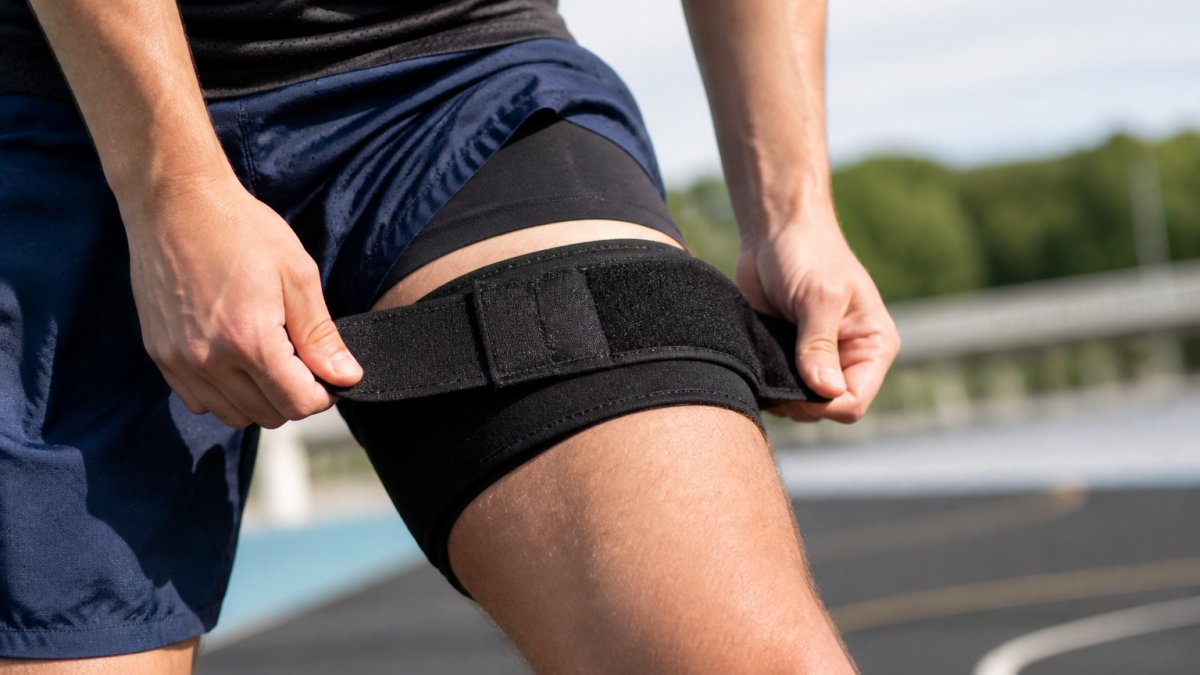
How to Wrap a Thigh for Support: Step-by-Step Instructions
Wrapping your thigh correctly ensures you get maximum support without restricting circulation or causing discomfort. The process takes about three to five minutes once you understand the basic technique.
Start by sitting down with your leg extended or slightly bent at the knee. This position relaxes your thigh muscles and makes it easier to apply even pressure. Locate the center of your thigh, roughly midway between your hip and knee, as this is where you'll anchor your wrap.
As you wrap, maintain consistent tension. The wrap should feel snug but not tight enough to cut off circulation. You should be able to slip one finger under the wrap comfortably. If the wrap feels too loose, you won't get adequate support. If it's too tight, you'll restrict blood flow and may experience numbness or tingling.
Secure the wrap using the adjustable straps provided. Most quality wraps feature hook-and-loop fasteners that allow you to fine-tune pressure after application. This is where adjustable thigh wraps excel over traditional elastic wraps, you can modify the fit without rewrapping your entire leg.
Once secured, stand and move around for a minute. Walk, do a few light leg lifts, or perform gentle squats. This movement helps you assess whether the wrap is positioned correctly and whether the pressure feels right. If you notice bunching, slipping, or discomfort, unwrap and try again. It typically takes two or three practice attempts before the process becomes automatic.
Thigh Compression Sleeve vs. Traditional Wraps
Understanding the differences between these two support options helps you choose what works best for your body and activity type.
A thigh compression sleeve is a fitted tube of elastic fabric that slides over your leg. It provides uniform compression throughout its length. The sleeve stays in place through its snug fit and doesn't require adjustment during activity. You simply pull it on like a sock and it's ready to go.
A traditional adjustable thigh wrap uses straps and fasteners to create customizable compression. You wrap it around your leg and tighten the straps to your preferred pressure level. This design gives you more control, you can increase compression as your muscles warm up or decrease it if you feel restricted. Wraps also accommodate varying thigh sizes more easily since you adjust them to fit.
The trade-off is convenience versus customization. Sleeves are faster to put on and require no adjustment. Wraps take a few minutes to apply correctly but give you precise control over pressure distribution. For athletes with larger or smaller-than-average thighs, wraps often fit better because you're not limited to predetermined sleeve sizes.
Durability differs too. Quality compression sleeves can last 12-18 months with regular use. Adjustable wraps, especially those with quality neoprene or elastic fabric, often last longer because the straps wear gradually rather than the entire sleeve experiencing equal stress.
Thigh Wrap Fit and Sizing: Getting the Right Measurement
Proper sizing is critical. A wrap that's too small restricts circulation. One that's too large slips during activity and provides no support. Most quality wraps are sized by thigh circumference rather than clothing sizes, which gives you a much more accurate fit.
Measuring Your Thigh Correctly
Measure your thigh at its widest point, typically 4-6 inches above your knee. Use a soft measuring tape and wrap it snugly around your leg while standing with your weight evenly distributed. Don't pull the tape tight or leave it loose; it should feel the way the wrap will feel when properly fitted.
Write down this measurement in inches. Most adjustable thigh wraps come in ranges: small (14-18 inches), medium (18-22 inches), large (22-26 inches), and extra-large (26+ inches). If your measurement falls between sizes, choose the larger size, you can always tighten the straps more on a larger wrap, but you cannot loosen a wrap that's fundamentally too small.
Consider measuring both thighs if you've noticed asymmetry. Many people have one thigh slightly larger than the other. If the difference is less than half an inch, one wrap size will work for both legs. Beyond that, you might need two different sizes or look for wraps with extended adjustment ranges.
Adjusting for Comfort and Stability
Once you have the right size, proper adjustment ensures comfort during activity. The wrap should feel supportive without being restrictive. You should be able to move your leg through its full range of motion without the wrap limiting you.
Start with moderate tension on the straps. If you feel any numbness, tingling, or coolness in your lower leg or foot during the first five minutes of activity, the wrap is too tight, loosen it immediately. These signs indicate restricted blood flow, which can cause injury if ignored.
As your muscles warm up during exercise, you may want to increase strap tension slightly. Your muscles expand when warm, which can make a wrap feel looser. Check the fit every 10-15 minutes during your first few sessions with a new wrap until you understand how it responds to your body and activity level.
Adjustable Thigh Wraps for Running and Athletic Training
Runners and athletes benefit significantly from adjustable thigh wrap support during high-impact activities. Running places enormous stress on the quadriceps, hamstring, and hip flexors. A properly fitted wrap distributes this stress more evenly and can reduce the risk of common running injuries like quad strains and hamstring pulls.
For running specifically, position your wrap so it covers the area where you typically feel fatigue or discomfort. Many runners experience quad fatigue in the outer thigh, this area benefits most from targeted compression. Hamstring-focused runners should position the wrap slightly higher and toward the back of the thigh.
During training sessions, the wrap provides psychological benefit beyond physical support. Knowing your leg is stabilized often improves running form because you're not unconsciously favoring or protecting an area you're worried about. This improved form translates to better efficiency and reduced injury risk.
For sports requiring lateral movement, soccer, basketball, tennis, the wrap's support becomes even more valuable. The constant direction changes stress your thigh muscles in multiple planes. A wrap that provides balanced compression across the entire thigh helps stabilize your leg during these unpredictable movements.
Start with shorter sessions wearing your wrap. A 20-minute run or training session lets you assess how the wrap feels and performs before committing to longer efforts. Most athletes find that after two or three sessions, the wrap becomes unnoticeable, a sign it's fitted correctly and providing appropriate support without restriction.
Safety, Circulation, and When to Remove Your Wrap
Wearing a thigh wrap improperly or for too long can cause problems. Understanding safety guidelines helps you use your wrap effectively without risking injury.
Check your circulation regularly. If you notice your skin turning pale, blue, or purple below the wrap, or if you experience numbness or tingling that doesn't resolve within a minute of loosening the straps, remove the wrap immediately. These signs indicate compromised blood flow.
Most athletes should not wear a thigh wrap for more than 3-4 hours continuously. Your muscles need periods without compression to recover and adapt. Wearing a wrap all day, every day can actually weaken the muscles you're trying to support because they become dependent on external stability.
If you have a history of blood clots, deep vein thrombosis, or circulation problems, consult a healthcare provider before using a thigh wrap. These conditions can be worsened by compression, and professional guidance is essential.
Watch for skin irritation or chafing where the wrap contacts your skin. If irritation develops, try wearing a thin layer of compression shorts or athletic tights under your wrap. This barrier reduces friction and often eliminates the problem.
Remove your wrap immediately if you experience sharp pain, severe swelling, or any sensation that feels different from normal muscle fatigue. Pain signals that something is wrong. Muscle soreness from training is normal; sharp, localized pain is not.
Care and Durability: Keeping Your Wrap in Top Condition
Proper care extends your wrap's lifespan and maintains its compression effectiveness. Most quality adjustable thigh wraps can last a significant period with appropriate maintenance.
Hand wash your wrap in cool water with mild soap after each use. This removes sweat, which can break down elastic fibers and create odor. Avoid hot water, heat degrades elastic materials.
Air dry your wrap completely before storing it. Never put it in a dryer, high heat permanently damages elastic fabrics. Lay it flat or hang it in a well-ventilated area.
Store your wrap in a cool, dry place away from direct sunlight. UV exposure degrades synthetic fabrics over time. A gym bag or drawer works fine as long as it's not exposed to extreme heat.
Inspect your wrap regularly for signs of wear. Fraying edges, reduced elasticity, or velcro that no longer grips securely are signs your wrap is reaching the end of its useful life. When compression noticeably decreases or straps no longer hold securely, it's time to replace it.
If your wrap gets wet from rain or water exposure during outdoor activities, dry it immediately. Prolonged moisture exposure can weaken elastic fibers and create conditions for mold or mildew growth.
Finding the right adjustable thigh wrap transforms your athletic performance and training confidence. The key is choosing a wrap that fits your thigh measurements properly, learning to apply it correctly, and using it strategically during activities where you need support.
Frequently Asked Questions
How tight should an adjustable thigh wrap be?
An adjustable thigh wrap should feel snug but not restrictive. You should be able to slide one finger under the straps comfortably. If the wrap leaves deep marks on your skin, cuts off circulation, or causes numbness or tingling, it is too tight. The goal is compression that supports your muscle without limiting blood flow. Adjust the straps after 15-20 minutes of activity, as muscles may shift slightly during movement.
Can you wear a thigh wrap while playing sports?
Yes, adjustable thigh wraps are designed for athletic activity. They provide targeted support during running, training, and sports that involve jumping or lateral movement. Make sure the wrap is secure before starting your activity, test your range of motion and ensure the straps stay in place during dynamic movements. If the wrap slips or feels uncomfortable during play, readjust before continuing.
What is the difference between a thigh wrap and a compression sleeve?
A thigh wrap uses adjustable straps to deliver targeted compression pressure where you need it most, offering customizable support and easier on-and-off application. A compression sleeve is a continuous fabric covering that provides uniform compression around the entire thigh. Wraps offer more flexibility in pressure control and fit, while sleeves provide consistent compression but less adjustability. Choose a wrap if you need targeted support for a specific injury; choose a sleeve for general muscle support during activity.
How do you keep a thigh wrap from slipping during exercise?
A well-fitted wrap with non-slip grip technology and properly adjusted straps will stay in place during most activities. Position the wrap around the mid-thigh, not too high or too low. Tighten the straps evenly and check that the base of the wrap sits flush against your skin. During high-impact activities like running, you may need to adjust straps every 20-30 minutes as your muscles warm up and shift. If slipping persists, your wrap may be sized too large for your measurements.
0 comments