

Table of Contents
- Why Dance Heels for Wide Calves Require Different Fit Standards
- How to Measure Calf Circumference for Boots and Dance Heels
- Dance Heel Height for Beginners and Wide-Calf Fit
- Choosing Dance Shoes with Adjustable Ankle Straps
- Materials, Sole Types, and Flexibility for Dance Comfort
- Transforming Your Existing Heels Into Dance Boots
- Testing Fit and Preventing Common Problems
- Frequently Asked Questions
Last Updated: October 15, 2026
Why Dance Heels for Wide Calves Require Different Fit Standards
Finding dance heels wide calves means rethinking how you shop. Standard sizing ignores calf circumference: you pick a shoe size and hope the shaft accommodates your calf.
Traditional boots assume shoe size equals leg fit, but a size 8 wearer could have a 12-inch or 16-inch calf, and neither fits the same boot.
That's why dance heels for wide calves demand a different strategy: measure your calf circumference first.
At Bootsy- The Boot Sleeve, we understand that women with wide calves need boots sized by leg measurement, not shoe size.

How to Measure Calf Circumference for Boots and Dance Heels
Step-by-Step Measurement Process
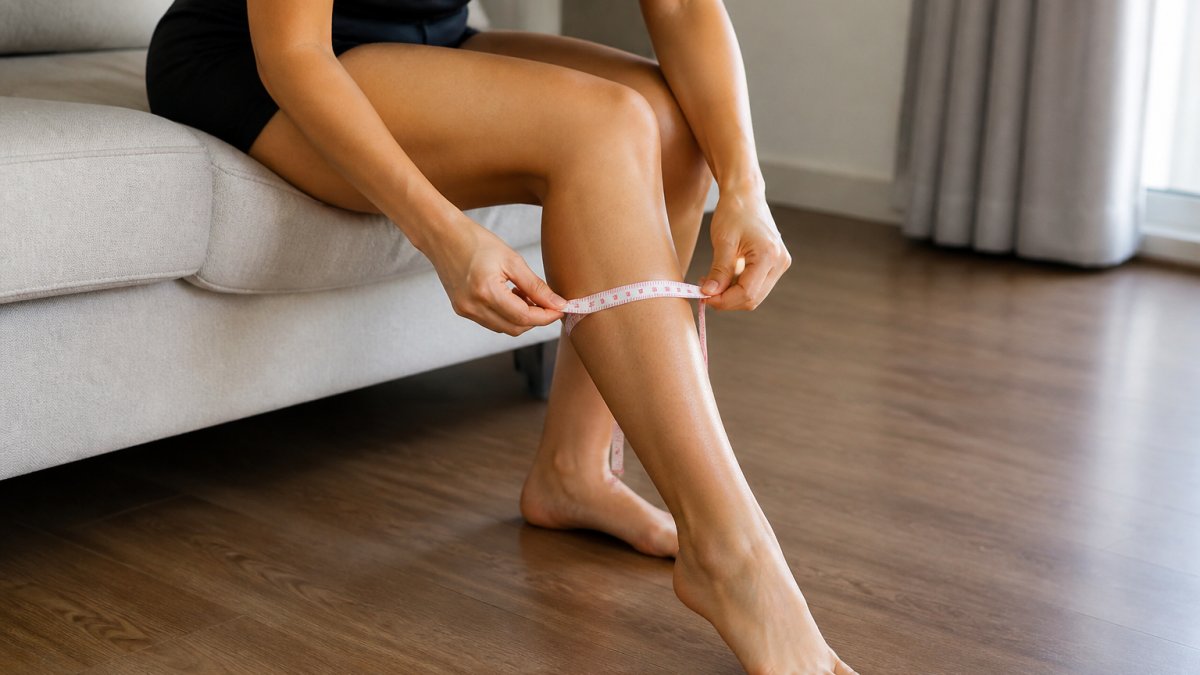
Measuring your calf takes three minutes and tells you which heels and boots will fit.
The measurement steps:
-
Stand with feet shoulder-width apart. Keep weight balanced and calf muscles relaxed, don't flex.
-
Find the widest part of your calf, usually halfway between knee and ankle.
-
Wrap the tape around that spot, horizontal and snug but not tight, one finger should slide under it.
-
Read the measurement. Write down the number in inches. This is your calf circumference.
-
Measure both legs. Most people have different measurements on each side. Use the larger number when shopping.
Recording Your Measurements for Shopping
Write down three numbers before you shop for dance heels for wide calves: calf circumference, shoe size, and calf height preference (mid-calf or thigh-high). Keep these in your phone. Many retailers list calf circumference ranges alongside shoe sizes, match your measurement to their range, not just shoe size.
Dance Heel Height for Beginners and Wide-Calf Fit
Heel height affects comfort and control, especially with a wider calf, and beginners often pick heels too tall and struggle with balance.
For dancers new to heels, start with 1.5 to 2.5 inches, polished elevation without shifting your weight forward. Your calf works harder in taller heels, so if it's already pressing against the shaft, a 3-inch heel becomes exhausting.
Wide-calf dancers should prioritize comfort over height: a 2-inch heel that fits properly beats a 3-inch heel that cuts off circulation.
Choosing Dance Shoes with Adjustable Ankle Straps
Why Adjustable Closures Matter for Wide Calves
A fixed-zip boot has one factory-set shaft circumference: if it doesn't match your calf, you squeeze in or leave a gap. Adjustable closures split that into two independent adjustments, the shaft (calf room) and the ankle (foot lockdown).
That separation is the point for a fuller calf: keep the ankle snug for control during turns while the top opening stays loose enough that your calf isn't compressed.
Where the Strap Sits Changes Everything
Strap placement matters as much as strap type. A strap crossing the widest part of your calf digs in no matter how loose you set it. Look for straps above the calf bulge or below it, so the closure isn't fighting your widest measurement.
Two more design details worth checking:
- Elastic gussets or stretch panels built into the shaft let the boot expand at the calf without loosening the ankle. A gusset is a hidden stretch insert, usually on the inner side of the shaft.
- Open-sided or cutout designs skip the shaft entirely. The shoe holds your foot and ankle, and your calf is never enclosed, so calf circumference stops being a fit variable.
Closure Types Compared for Fuller Calves
Buckle closures give the widest adjustment range and hold their setting, the most reliable choice when your calf sits well outside a standard shaft width.
Lace-up closures distribute tension across many points, so no single spot takes all the pressure, leave the lower laces tight and the upper laces relaxed.
Velcro straps adjust fastest and re-tighten easily between songs, but only cover the distance the strap was cut for, so they can't expand as far as a buckle.
Elastic panels with a fixed closure (a zip plus a stretch gusset) offer the least adjustment but the most consistent fit.
Matching Closure to Dance Style
In styles with repeated rises onto the ball of the foot, like Latin and rhythm, your calf flexes constantly. A lace-up or gusseted design that gives with each flex beats a rigid buckle boot that stays the same shape while your leg changes underneath it. For smooth and standard styles, where the leg stays more extended, a buckle or fixed-zip boot with a gusset holds its line and looks cleaner.
Materials, Sole Types, and Flexibility for Dance Comfort
The material your heel is made from affects how it fits and moves with your leg.
Stretch materials (faux leather blends, neoprene, or mesh) adapt to your calf shape and give slightly as you move, crucial for dancers.
MINI | Chocolate Croc Mid-Calf Boot Sleeve | XS–5X Calf Fit →

Flexible soles matter for dance heels wide calves because they let your foot articulate naturally; a stiff sole forces you to compensate with your ankle and calf, increasing fatigue.
Look for heels with:
- Suede or leather soles that grip the dance floor without sticking
- Cushioned insoles that absorb impact
- Flexible toe boxes that don't pinch
The best dance heels combine a flexible upper material with a responsive sole. This lets your calf work naturally while your foot maintains contact with the floor.
Transforming Your Existing Heels Into Dance Boots
You don't need new heels to get the boot look. If you have heels you love that don't zip up your calf, a boot sleeve transforms them instantly.
The best boot sleeves are made from stretch materials that move with your leg and cover from ankle to mid-calf or thigh. Fitted properly, a sleeve sits snug without bunching or slipping.
Bootsy- The Boot Sleeve offers sleeves sized by calf circumference, not shoe size. You measure your calf, pick your size, and the sleeve fits your leg perfectly.
Testing Fit and Preventing Common Problems
At-Home Fit Checks Before Dancing
Test any new heel or boot at home before it touches a dance floor, once worn on a floor, most retailers treat shoes as used and won't accept returns. Budget 15 to 20 minutes on a hard surface, not carpet, since carpet hides slipping and instability.
The fit-check process:
-
Put the shoe on and fasten everything completely. Stand still for 2 to 3 minutes, long enough for a too-tight shaft to show pressure.
-
Check shaft clearance at your widest point. Slide one finger between boot and calf at the fullest part: if it won't fit, the shaft is too narrow; if two fingers fit easily, it's too wide and will slip.
-
Test ankle articulation. Point your foot, flex it back, and roll your ankle in a circle. The shoe should move with you. If the shaft holds your ankle stiff, you'll fight it on every rise and turn.
-
Do the movement test, not just a walk. Add the moves your style uses, slow turns, a rise onto the ball of the foot, a side step, a pivot, and watch for the shaft sliding down, the top edge digging in, or the heel lifting.
-
Hold a rise for 30 seconds. Standing on the balls of both feet mimics the sustained calf engagement of a dance session; if your calf aches or goes numb, the shaft is compressing it.
-
Check pressure points after 10 minutes. Any spot that pinches or rubs at 10 minutes will be painful at 60.
Movement-Specific Checks by Dance Style
Different styles load the calf differently, so test the movement you'll actually do.
- Latin and rhythm: quick weight transfers and hip action. Test fast side-to-side steps and check that the shaft doesn't twist around your leg.
- Smooth and standard: long, gliding steps and closed hold. Test a slow forward walk and a rise, and check that the top edge of the boot doesn't catch your partner's leg.
- Swing and lindy: constant bounce and rotation. Test repeated rises and pivots, and watch for the heel slipping inside the shoe, which is a shoe-size issue, not a calf issue.
Troubleshooting Slipping, Bunching, and Calf Discomfort
Slipping down: the shaft slides toward your ankle during movement because it's too wide for your calf.
Bunching or wrinkling: fabric gathers around your leg, same cause as slipping, a shaft that's too wide. A smaller calf size or a stretch panel fixes it.
Calf pressure, numbness, or cramping: the shaft is too narrow.
Heel lifting inside the shoe: your foot slides forward and the heel pops up. This is a shoe-length or width issue, not a calf issue.
Rubbing at the top edge: the shaft edge is cutting into your calf.
When to Reject a Shoe Instead of Stretching It
Some fit problems improve with break-in; others don't, and pushing through risks injury. Reject the shoe if your calf goes numb, tingles, or cramps within 15 minutes; the shaft won't close over your calf at the loosest setting; a sharp pressure point doesn't soften after 10 minutes of standing; or the shoe slips off your heel during a turn. A shoe that fails these tests isn't a break-in problem but a measurement mismatch, no amount of stretching changes the boot's base circumference.
Frequently Asked Questions
How do you measure your calves for dance heels?
Measure at the widest point of your calf with a soft measuring tape while standing. Keep the tape snug but not tight, and record the measurement in inches. Measure both legs, as they may differ slightly. Do this measurement barefoot or in socks for accuracy. Write down the measurement and refer to it when shopping for dance heels or boot sleeves designed by calf circumference rather than shoe size alone.
What heel height is easiest to dance in for beginners with wide calves?
Beginners with wide calves typically find 1.5 to 2.5 inches the most stable. Lower heels reduce strain on the calf and ankle, making balance easier during turns and heel steps. Wider heel bases also provide more stability than thin stilettos. As you gain confidence and calf strength, you can gradually move to higher heels. Always prioritize comfort and control over height when starting out.
Are ankle-strap dance heels comfortable for wide calves?
Yes, when the strap is adjustable. Ankle straps provide security and prevent slipping, which is especially important if your calf is wider than standard sizes. Look for straps with buckle closures or elastic panels that can accommodate your calf circumference without pinching. The strap should sit snugly but allow room for one finger underneath. Adjustable closures are key to comfort for wide-calf dancers.
Can you wear dance heels if you have wide calves?
Absolutely. The key is measuring your calf circumference and choosing heels with flexible materials and adjustable closures rather than relying on shoe size alone. Dance shoes with stretch uppers, padded insoles, and ankle straps designed for wider legs work well. You can also transform your favorite heels into boot-style options using boot sleeves sized by calf measurement, like Bootsy's MINI mid-calf sleeve ($29.99) or CROC thigh-high sleeve ($35.99), which accommodate calf sizes from XS to 5X.
0 comments