

Table of Contents
- Why Standard Boots Fail Wide Calves
- How to Measure Calf Circumference for Boots
- Understanding Shaft Width and Boot Height
- Best Materials for Wide Calf Boots: Leather vs. Stretch
- Boot Sleeves for Wide Calves: A Flexible Alternative
- Comfortable Boots for Wide Calves: Features That Matter
- Styling Wide Calf Boots for Everyday and Special Occasions
- Return Policies and Shipping for Wide-Fit Boots
- Frequently Asked Questions
Last Updated: September 11, 2026
Why Standard Boots Fail Wide Calves
Most boots are built around a narrow, straight leg shape that doesn't match how many women are actually proportioned. If you've pulled a zipper halfway up and felt it stop, the problem isn't your body, it's the boot. Learning how to find boots for wide calves starts with accepting that standard sizing was never designed for the full range of real calf shapes, and that's the gap this guide from Bootsy- The Boot Sleeve was written to close.

Traditional boot sizing relies almost entirely on shoe size and height, not leg volume. A size 8 boot assumes a certain shaft circumference whether your calf measures 15 inches or 20. That's why so many women end up with a boot that fits the foot perfectly and refuses to close around the calf.
Below, we'll cover how to measure accurately, what shaft width and boot height really mean, which materials stretch, and how to shop with confidence when a size chart feels useless.
How to Measure Calf Circumference for Boots
Calf circumference is the measurement around the widest part of your lower leg, taken while standing, and it's the single number that determines whether a boot shaft will close. Get it right and most of the guesswork disappears.
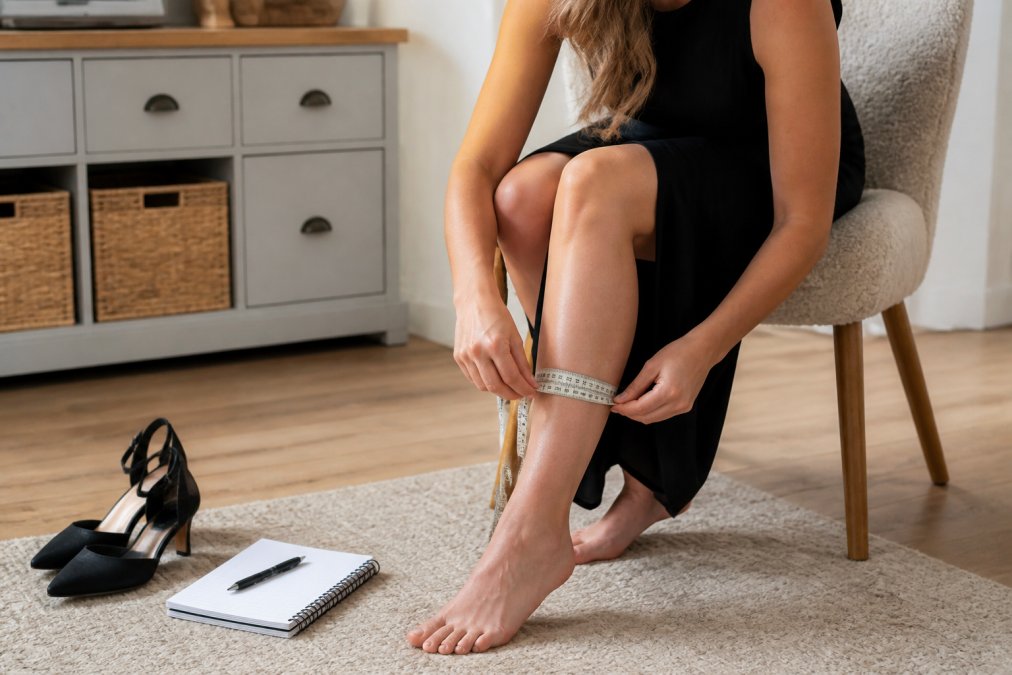
Tools You Need for an Accurate Measurement
You need a flexible measuring tape, a mirror or a second person, and something to record your numbers. A fabric sewing tape works best because it wraps smoothly around the curve of your leg.
Avoid a stiff metal tape measure, it won't follow your calf's contour and will read too small.
Measuring Both Calves at the Widest Point
Stand with weight evenly distributed, feet flat, and measure each leg separately. Most people have one calf slightly larger, and boots must accommodate the bigger one.
- Wrap the tape around the widest part of your calf, usually a few inches below the knee
- Keep the tape snug but not tight, level all the way around
- Record the number in inches, then repeat on the other leg
- Measure again at the end of the day, when legs are at their largest
That final step matters: calf size shifts with activity and swelling, so an evening measurement is the honest one.
Understanding Shaft Width and Boot Height
Shaft width is the circumference of the boot opening; boot height is the distance from the arch to the top of the shaft. Both appear on a good size chart and both change how a boot fits.
A boot labeled "wide calf" might offer a 16- to 18-inch shaft, while extra-wide options push past 20 inches (peer-reviewed research). But "wide calf" isn't standardized, so the same label means different things at different retailers.
Boot height interacts with this in a way that's easy to overlook. A knee-high boot sits at the widest part of the calf and needs the most room; a mid-calf stops below that point and is more forgiving; an over-the-knee style must clear the calf entirely.
Best Materials for Wide Calf Boots: Leather vs. Stretch
Leather holds its shape and ages well but offers little give. Stretch materials move with your leg and forgive a wider calf, though they can lose structure over time. The right choice depends on whether you prioritize durability or flexibility.
| Material | Stretch | Shape Retention | Best For |
|---|---|---|---|
| Full-grain leather | Minimal | Excellent | Structured, long-term wear |
| Stretch faux leather | High | Moderate | Wide calves, all-day comfort |
| Vinyl | Moderate | Good | Smooth finish, easy cleaning |
| Elastic gore panels | High (at panel) | Good | Adjusting fit at the ankle |
A common mistake is buying leather boots a half size up to gain calf room, that only makes the foot too loose and doesn't solve the shaft problem.
How Stretch Panels Actually Create Room
Where a stretch panel sits on the shaft changes what it does. A full-length back panel from heel to top gives the most expansion, often adding two to three inches of effective circumference (peer-reviewed research). A short ankle gore adds flex for walking but does almost nothing for calf width. A side panel up the outer shaft splits the difference.
In product descriptions, look for "full-length stretch panel," "back gore," or "elasticized shaft" rather than just "stretch." A two-inch ankle gore is not a wide-calf boot, it's a comfort feature on a standard shaft.
Leather Break-In: What to Expect and What Not To
Leather does loosen with wear, but less than most shoppers hope. A full-grain leather shaft typically relaxes a quarter to a half inch at the calf after several wears, mostly at flex points like the ankle and back of the knee (peer-reviewed research). It will not turn a 15-inch shaft into a 17-inch one.
What leather does well is hold its shape once formed to your leg, which is why a leather boot that fits on day one tends to look better over time than a stretch boot. The trade-off: leather gives almost no margin for error at the calf, if the shaft is too small, break-in won't fix it.
The Combination That Works Best for Wide Calves
The most forgiving construction for a wide calf is a leather or faux-leather shaft with a full-length stretch panel at the back. You get leather's structure and finish on the visible front and sides, plus hidden stretch expansion at the back. Most wide-calf-specific brands build around this configuration.
Boot Sleeves for Wide Calves: A Flexible Alternative
Boot sleeves are stretch covers that slip over an existing pair of heels to create the look of a full boot, sized by leg circumference rather than shoe size, a single design choice that solves the fit problem standard boots create.
How Boot Sleeves Work with Your Existing Heels
A boot sleeve pulls over the shoe and up the leg, forming a continuous shaft. Because sizing is based on your calf and thigh measurements, you're not limited by whatever shaft width a retailer stocks.

Bootsy- The Boot Sleeve builds its sleeves this way, with sizing that runs from 14 to 60 inches around the thigh and calf. The Mini-The Boot Sleeve in Mid-Calf is a good starting point for anyone testing the concept, and the Vamp-The Boot Sleeve in Thigh High covers the over-the-knee look.
Most shopping guides assume you have to find a boot that fits. A sleeve flips the equation: you already own the shoe, and the sleeve adapts to you.
Comfortable Boots for Wide Calves: Features That Matter
Comfort in a wide-calf boot comes down to four things: shaft width matching your measurement, a stretch panel for movement, a supportive footbed, and a walkable heel height. Miss one and the boot sits in your closet.
Start with the footbed. Arch support and cushioning determine whether you can wear a boot all day, and a synthetic lining affects breathability more than most shoppers expect. A beautiful shaft with a flat, unsupportive footbed will still hurt.
Then check the closure. A zipper with an adjustable buckle gives two ways to fine-tune fit; a zipper alone leaves you with whatever the factory decided.
Heel height is the last piece. A block heel distributes weight better than a thin stiletto, and ankle support improves as the heel gets lower and wider. If you're on your feet for hours, that trade-off is worth making.
Styling Wide Calf Boots for Everyday and Special Occasions
Styling wide-calf boots is less about hiding your legs and more about choosing silhouettes that work with your proportions. A tapered ankle creates a clean line; a slouchy shaft adds volume you may not want.
For everyday wear, pair mid-calf boots with straight-leg jeans or a midi skirt that breaks just above the boot opening. For evenings, an over-the-knee boot over opaque tights creates a long, continuous line.
Color does real work too. A boot in the same tonal family as your outfit lengthens the leg; a contrasting boot draws the eye to the shaft. Neither is wrong, knowing the effect lets you choose deliberately.
Boot sleeves make this kind of styling flexible. The Croc-The Boot Sleeve in Thigh High brings a textured animal print to an outfit you already own, and the Best-The Boot Sleeve in Thigh High keeps things classic in black. Swapping the sleeve changes the entire look without a new shoe purchase.

Return Policies and Shipping for Wide-Fit Boots
Return policies matter more for wide-fit footwear than almost any other purchase, because fit is hard to predict from a size chart. Before buying, check three things: the return window, who pays return shipping, and whether sale items are excluded.
Many retailers offer a 30-day window, but some exclude discounted merchandise, exactly the category wide-calf boots often fall into. Read the fine print before checkout, not after.
Why Wide-Fit Returns Are Different
A standard-width boot that doesn't fit usually fails at the foot, too long, too narrow, wrong arch. A wide-calf boot that doesn't fit usually fails at the shaft, meaning the foot fit was fine and a single measurement triggered the return. That distinction tells you what to test first when the box arrives.
Try the boot on over the socks or tights you'll wear with it, at the end of the day, and zip it fully before deciding. If the shaft closes but the foot slips, that's a foot-size problem, a different size in the same style may solve it. If the shaft won't close at all, no size swap helps; return it and look for a wider shaft or stretch-panel construction.
Shipping Costs and the Real Cost of Trial and Error
Return shipping is where wide-fit shopping gets expensive. Some retailers provide a prepaid label, some deduct the cost from your refund, and some charge a flat restocking fee on footwear. Return shipping commonly runs several dollars, and a restocking fee adds more, order two sizes to compare and that cost can double.
A practical approach: order from retailers offering free return shipping on footwear, even at a slightly higher upfront price. The math favors the free-return option once you account for one or two returns.
What to Confirm Before You Check Out
- The return window in days, counted from delivery, not order date
- Whether return shipping is prepaid, deducted, or your responsibility
- Whether sale, clearance, or final-sale items are returnable
- Whether exchanges are free or treated as a return plus a new order
- Whether the boot must be unworn outdoors, with tags attached
Screenshot the policy page before ordering. Policies change, and having the version you agreed to makes a return dispute easier to resolve.
Why Sleeves Change the Return Math
For boot sleeves, the calculation is simpler. Sizing is based on your own measurements rather than a manufacturer's guess, so there's less trial and error. A flexible tape and an honest measurement do most of the work before ordering, making the return rate on a correctly measured sleeve far lower than on a guessed boot size.
Frequently Asked Questions
What boots look good on big calves?
Boots with a shaft that matches your calf circumference look best. Mid-calf and knee-high styles with stretch panels or elastic gore accommodate muscular calves without gaping. Boot sleeves for wide calves also work well because they conform to your leg shape rather than forcing a fixed shaft width. Look for styles with a tapered fit at the ankle and enough room at the widest part of your calf.
How do I measure my calf for boots?
Wrap a flexible measuring tape around the widest part of your calf, usually about 2 to 3 inches below the knee crease. Keep the tape snug but not tight. Measure both calves and use the larger number. Write down the measurement in inches. Compare it to the boot shaft width listed on the retailer's size chart, and add half an inch for comfort if you plan to wear thick socks.
Are there accessories to help boots fit wider calves?
Yes. Boot sleeves for wide calves are a practical option. Bootsy's boot sleeves fit calf and thigh measurements from 14 to 60 inches and slip over your existing heels to create a custom-fitting boot. The Mini-The Boot Sleeve in Mid-Calf ($29.99) and the Vamp-The Boot Sleeve in Thigh High ($35.99) both use stretch faux leather or vinyl that adapts to your leg shape without zippers or buckles.
What store carries wide calf boots?
Many retailers now offer wide calf and extra-wide calf options, but sizing varies by brand. Online stores often have the best selection because you can filter by shaft width. Always check the retailer's size chart and return policy before ordering. If you want a fit that works with shoes you already own, Bootsy's boot sleeves provide a size-inclusive alternative that ships directly to you.
Finding boots that fit a wider calf shouldn't require a dozen returns or a compromise on style. Bootsy- The Boot Sleeve was built for exactly this problem, with a patent-pending design sized by calf and thigh measurements from 14 to 60 inches rather than shoe size. The stretch faux leather and vinyl sleeves work over heels and many flats, turning shoes you already own into mid-calf or thigh-high boots in seconds. Get started with Bootsy- The Boot Sleeve and stop shopping around the fit problem.
0 comments