

Last Updated: October 22, 2026
Quick Summary
To find wide calf boots with arch support, measure your calf circumference and foot length first, then check each listing for both a shaft circumference that clears your calf and a named footbed feature like a contoured or removable insole. Wide-fit and wide-calf solve different problems, so verify both specs before buying.
- Measure your calf at its widest point seated and standing, and write the number in centimeters.
- Wide-fit boots add room in the footbed; wide-calf boots add room in the shaft.
- Look for a contoured footbed, removable insole, or shank rather than vague comfort wording.
- Search reviews for arch and insole to confirm support is real before buying.
- Test boots indoors on carpet with your socks and orthotic before the return window closes.
Table of Contents
- Start With Two Measurements: Calf and Foot
- How to Measure Calf Circumference for Boots
- Wide-Fit Boots vs. Wide-Calf Boots: They Are Not the Same
- How to Spot Boots With Arch Support Before You Buy
- Insole Compatibility and Modification Options
- Your Wide-Calf Boot Fit Guide: Shaft, Height, and Closures
- Try-On Checklist and Return-Policy Rules
- A Sizing Alternative When Standard Wide Calf Boots Fail
- Frequently Asked Questions
Start With Two Measurements: Calf and Foot
Finding wide calf boots with arch support starts with two numbers: your calf circumference and your foot length. Most shoppers only know their shoe size, and that is exactly why so many boots fail. This guide from Bootsy walks you through both measurements, then shows you how to check for real support before you spend a dime.
Here is the core problem. A boot can fit your calf and still wreck your feet, or support your arch and refuse to zip. The two fit systems are separate, and most brands only solve one.
Below, we will show you exactly how to measure both, read a product page like a fit tester, and test boots at home before the return window closes.
How to Measure Calf Circumference for Boots
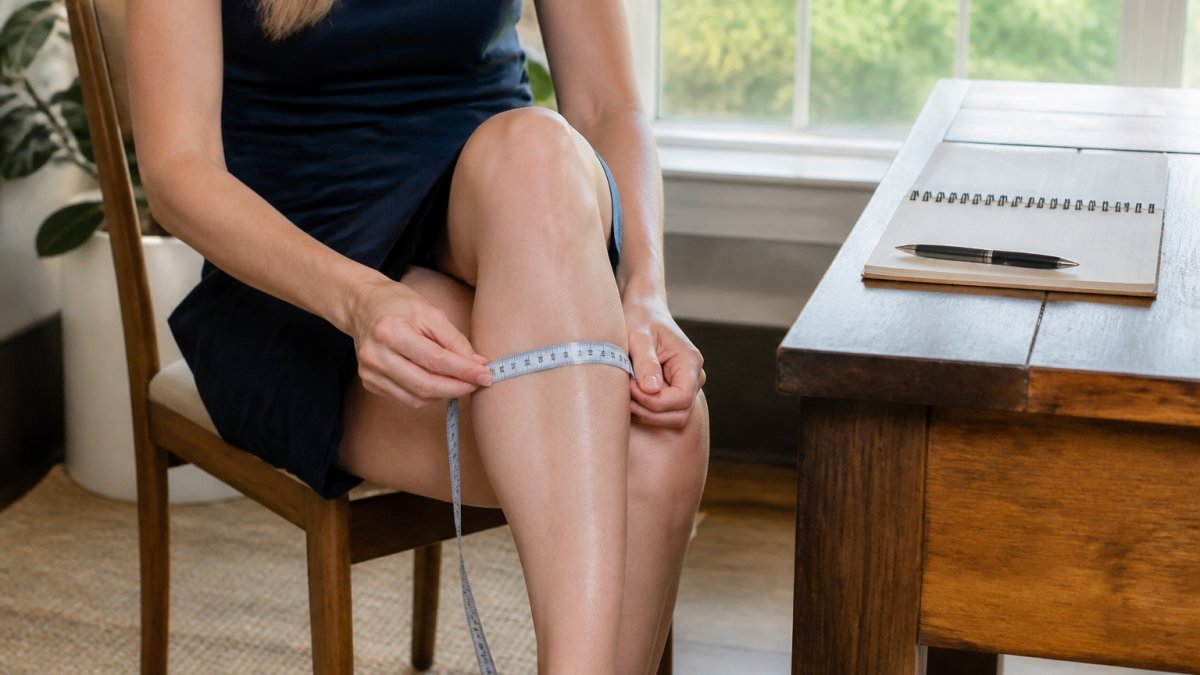
Measuring calf circumference for boots takes two minutes and a soft tape. Wrap the tape around the widest part of your calf, usually a few inches below the knee, and keep it snug but not tight. Write the number down in centimeters.
Do it while seated, then again standing. Calf size shifts when you stand, and boots are worn upright.
Measuring Foot Length, Width, and Instep at Home
Stand on a sheet of paper with your heel against a wall. Mark the tip of your longest toe, then measure heel to mark for length.
For width, measure across the widest part of the ball of your foot. For instep, wrap the tape over the top of your foot at its highest point, from the floor on one side to the floor on the other.
- Length: heel to longest toe, standing
- Width: across the ball of the foot
- Instep: over the top of the foot, floor to floor
Measure both feet. Most people differ slightly, and you should fit the larger one.
Wide-Fit Boots vs. Wide-Calf Boots: They Are Not the Same
Wide-fit boots and wide-calf boots solve different problems. Wide-fit boots add room in the footbed for a wide foot or high instep. Wide-calf boots add room in the shaft for a larger calf.
This is where most shoppers get burned. You order a wide-width boot, assuming the shaft will fit, and it will not zip. Or you buy an extra-wide calf boot and your toes are pinched.
Check both specs on every product page:
- Foot width: listed as W, WW, or wide
- Shaft circumference: listed in inches or centimeters
- Shaft height: how far up the leg the boot reaches
If a listing gives only one, ask before buying.
How to Spot Boots With Arch Support Before You Buy
Boots with arch support name the feature, not the vibe. Look for a cushioned footbed, a removable insole, or wording like "arch support" and "contoured footbed" in the description. Vague phrases like "comfort technology" tell you nothing.
A cushioned footbed is the layer under your foot that absorbs impact. A removable insole lets you swap in your own orthotic. Both matter for all-day walking comfort.
Reading Product Descriptions and Photos Like a Fit Tester
Start with the spec list. Real support shows up as named parts: a contoured footbed, a padded heel cup, a shank for stability. If the page only says "cushioned," assume light padding, not arch support.
Then zoom the photos. Look for a side cutaway or an insole shot. A visible arch curve and a deep heel cup are good signs. Flat, thin insoles are not.
A Step-by-Step Verification Method
Most product pages separate calf-fit language from foot-support language, so you have to evaluate both on the same listing. Use this sequence every time:
- Find the footbed spec. Search the page for "footbed," "insole," "midsole," and "shank." A contoured footbed or a shank (a stiff layer under the arch) signals structural support. "Memory foam" alone signals cushioning, which compresses and does not hold an arch.
- Check removability. If the insole is described as removable, you can substitute your own orthotic. If it is glued in, the boot's built-in shape is what you get.
- Read the heel counter. A padded or reinforced heel cup stabilizes the foot and takes pressure off the arch. Look for "heel cup," "heel counter," or "padded collar" in the spec list.
- Inspect the outsole. A shank or a firm midsole reduces flex under the arch. Photos that show a rigid waist, the narrow middle of the sole, are a better sign than a sole that bends easily in the hand.
- Cross-check reviews. Search the reviews for "arch" and "insole." Shoppers with high arches mention support when it is real and complain when it is missing. A pattern of "flat inside" comments is a red flag.
What the Terms Actually Mean
- Contoured footbed: the insole has a raised arch and a cupped heel rather than a flat surface.
- Removable insole: the factory insole lifts out, leaving room for an aftermarket orthotic.
- Built-in arch support: the boot's midsole or shank is shaped to support the arch; it cannot be removed.
If a listing uses only cushioning language and shows no insole photo, treat the arch support as unverified and plan to add your own insole, which brings us to compatibility.
CROC | Chocolate Croc Thigh-High Boot Sleeve | XS–6X Thigh & Calf Fit →
Insole Compatibility and Modification Options
Insole compatibility decides whether a supportive boot stays supportive. If the factory insole is removable, you can drop in your own orthotic and keep the arch support you already trust.
Check three things before buying:
- Removable insole: stated in the description
- Depth: enough room so your orthotic does not crowd the toes
- Heel height: a flatter heel is easier to fit an orthotic into
For a boot that is snug in the calf but fine in the foot, a stretch panel or adjustable closure can add room without changing the footbed. That keeps your support intact while the shaft gives.
Boot Volume: The Number Nobody Lists
Boot volume is the interior space above your foot. Adding an insole takes up volume, and a boot that fit with the factory insole can become tight across the instep or push your heel up. A common pattern is that a thick orthotic needs roughly a half size more room in the toe box and instep than the factory insole allowed.
Signs a boot has enough volume for an orthotic:
- The description mentions a removable insole or "orthotic-friendly" design.
- The boot has a roomy toe box or is offered in a wide width.
- Reviews mention swapping in insoles without sizing up.
Modification Options, Ranked by Risk
- Swap the insole (lowest risk). Remove the factory insole and insert your orthotic. Keep the factory insole in case you return the boot.
- Add a thin arch support under the factory insole (moderate risk). A slim arch cookie can add support without much volume, but it can shift the fit.
- Size up to make room (moderate risk). Sizing up adds volume but may loosen the heel and calf fit.
- Stretch the shaft (higher risk). A cobbler can stretch leather at the calf, but this does not change footbed volume and may void the return policy.
Before you modify anything, test the boot with your orthotic indoors on carpet and keep the original packaging. Many return policies require unworn boots with tags, and modifications can disqualify a return.
Your Wide-Calf Boot Fit Guide: Shaft, Height, and Closures
A wide-calf boot fit guide comes down to three specs: shaft circumference, shaft height, and closure type. Match all three to your measurements and returns drop fast.
Shaft circumference must clear your calf measurement with a little room to move. Shaft height should land where you want it on the leg, mid-calf or knee-high. Closures decide how forgiving the fit is.
| Feature | What to Check | Why It Matters |
|---|---|---|
| Shaft circumference | At or above your calf measurement | Prevents pinch and gaping |
| Shaft height | Matches your leg length | Avoids cutting or slouching |
| Closure type | Zip, stretch panel, laces | Adds adjustable fit |
| Foot width | W or WW if you have a wide foot | Relieves toe pressure |
| Insole | Removable or cushioned | Preserves arch support |
A full-length zip closure helps, but only if the shaft is wide enough to close. A stretch panel adds give at the calf. Laces and buckles offer the most adjustable fit.
Try-On Checklist and Return-Policy Rules
Test boots indoors, on carpet, the day they arrive. Wear the socks you plan to pair with them and walk for ten minutes. Then run this checklist:
- Boot zips or closes without force
- Calf has room to flex when you sit
- Toes have space to wiggle
If any box is unchecked, return them. Read the return policy first: many brands require unworn boots with tags, and some charge restocking fees. Keep the box and paperwork until you are sure.
A Sizing Alternative When Standard Wide Calf Boots Fail
Sometimes standard wide calf boots just will not fit, no matter how carefully you measure. That is where a different approach helps.
The idea is simple. You keep the shoes that already fit and support your feet, then add a stretch faux leather or vinyl sleeve over them.
- MINI mid-calf sleeve: $29.99, XS-4X calf fit
- BEST black thigh-high sleeve: $35.99, XS-6X thigh and calf fit
- CROC chocolate thigh-high sleeve: $35.99, XS-6X thigh and calf fit
Because the sleeve sizes by your leg, your arch support comes from the shoe underneath. That solves the fit problem and the support problem at once.

Frequently Asked Questions
How do I measure my calves for wide calf boots?
Wrap a soft measuring tape around the widest part of your calf, usually 3 to 5 inches below the back of your knee, and keep it snug but not tight. Measure both legs standing up, since calves can differ by half an inch or more, and use the larger number. Also note your shoe size and foot width. Compare that calf number to each brand's size chart before ordering, because a 16-inch calf in one label may be a 17-inch in another.
Does wide fit mean wide calf?
No. Wide-fit boots usually refer to a wider foot bed or toe box, which helps people with wide feet or bunions. Wide-calf boots refer to a larger shaft circumference around the leg. A boot can be wide-fit and still have a narrow calf, or have a generous calf and a standard foot width. Check both numbers separately: foot width in the product specs, and shaft circumference in the size chart.
Can insoles add arch support to wide calf boots?
Yes, if the boot has a removable insole or enough depth in the toe box. Pull out the factory insole and slide in an over-the-counter arch support, trimming it to match the original shape. Look for boots described as having a removable footbed, since glued-in insoles are harder to replace. If the boot feels tight across the instep after adding an insole, size up half a size or choose a thinner support.
How can I tell if boots have enough arch support?
Look for a contoured footbed with a raised medial arch, a firm heel counter, and a cushioned heel rather than a flat foam slab. Product photos taken from the side often show the footbed curve. Descriptions that mention arch support, a removable insole, or orthotic-friendly construction are stronger signals than generic comfort claims. If you need prescription orthotics, confirm the boot has a removable insole and enough depth before buying.
If wide calf boots keep failing you at the zip, the problem is the sizing system, not your legs. Bootsy sizes by your actual measurements, so you get a fit that works with the supportive shoes you already own. Start with our fit guide, then choose the MINI for mid-calf looks or the BEST and CROC for thigh-high styles.
0 comments