

Table of Contents
- Why Boot Shafts Fit Wrong on Shorter Legs
- How to Measure Boot Shaft Height Before You Alter Anything
- Boot Shaft Alterations: What a Cobbler Can and Cannot Change
- How to Make Leather Boots Tighter Around the Calf
- Shortening the Shaft: Steps, Risks, and Fit Consequences
- Cobbler Boot Shaft Alteration Cost, Turnaround, and Questions to Ask
- Tailoring vs. Styling: A No-Sew Alternative for Shorter Legs
- Frequently Asked Questions
Last Updated: October 16, 2026
Why Boot Shafts Fit Wrong on Shorter Legs
Boot shafts are built for average leg lengths, not yours. That single fact explains almost every fit problem shorter women run into: the top of the boot lands above the knee, the shaft wrinkles at the ankle, and the calf feels loose even when the foot fits fine. Boot shafts are the vertical tube of a boot that runs from the heel to the top opening, and their height is fixed at the factory. At Bootsy, we hear from petite shoppers constantly who love a boot's look but can't wear it because the proportions are off. The good news: some shafts can be tailored, and some don't need to be.
How to Measure Boot Shaft Height Before You Alter Anything
Measure before you cut, stretch, or buy anything. A tailor or cobbler needs four numbers, and so do you: your leg length, your desired shaft height, your calf circumference, and the boot's current shaft height. Without all four, you are guessing at what to change.
Measuring Shaft Height, Calf Circumference, and Shaft Diameter
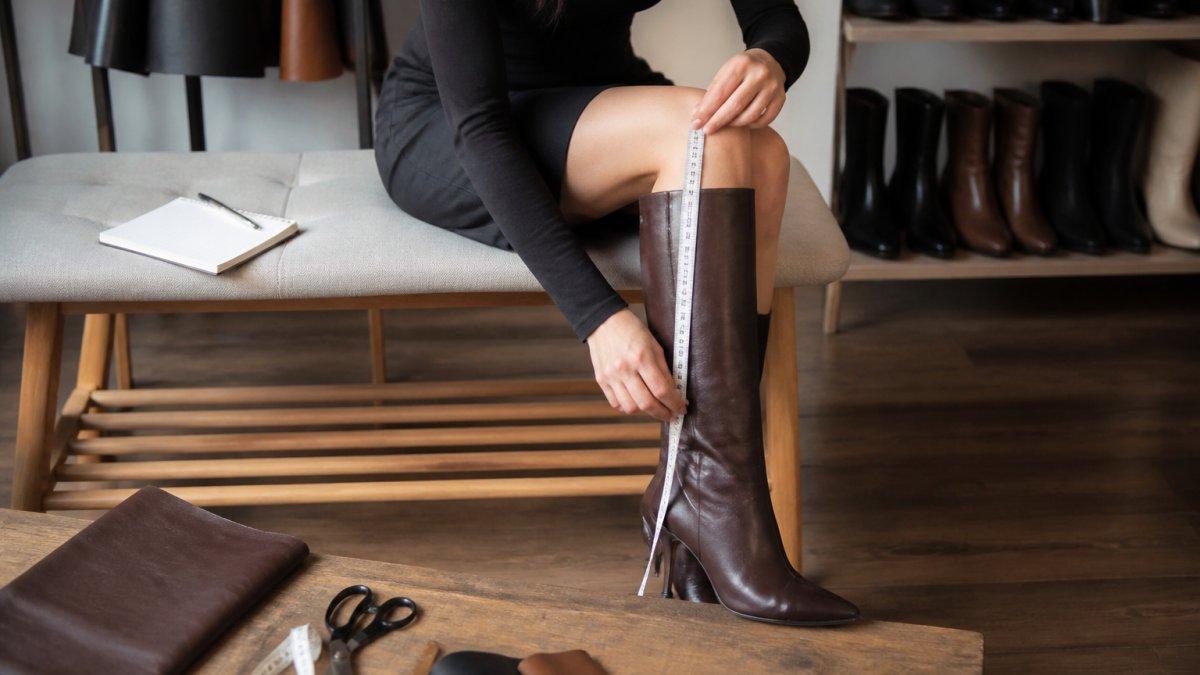
Boot shaft height is the distance from the top of the heel to the highest point of the boot opening. Shaft diameter is the width of that opening, and calf circumference is the distance around the widest part of your calf. Leg length here means the distance from the floor to the back of your knee, which sets the ceiling for where a shaft can sit without restricting movement.
Here's how to get each number:
- Sit on a chair with your bare leg flat and your foot on the floor.
- Run a flexible tape from the floor to the back crease of your knee. Write this down as your leg length.
- Run the tape from the floor to the height you want the boot top to sit. A common target for shorter legs is 1 to 2 inches below the knee crease, which keeps the shaft from digging in when you sit.
- Wrap the tape around your calf at its widest point.
- Measure the boot opening across its widest line, then double it for circumference.
- Measure the boot's current shaft height from the top of the heel to the top of the opening.
- Subtract your desired shaft height from the boot's current shaft height. That difference is how much material a cobbler would need to remove.
Deciding What to Alter Before You Commit
Once you have the four numbers, the decision is simpler than it looks. If your desired shaft height is more than 2 inches below the boot's current height, shortening is usually the right move. If the difference is 1 inch or less, a styling fix such as a different trouser hem or a shaft-positioning trick may be enough. If your calf circumference is more than 1 inch smaller than the boot opening, tightening the calf is the priority, and shortening may not be needed at all.
Write the four numbers on a card and bring it to the cobbler. A measurement-first conversation prevents the most common mistake: paying for a shaft shortening when the real problem was circumference.
Boot Shaft Alterations: What a Cobbler Can and Cannot Change
A cobbler can shorten a leather shaft and take in a calf, but they cannot add material that isn't there. That's the rule that decides everything.
Feasibility by Boot Construction: Leather, Rubber, and Synthetic Shafts
| Shaft Material | Can Shorten? | Can Tighten Calf? | Notes |
|---|---|---|---|
| Smooth leather | Yes | Yes | Easiest to work with |
| Suede | Yes | Sometimes | Shows stitch marks |
| Rubber | Rarely | No | Seams don't reseal |
| Synthetic | No | No | Material frays |
Leather construction gives a cobbler the most room to work. Rubber and most synthetic shafts resist alteration because the seams can't be resewn cleanly.
How to Make Leather Boots Tighter Around the Calf
Tightening a calf is usually easier than shortening a shaft. A cobbler can add a hidden elastic panel or take in the back seam to reduce the shaft circumference. This fixes gaping without changing the height.
You can also try these at-home methods first:
- Wear thick socks and warm the leather with a hair dryer on low.
- Use a boot shaper or rolled towel to hold the shaft shape overnight.
- Take the boots to a cobbler if the leather won't budge.
Shortening the Shaft: Steps, Risks, and Fit Consequences
Shortening a shaft works, but it changes more than height. A cobbler cuts the top, removes a section, and resews the opening. The steps look simple:
- Mark the new top line on both boots.
- Cut evenly around the shaft.
- Resew or rebind the opening.
- Recheck the fit with the boots on.
The risks matter more than the steps. A shortened shaft often loses its original shape, and the calf fit can loosen because you've removed the narrowest part of the tube. Shortening is also a one-way change. If the new height feels wrong, you can't add the leather back.
How Boot Construction Changes What Is Possible
Not every shaft shortens the same way. The construction details decide whether the job is straightforward, risky, or not worth doing.
- Pull-on leather with no zipper: The easiest candidate. A cobbler can cut the top, remove a section, and resew or rebind the opening. The main risk is losing the original top-line shape.
- Zippered shafts: The zipper usually runs from the top opening down part of the shaft. Shortening the shaft means the zipper must be shortened or repositioned, which is more labor and can leave the zipper pull sitting at an awkward height. Ask whether the zipper can be shortened cleanly before agreeing to the job.
- Lined shafts: A lining adds a second layer to resew. If the lining is glued rather than stitched, shortening can leave the lining loose inside the boot. A cobbler may need to reattach the lining, which adds cost and turnaround time.
- Decorative stitching, buckles, or straps near the top: These details are often positioned relative to the original top line. Shortening can crowd them or remove them entirely. If the detail is what you love about the boot, shortening may not be the right answer.
- Western and cowboy boots: The shaft often has a deep scallop or collar. Shortening flattens that shape, and the pull straps may need to be moved or removed. Many cobblers will decline this job because the result rarely matches the original silhouette.
- Rubber and most synthetic shafts: The seams cannot be resewn cleanly, so shortening is rarely possible. A cobbler may refuse the job outright.
Fit Consequences Beyond Height
Shortening changes how the boot sits on your leg, not just where the top lands. Three consequences come up most often.
MINI | Chocolate Croc Mid-Calf Boot Sleeve | XS–5X Calf Fit →
First, the calf fit can loosen. The narrowest part of the shaft is usually near the top, so removing that section can leave the remaining tube wider than your calf. If the boot already gaped, shortening can make it worse.
Second, the boot's balance can shift. A taller shaft adds weight and structure above the ankle. Removing height can make the boot feel less supportive, especially in a tall leather boot that relied on the shaft for stability.
Third, closure placement changes. If the boot has a zipper, buckle, or strap, its position relative to your knee and calf moves. A zipper that once ended below the knee may now end at mid-calf, which can look intentional or awkward depending on the design.
Questions to Ask Before You Agree to Shortening
- Can this specific shaft be shortened without losing its shape?
- Will the calf fit change after the alteration, and can you tighten it at the same time?
- How will the zipper, lining, or decorative details be handled?
- What's the turnaround time?
- What happens if the result doesn't fit?
A good cobbler will tell you when a job isn't worth doing. If they say no, believe them.
Cobbler Boot Shaft Alteration Cost, Turnaround, and Questions to Ask
Cobbler boot shaft alteration cost varies by shop and by how much work the leather needs. Prices depend on your local market, the boot material, and whether the cobbler resews a lining. Call ahead and ask for a quote before you commit.
Ask these questions before you hand over your boots:
- Can this specific shaft be shortened without losing its shape?
- Will the calf fit change after the alteration?
- What's the turnaround time?
- What happens if the result doesn't fit?
A good cobbler will tell you when a job isn't worth doing. If they say no, believe them.
Tailoring vs. Styling: A No-Sew Alternative for Shorter Legs
You don't always need a cobbler. A boot sleeve gives you the look of a taller boot without cutting anything. Bootsy's patent-pending sleeves slip over your existing heels and dress shoes, and they size by calf and thigh circumference instead of shoe size.

Our Bootsy MINI mid-calf boot sleeve fits calves from XS to 5X, so a shorter leg gets a mid-calf line that actually lands where it should. The Bootsy CROC thigh-high sleeve works the same way for a taller look, sizing by thigh measurement up to 60 inches. Both are washable, travel-friendly, and let you skip the tailor entirely.
Frequently Asked Questions
Can a cobbler shorten the shaft of a boot?
Yes, many cobblers shorten boot shafts, but the job depends on construction. Leather shafts with a back seam or zipper are the most straightforward to alter, since the cobbler can remove length from the top and re-stitch the opening. Rubber boots and molded synthetic shafts usually cannot be shortened cleanly. Expect to lose the original top edge finish, and ask whether the boot opening needs to be re-tapered so it still grips your calf after the cut.
How much can a leather boot shaft be shortened?
Most cobblers will remove up to 2 inches without rebuilding the whole shaft, and some will go further if the boot has a full-length back zipper. Cutting more than that often changes where the boot hits your leg and can leave the shaft too wide at the new opening. Bring the boots in wearing the pants or tights you plan to pair them with, and ask the cobbler to pin the new height before any cutting happens.
How do you measure boot shaft height for shorter legs?
Measure from the inside of the heel to the top of the boot shaft while the boot sits flat. Then measure your own leg from the floor to the point where you want the boot to end, usually just below or above the knee. Compare the two numbers. If the boot shaft is more than an inch or two taller than your target, tailoring or a shorter shaft style will fit your proportions better.
Is it better to tailor boots or choose a shorter shaft?
Tailoring makes sense when you love the boot and the leather is worth the investment. A cobbler boot shaft alteration cost typically runs $40 to $100 per pair, which can be hard to justify on a $60 pair. If you are still shopping, look for mid-calf or ankle booties instead. If you already own heels you love, a boot sleeve sized by calf circumference gives you the tall boot look without cutting anything.
Shorter legs shouldn't limit your boot options. If a cobbler can't shorten your shaft without wrecking the fit, Bootsy offers a smarter path: our patent-pending boot sleeves turn your existing heels into mid-calf or thigh-high boots, sized by your calf and thigh measurements rather than shoe size. Choose from inclusive XS-5X sizing, washable materials, and a travel-friendly design. Get started with Bootsy and build the boot look that finally fits your legs.
0 comments