

Table of Contents
- Why Versatile Footwear for Travel Packing Beats a Shoe for Every Outfit
- How to Make Heels Look Like Boots With One Accessory
- Travel Shoe Packing Hacks That Actually Save Space
- Inclusive Fit Boot Sleeves: Sizing by Measurement, Not Shoe Size
- Comfort, Durability, and Weather: What to Check Before You Pack
- Comparison: Boot Sleeves vs. Packing Traditional Boots
- Frequently Asked Questions
Last Updated: September 10, 2026
Why Versatile Footwear for Travel Packing Beats a Shoe for Every Outfit
The case for versatile footwear for travel packing is simple: every extra pair of shoes taxes your luggage space, your back, and your morning decision-making. This guide covers why one adaptable pair beats five single-purpose pairs, and how boot sleeves turn heels you already own into boots you can pack flat.
Here's the tension most packing guides ignore. A traditional knee-high boot eats roughly a third of a carry-on's usable volume. Multiply that by three outfits and you've surrendered your bag to footwear. Boot sleeves flip the math: the shoe provides the sole and structure, the sleeve provides the shaft, and the shaft collapses into nothing when you're done.
Below, we'll show you exactly how to build a travel capsule around this logic, what to measure before you buy, and which packing techniques actually save space.
How to Make Heels Look Like Boots With One Accessory
You make heels look like boots by sliding a stretch boot sleeve over the shoe, creating a continuous shaft from the heel counter to mid-calf or thigh. The sleeve covers the shoe's upper, so the heel reads as a built-in boot heel rather than a separate shoe.

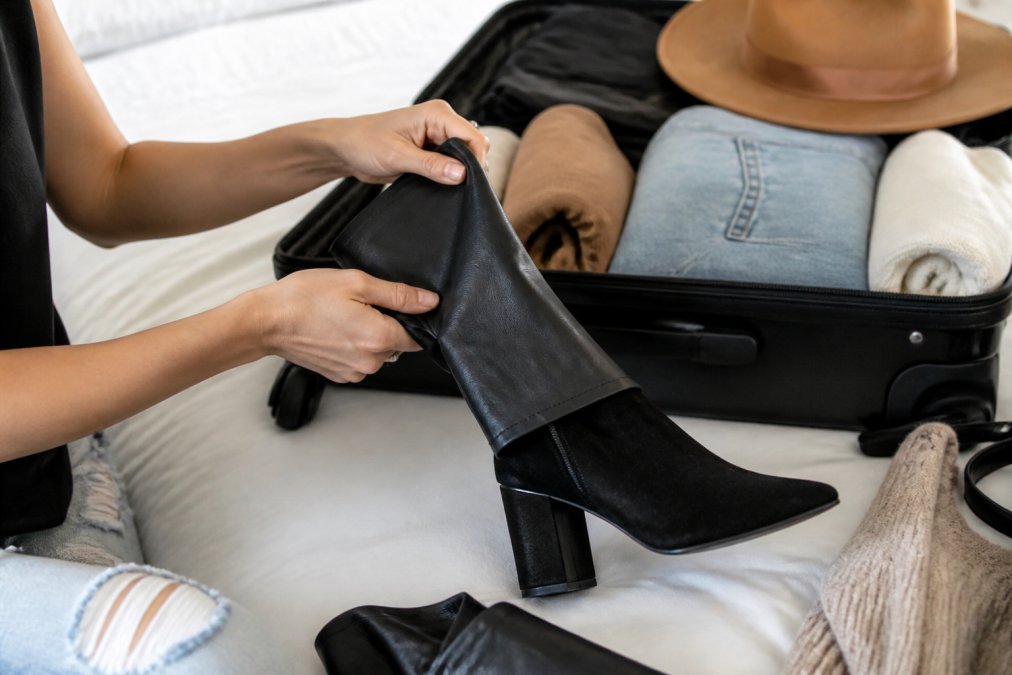
The effect works because the eye reads silhouette, not construction. A block heel under a stretch shaft looks similar to a manufactured boot from two feet away. Stiletto heels under a thigh-high sleeve can look top-heavy, so matching sleeve length to heel width is recommended.
What Boot Sleeves Are and How They Work
A boot sleeve is a tube of stretch material that fits over an existing shoe to create the visual shaft of a boot. Bootsy's patent-pending design uses high-quality stretch faux leather and vinyl, sized by thigh and calf circumference rather than shoe size. The sleeve grips the shoe and the leg, and the stretch holds it in place while you walk.
Matching Sleeves to Heel Styles
| Heel Style | Best Sleeve Length | Why It Works |
|---|---|---|
| Block heel | Thigh-high | Balances the wider heel base |
| Kitten heel | Mid-calf | Keeps proportion without tipping |
| Chunky platform | Mid-calf | Avoids a stacked, heavy line |
| Thin stiletto | Mid-calf | Thigh-high overwhelms a thin heel |
Travel Shoe Packing Hacks That Actually Save Space
The best travel shoe packing hacks reduce volume, not just weight. Sleeves roll or fold flat, which means the space a single pair of boots would consume can hold three or four sleeves instead. But volume is only half the equation, the other half is how the packed item behaves when you actually move through a trip.
Packing Techniques for Shoes and Sleeves
- Stuff socks and underwear inside shoe cavities before packing, a pair of crew socks fills the toe box and heel cup without adding a separate pouch
- Roll sleeves rather than folding them to avoid crease lines in the faux leather; a mid-calf sleeve rolls to roughly the size of a rolled T-shirt
- Place shoes sole-to-sole at the bottom of the bag where the base is widest, then build soft items around them
- Use a shoe bag for the shoes themselves, and lay sleeves flat against the bag's back panel so they conform to the frame instead of bulging
- Wear your bulkiest shoe on travel day and pack only the sleeves, the shoe on your foot costs zero bag volume
Weight and Luggage Space Math
A traditional knee-high boot has a fixed shaft that cannot compress, so it occupies a rigid block of space whether you pack one garment or ten around it. A sleeve has no rigid structure to protect, so it compresses to a fraction of that footprint. For a one-bag traveler, that difference is the entire argument: you carry the shaft you need and leave the rest at home.
A practical way to think about it: most carry-on guidance treats footwear as the single largest non-negotiable volume item in a bag. If you can convert that rigid block into something that folds flat, you free space for a second outfit layer, a laptop sleeve, or a toiletry kit that would otherwise ride in a personal item. The gain is not marginal, it is the difference between one bag and two.
Packing for Multi-Modal Transit
The packing plan has to survive the whole trip, not just the flight. A single itinerary often runs airport security, a long-haul flight, a rental car, and a day of walking on uneven ground. Sleeves handle that sequence better than a second pair of boots because they are removable at each stage:
- Security: wear the shoe through the checkpoint and keep sleeves in the bag; there is no boot shaft to pull off and re-lace
- Long-haul flight: slip sleeves off and treat the shoe as a flat or low-profile option for the seat, then reapply them on arrival
- Rental car and city walking: keep sleeves on for a polished look, or swap to flats without repacking anything
- Rugged or wet ground: leave the sleeves in the bag and wear the shoe alone, so you are not stretching faux leather over mud or gravel
That flexibility is the real packing hack. You are not choosing between a boot and a shoe for the whole trip, you are choosing per segment, and the sleeve is the only piece that lets you do it without a second pair.
Inclusive Fit Boot Sleeves: Sizing by Measurement, Not Shoe Size
Inclusive fit boot sleeves are sized by leg circumference, not shoe size, which is why they work for bodies that standard boot sizing ignores. Bootsy sizes from 14" to 60" in thigh and calf measurements, covering XS through 5X (the CDC).
What to Measure Before You Buy
Measure three things with a soft tape:
- Calf circumference at the widest point, usually a few inches below the knee
- Thigh circumference at the point where you want the sleeve's top edge to sit
- Shoe size to confirm compatibility, since Bootsy sleeves work with women's sizes 6-11
Comfort, Durability, and Weather: What to Check Before You Pack
Comfort and durability decide whether a sleeve survives a trip. Stretch faux leather and vinyl hold shape well, but they need the right shoe underneath, the right care between wears, and a realistic read on the climate you are packing for.
Arch Support, Cushioning, and All-Day Comfort
The sleeve doesn't provide arch support; your shoe does. That's the practical advantage of this system. If you already own a heel with cushioning and a supportive footbed, the sleeve inherits all of it. Choose travel shoes with a midsole you can stand in for hours, then let the sleeve handle the styling.
A common pattern among frequent travelers is to treat the shoe as the performance layer and the sleeve as the appearance layer. That split lets you invest once in a genuinely comfortable shoe, one with a removable insole you can swap for an aftermarket orthotic, and change the look without buying a second pair of boots. If you need extra arch support, look for a shoe with a removable footbed so you can insert your own; the sleeve will not interfere with it because it sits over the shoe's upper, not inside it (aofas.org).
Materials, Breathability, and Repairability
Breathability comes from the shoe, not the sleeve, so pair sleeves with mesh or moisture-wicking uppers when you're walking all day. On longevity: constant stretching stresses any material, so rotate between two sleeves rather than wearing one daily. Sleeves are washable, which extends their working life considerably compared with suede boots that need professional care.
The repairability angle offers an advantage over traditional boots. A leather boot with a worn sole or a broken zipper often means a cobbler visit, a wait, and sometimes a replacement because the shaft and the sole are one unit. With a sleeve system, the two components can be addressed independently. If the sleeve stretches out or snags, you replace the sleeve. If the shoe wears down, you resole or replace the shoe and keep the sleeve. That separation means you are not throwing away a whole boot because one part wore out.
A few care habits that extend sleeve life:
- Wash according to the care label and air-dry flat rather than hanging, which can distort the stretch
- Store sleeves rolled, not folded, to avoid permanent crease lines
- Keep a spare sleeve in rotation so no single piece takes daily stretch stress
- Wipe vinyl and faux leather with a damp cloth after dusty or rainy days
Matching Footwear to Climate
Climate changes which shoe you pair with the sleeve, and it changes whether you wear the sleeve at all:
- Hot and humid: choose a breathable mesh or knit shoe and expect to wear the sleeve less; moisture plus stretch material can feel clammy over a long day
- Cold and dry: a lined or insulated shoe works well under a sleeve, and the sleeve adds a layer over the ankle without the bulk of a full boot
- Rainy or slushy: keep the sleeve off in standing water, faux leather and vinyl are not waterproof, and repeated soaking shortens their life. Wear the shoe alone and change into the sleeve once you are indoors
- Mixed or unpredictable: pack two sleeves in different finishes so you can match the weather and the outfit without carrying a second shoe
Comparison: Boot Sleeves vs. Packing Traditional Boots
| Factor | Boot Sleeves | Traditional Boots |
|---|---|---|
| Packed volume | Folds flat | Rigid, fixed shape |
| Weight | Minimal | Adds noticeable luggage weight |
| Fit method | Thigh and calf measurement | Shoe size and calf width |
| Style range | One shoe, multiple looks | One look per pair |
| Cost | $29.99-$35.99 | Full boot retail price |
| Care | Washable | Often needs specialist care |
Bootsy's sleeves start at $29.99 for the Mini mid-calf in Chocolate Crocodile Print and $35.99 for thigh-high styles in Black faux leather, Deep Cherry vinyl, and Chocolate Crocodile. That's the entire footwear styling budget for a trip, versus the price of one pair of boots.
For multi-modal transit, the system shines: slip sleeves off at security, wear them through the airport, and swap to flats for the rental car without repacking anything.
Frequently Asked Questions
What are boot covers called?
Boot covers are commonly called boot sleeves. They are stretch fabric or faux leather tubes that slip over your existing shoes to create the look of a taller boot. Unlike full boots, boot sleeves have no sole or footbed, so you keep the comfort and arch support of shoes you already own. They are sold by leg circumference rather than shoe size, which makes them useful for travelers who want multiple boot styles without packing multiple pairs.
Are boot sleeves a good alternative to packing bulky boots?
For most trips, yes. A pair of thigh-high boots can take up a third of a carry-on, while a boot sleeve folds flat and weighs a few ounces. If you pack two sleeves and one pair of heels, you get a mid-calf and thigh-high look from the same shoes. The trade-off is that sleeves offer no foot support or weather protection, so you still need a practical walking shoe for rainy days or long sightseeing walks.
How do I make heels look like boots without buying new footwear?
Slip a stretch boot sleeve over your heel so the opening sits where you want the boot to end, then adjust the hem until the material sits smooth. Block heels and thicker pumps hold sleeves in place best because the sleeve grips the shoe body. Thin stilettos can work if the sleeve has enough stretch and a snug ankle section. This is one of the simplest travel shoe packing hacks because the sleeve rolls up small and adds almost no luggage weight.
How do I choose inclusive fit boot sleeves that actually stay up?
Measure your thigh and calf circumference at the widest point, not your shoe size. Sleeves sized by leg measurement, such as those covering 14 to 60 inches, fit a wider range of bodies than standard boot sizing. Look for a snug but stretchy ankle section, since that is what stops the sleeve from sliding down as you walk. A sleeve that bunches at the knee usually means the calf measurement is too loose.
How can I pack fewer shoes for a trip without sacrificing style?
Build your shoe list around one walking pair, one dressy pair, and one sleeve that changes the dressy pair's look. Wear the bulkiest shoes on travel days. Roll sleeves and stuff them inside shoes to save luggage space. Choose neutral colors like black or chocolate so one pair works with every outfit in your travel capsule. This approach keeps you to two pairs of shoes while still giving you a heel, a flat, and a boot option.
What should I check before relying on versatile footwear for travel packing?
Test the setup at home first. Walk around for an hour to confirm the sleeve stays in place and does not rub. Check that your heels have enough arch support and cushioning for the walking you plan to do. Confirm the material is breathable enough for your destination's climate, and check whether the sleeve is washable. Finally, weigh your packed shoes and sleeves against your airline's carry-on limit so nothing gets left behind at the gate.
Packing light and looking put-together shouldn't be a trade-off, and with the right accessory they aren't. Bootsy builds boot sleeves sized by your actual measurements, from 14" to 60", in stretch faux leather and vinyl that turn the heels you already own into thigh-high and mid-calf boots. Choose your size, pick your finish, and reclaim your carry-on. Get started with Bootsy and pack one bag without giving up a single look.
0 comments