

Table of Contents
- Why Waterproof Wide Calf Boots Matter for Winter
- How to Measure Calf Circumference for Boots
- Quick Comparison: Bootsy Boot Sleeves for Winter Weather
- MINI: Chocolate Croc Mid-Calf Boot Sleeve for Petite and Standard Calves
- CROC: Chocolate Croc Thigh-High Boot Sleeve with Extra-Wide Calf Fit
- BEST: Black Thigh-High Boot Sleeve for Maximum Warmth and Coverage
- Wide Calf Boots with Adjustable Shafts: Why Fit Matters More Than Size
- Winter Weather Protection: Waterproofing, Traction, and Warmth
- Frequently Asked Questions
Last Updated: October 10, 2026
Why Waterproof Wide Calf Boots Matter for Winter
Finding waterproof wide calf boots that actually fit is frustrating because most either squeeze your calves or gap at the back. Traditional boots force you into a rigid shoe-size model that ignores how legs vary in shape and measurement.
Calf circumference matters far more than shoe size for fit, comfort, and weather protection. This guide shows how to find waterproof wide calf boots that stay secure, keep moisture out, and match your leg measurements.
How to Measure Calf Circumference for Boots
Your calf circumference, not shoe size, determines whether a boot stays up, zips smoothly, and feels secure in snow or wet conditions.
Taking an Accurate Measurement
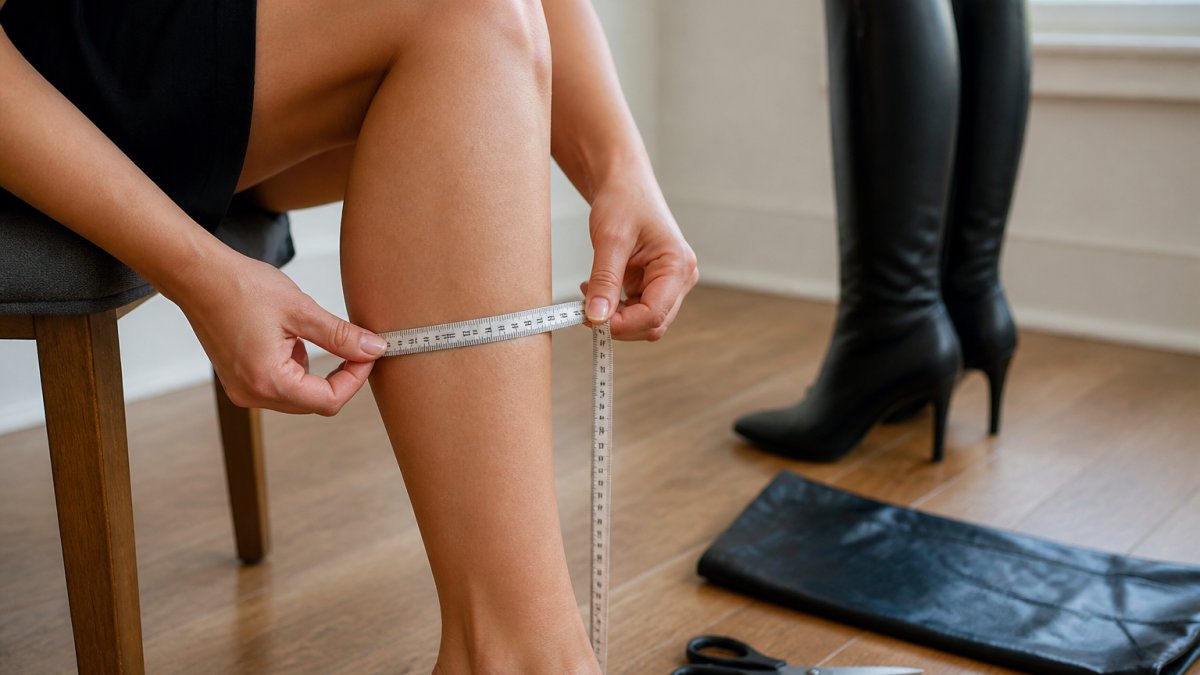
Wrap a soft measuring tape around the fullest part of your calf muscle while standing, snug enough to let one finger slip underneath. For extra-wide calf fit, also measure your thigh at its fullest point, usually 4-6 inches below the hip.

Accounting for Winter Clothing and Socks
Winter socks add 0.25 to 0.5 inches to your calf circumference. Thermal or wool-blend socks add even more bulk than cotton.
Measure while wearing the winter socks you'll actually use, or add 0.5 inches to your bare-leg measurement as a buffer.
If you plan to tuck pants into your boots, measure with pants on and tucked, or add 0.25 to 0.5 inches to account for the bunched fabric.
Accounting for Swelling and Seasonal Changes
Your legs swell throughout the day due to gravity, activity, and fluid retention, especially if you stand or walk for extended periods.
Measure in the evening when swelling is at its peak to ensure boots won't feel tight during active winter days.
Comparing Your Measurement to Boot Sizing
Compare your calf measurement directly to the boot's calf circumference specification, not the shoe size. Many "wide calf" boots still size by shoe size, meaning they have a fixed calf circumference that may not match your leg.
A size 10 "wide" boot might have a 15-inch calf circumference; if your calf measures 16 inches, it will be too tight. Always check the actual calf measurement.
Choosing boots by calf measurement eliminates the gap that lets cold air and moisture in around the shaft.
Quick Comparison: Bootsy Boot Sleeves for Winter Weather
Bootsy- The Boot Sleeve offers three options sized by your actual leg measurements for petite frames, standard builds, and extra-wide calves or thighs.

| Bootsy Option | Calf/Thigh Range | Boot Height | Best For | Price |
|---|---|---|---|---|
| MINI | XS-5X calf | Mid-calf | Petite legs, standard calves | $29.99 |
| CROC | XS-5X thigh & calf | Thigh-high | Wide calves, thick thighs | $35.99 |
| BEST | XS-5X thigh & calf | Thigh-high | Maximum warmth, all leg sizes | $35.99 |
All three are made from high-quality stretch faux leather and vinyl, designed to work with compatible women's heels and dress shoes in sizes 6-11. They're washable, reusable, and travel-friendly, meaning you can pack them instead of hauling full winter boots through airports or into small luggage spaces.
MINI: Chocolate Croc Mid-Calf Boot Sleeve for Petite and Standard Calves
The MINI offers mid-calf coverage for petite frames and standard to moderately wide calves without thigh-high coverage.
At $29.99, it's the most affordable option. The chocolate croc texture adds visual interest, and because it's sized by calf circumference, you get a fit that matches your measurements.
Just measure your calf, select your size, and the sleeve transforms any compatible heel into a polished mid-calf boot. It's compact for travel, washable, and works with heels you already own.
MINI | Chocolate Croc Mid-Calf Boot Sleeve | XS–5X Calf Fit →
CROC: Chocolate Croc Thigh-High Boot Sleeve with Extra-Wide Calf Fit
The CROC offers thigh-high coverage for thicker legs and thighs at $35.99, with select sizes accommodating thigh measurements up to 60 inches, a range traditional boots don't serve.
Choose this if you've struggled to find boots that zip up or stay secure around wider calves and thighs. Thigh-high coverage provides maximum protection, and sizing by leg measurement ensures a secure fit that doesn't gap or squeeze.
Thigh-high coverage provides better warmth retention and weather protection by fully covering your legs from shoe to thigh.
BEST: Black Thigh-High Boot Sleeve for Maximum Warmth and Coverage
The BEST is the premium option at $35.99, with black coloring that coordinates with any winter wardrobe and hides wear better than lighter colors.
Like the CROC, it offers thigh-high coverage and XS-5X thigh and calf fit, accommodating measurements up to 60 inches. The key difference is the color, black is less trendy than chocolate croc but more universally practical for professional settings, outdoor activities, and everyday wear.
If you're choosing between CROC and BEST, consider your wardrobe. Chocolate croc adds personality and works well with casual outfits and fashion-forward looks. Black is the safer choice if you need boots for work, travel, or situations where you want maximum versatility. Both provide the same fit precision and weather protection.
Wide Calf Boots with Adjustable Shafts: Why Fit Matters More Than Size
The fundamental problem with traditional waterproof wide calf boots is that they're still built around shoe size. A size 10 wide boot has a fixed calf circumference that may or may not match your actual leg. This creates two outcomes: either the boot fits your calf and gaps at the thigh, or it fits your thigh and squeezes your calf.
Boot sleeves solve this by sizing exclusively by leg circumference. You measure once, select your size, and the stretch construction adapts to your specific measurements. This approach works because it abandons the shoe-size model entirely.
When you wear a waterproof wide calf boot sleeve, the fit stays consistent throughout the day. There's no slipping, no gaps where cold air enters, and no pressure points from a rigid shaft that was designed for someone else's leg shape. This matters during winter activities, hiking, commuting, standing outside in cold weather, where a poor fit leads to discomfort and cold exposure.

Winter Weather Protection: Waterproofing, Traction, and Warmth
Waterproofing is the foundation of winter boot performance, but it's often misunderstood. Waterproof means water cannot penetrate the material; the boot keeps your feet and legs completely dry. Water-resistant means the material resists water for a time but will eventually allow moisture through with enough exposure.
For winter weather, true waterproof construction is essential. You're not just dealing with rain; you're facing snow, sleet, slush, and potentially standing water on sidewalks and parking lots. Understanding how waterproofing actually works helps you choose boots that will protect you and last through multiple seasons.
How Waterproofing Construction Works
Waterproof boots use one or more of three main construction methods:
- Rubber or synthetic shells: A solid outer layer (often rubber or PVC) that water cannot penetrate. This is the most durable approach for winter use and handles repeated exposure to snow and slush without degradation. Boots with full rubber shells are heavier but offer maximum protection.
- Waterproof membranes: A thin, breathable layer (such as Gore-Tex or similar materials) bonded between the outer material and lining. These allow sweat vapor to escape while blocking liquid water, reducing the clammy feeling that can occur in fully sealed boots during active winter use. Membrane-lined boots are lighter and more comfortable for extended wear.
- Sealed seams: Waterproof tape or sealant applied to all seams where water could potentially enter. Even with a waterproof outer material, seams are vulnerable points. Quality winter boots have sealed seams throughout, especially at the toe box, heel, and shaft.
The high-quality stretch faux leather and vinyl used in boot sleeves are designed to keep moisture out.
Caring for Waterproofing Over Time
Traction and Ice Safety
Warmth: Insulation, Coverage, and Moisture Management
- Coverage: A thigh-high boot sleeve provides more leg coverage than a mid-calf option, which means more of your leg stays protected from wind and cold. The stretch material itself provides a layer of insulation, and when paired with warm socks and compatible footwear, creates a complete winter system.
Frequently Asked Questions
How do I know if a waterproof wide calf boot will fit my specific measurements?
Measure your calf circumference at the widest point using a soft measuring tape. Bootsy boot sleeves are sized by actual leg measurements (XS-5X calf fit) rather than shoe size, so your measurement determines the fit. The MINI fits XS-5X calf circumferences, while CROC and BEST accommodate thigh measurements up to 60 inches. Use the Bootsy Boot Fit Guide before ordering to ensure your measurements fall within your chosen sleeve's range, eliminating the guesswork of traditional boot shopping.
What makes waterproof wide calf rain boots different from snow boots?
Rain boots prioritize water shedding and traction on wet surfaces, while snow boots add insulation and cushioning for cold-weather comfort. Bootsy sleeves work with your existing heels and dress shoes to transform them into the look of boots. Thigh-high sleeves like CROC or BEST accommodate thick thighs and wide calves without gapping or pinching.
How do I measure my calf circumference for boots accurately?
Wrap a soft measuring tape around your calf at its widest point, typically 2-3 inches below the knee. Keep the tape snug but not tight, and measure while standing with your leg relaxed. Write down the measurement in inches. Bootsy's sizing system uses this single measurement to determine your fit, which is why it works across petite, standard, and wide calf sizes. Measure both calves if they differ, and use the larger measurement when ordering.
Will boot sleeves slip down or bunch up during winter activities?
Bootsy sleeves use stretch faux leather and vinyl construction designed to stay in place on your leg throughout the day. Because sizing is based on your actual leg measurements rather than shoe size, the fit is snug enough to prevent slipping. They are washable and reusable.
0 comments