

Table of Contents
- What Defines Wide Calf Boots and Why They Matter
- How to Measure Calf Size for Boots Accurately
- Wide Calf vs Regular Boots: Key Differences
- Comfortable Boots for Wide Calves: Fit and Features
- Health and Comfort Benefits of Proper Boot Fit
- Styling Versatility and Fashion Options
- Maximizing Your Footwear Investment
- Frequently Asked Questions
Last Updated: October 1, 2026
What Defines Wide Calf Boots and Why They Matter
Wide calf boots are footwear specifically designed to accommodate larger leg circumferences without sacrificing comfort or style. Unlike standard boots that taper at the calf, wide calf boots feature extended shaft widths that accommodate measurements ranging from 14 to 60 inches in circumference. The benefits of wide calf boots extend far beyond simple fit, they address a fundamental problem that affects millions of women who find traditional retail boots impossible to close, let alone wear comfortably.
The core issue with standard boots is that they're built on a one-size-fits-most assumption. Manufacturers create boots for an average calf width, which leaves women with muscular calves, curvy leg shapes, or larger builds facing painful pressure points, restricted circulation, and the frustration of zippers that won't close. This isn't a minor inconvenience, it's the reason many women abandon boot shopping entirely.
What makes the benefits of wide calf boots so significant is that proper fit transforms how you experience footwear. A boot that actually closes around your leg prevents the bunching, bulging, and discomfort that comes from forcing your leg into an undersized shaft. When your boots fit your actual leg shape, you can wear them all day without thinking about them, style them with anything in your wardrobe, and enjoy the fashion options that have always been out of reach.
How to Measure Calf Size for Boots Accurately
Measuring your calf circumference correctly is the foundation for finding boots that actually fit. Most people measure their calf at random points, which leads to sizing errors. The proper method is straightforward: wrap a soft measuring tape around the widest part of your calf muscle while standing with your feet hip-width apart and your weight distributed evenly.
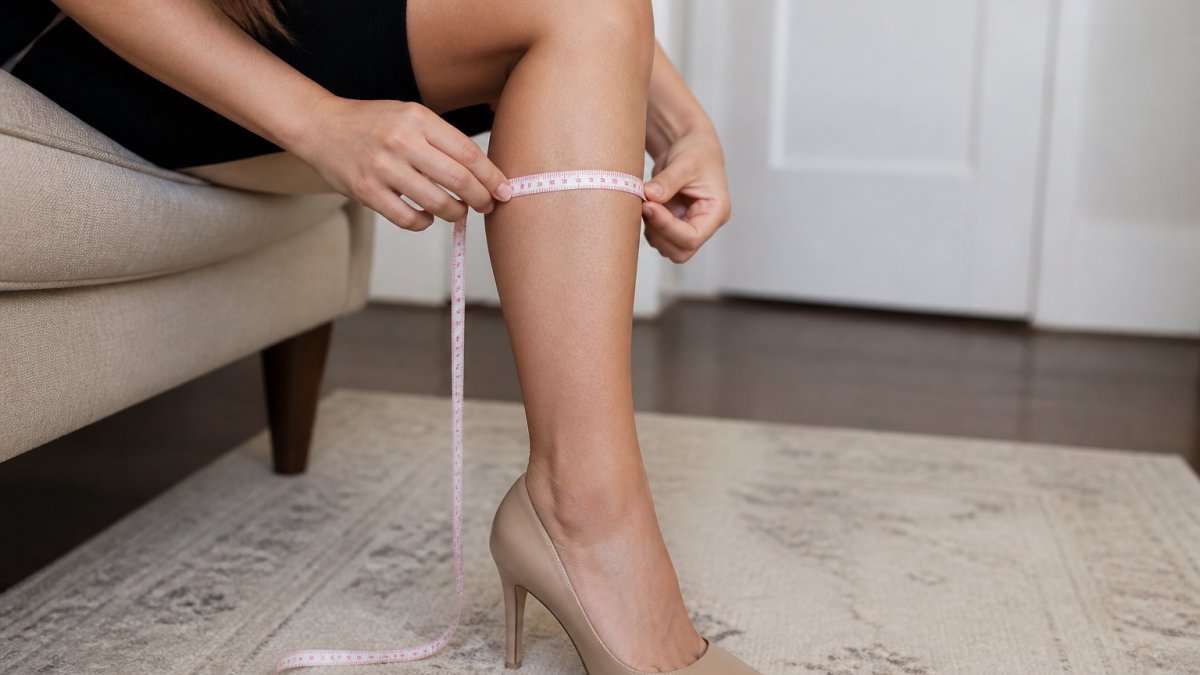
The widest part of your calf typically sits about one-third of the way down from your knee to your ankle. Measure while wearing the type of socks or hosiery you'll wear with your boots, this matters more than most people realize. A measuring tape should sit snugly but not compress the muscle. If you don't have a soft measuring tape, wrap a piece of standard printer paper (which is 11 inches wide) around your calf and note where it overlaps. That overlap measurement gives you an accurate baseline.
Record your measurement in inches and compare it against sizing charts. If your measurement falls between two sizes, choose the larger one, boots that are slightly loose can be adjusted with thicker socks or inserts, but boots that are too tight restrict circulation and cause pain. Many retailers only offer standard calf widths, which is why the benefits of wide calf boots become so clear once you measure and realize standard options won't work for your actual dimensions.
Wide Calf vs Regular Boots: Key Differences
The difference between wide calf and regular boots goes far deeper than shaft width. A regular boot is engineered around an assumed average calf volume, which means everything about its construction, the stretch capacity of the material, the placement of seams, the height of the shaft, and the zipper length, is calculated for that standard measurement.
Wide calf boots are built with fundamentally different engineering. The stretch panels are wider and positioned differently. The material itself is often more flexible to accommodate the larger volume without creating pressure points. The shaft height is measured not just from heel to opening, but with consideration for how that opening will sit on a larger leg. The benefits of wide calf boots include better weight distribution across the leg, which reduces the pinching sensation that comes from forcing a larger calf into a narrower space.
Regular boots also create a visual problem: when you force a wide calf into a narrow shaft, the boot bunches and bulges at the top, creating an unflattering silhouette that no amount of styling can fix. Wide calf boots maintain clean lines because the shaft is proportional to your leg shape. The boot sits smoothly from ankle to knee, which is why they look intentional rather than squeezed into.
Another critical difference is durability. When you're constantly stretching a regular boot beyond its design capacity, the material degrades faster. The zipper experiences excessive stress, the seams weaken, and the stretch fades more quickly. Wide calf boots, sized correctly for your measurements, experience normal wear patterns and last significantly longer.
Comfortable Boots for Wide Calves: Fit and Features
Finding comfortable boots for wide calves requires understanding which features actually matter. Adjustable lacing or elastic gore panels are frequently advertised as solutions, but they're only effective if the boot's base width accommodates your calf volume to begin with. A narrow boot with laces still won't fit a wide calf, the laces just make it slightly less painful to force on.
The most important feature is stretch material that moves with your leg without creating pressure points. High-quality stretch faux leather or vinyl can accommodate different calf shapes while maintaining structure. Look for boots where the stretch extends through the full shaft, not just at the sides. Boots with zippers that run the full length of the shaft are far more practical than those with partial zippers, because they allow you to open the boot wide enough to slip your foot in without fighting the material.
Croc | Chocolate Croc Thigh-High Boot Sleeve →
The Croc Chocolate Thigh-High Boot Sleeve from Bootsy- The Boot Sleeve lets you transform your existing heels into thigh-high boots by using a sleeve sized to your actual thigh circumference (14 to 60 inches). The stretch faux leather moves with your leg, and the zippered design means you control exactly how tight or loose it fits. This eliminates the pressure points and circulation issues that plague standard boots.

Footbed support matters more than people realize. A boot that fits your calf perfectly but offers poor arch support will still cause fatigue and discomfort. Look for boots with cushioned insoles or the ability to add your own orthotics. The shaft height should be proportional to your leg length, a petite woman with a 22-inch calf needs a different shaft height than a taller woman with the same calf measurement.
Health and Comfort Benefits of Proper Boot Fit
Wearing boots that actually fit your calf shape has direct health implications that go beyond comfort. When a boot is too tight around the calf, it restricts blood circulation to your lower leg and foot. This restriction can cause swelling, numbness, and in extreme cases, damage to nerve endings. Over time, wearing poorly fitting boots contributes to circulation problems and increases your risk of blood clots in the lower leg.
Proper boot fit also supports your gait and posture. When your calf is compressed or your leg is twisted to accommodate a boot that's too narrow, you unconsciously adjust how you walk to reduce pressure. This compensation changes your alignment, which creates stress on your knees, hips, and lower back. A boot that fits correctly allows your leg to sit in a natural position, which means your entire kinetic chain, from your ankle through your hip, functions properly.
The pressure points created by ill-fitting boots can cause skin irritation, blistering, and in some cases, permanent changes to your skin. Women who wear tight boots regularly report developing calluses, discoloration, and sensitivity in their calves.
Styling Versatility and Fashion Options
The benefits of wide calf boots include access to fashion options that standard boots never offered. Once you can actually wear boots comfortably, you realize how versatile they are. A well-fitting boot works with jeans, dresses, skirts, leggings, and even shorts. The clean lines of a properly proportioned boot create a polished look that works in professional settings, casual outings, and evening wear.
Maximizing Your Footwear Investment
Wide calf boots are an investment, which is why making the right choice matters. A properly fitting boot lasts significantly longer than one you've forced your foot into. The material doesn't degrade as quickly, the zipper doesn't experience excessive stress, and the overall construction remains intact through years of regular wear.
Frequently Asked Questions
How do I know if I need wide calf boots?
You need wide calf boots if standard boots won't zip up, gap at the sides, or create uncomfortable pressure points around your leg. Measure your calf circumference at its widest point. If it exceeds 14 inches, wide calf boots designed for extended sizing will fit you better than regular boots. Many women discover they need wider options after struggling with standard retail sizes.
How can I measure my calf size accurately at home?
Wrap a soft measuring tape around your leg at the widest part of your calf muscle, keeping the tape snug but not tight. If you don't have a measuring tape, wrap a standard 11-inch sheet of printer paper around your calf and note where it overlaps. Measure that overlap against a ruler. Take measurements while standing and wearing the shoes you plan to pair with boots for the most accurate fit.
What are the health benefits of wearing properly fitted wide calf boots?
Properly fitted boots reduce pressure points that can restrict circulation and cause discomfort during extended wear. They support your natural gait without forcing your leg into an unnatural position, reducing strain on your ankles and knees. Good fit also prevents blisters and foot fatigue. When boots accommodate your true measurements instead of forcing compression, you experience less swelling and pain, especially during long days on your feet.
Can boot sleeves work for all calf sizes and body types?
Yes. Boot sleeves like Bootsy's are designed to fit thigh and calf measurements from 14 inches to 60 inches in sizes XS through 5X, making them inclusive for diverse body types. Unlike traditional boots that rely on height, sleeves fit based on your actual leg circumference. They work for petite frames with smaller measurements and plus-size bodies alike, transforming your existing heels into stylish boots without buying new footwear.
0 comments