

Table of Contents
- Why Wide-Leg Pants Fall Short for Pole Dancing
- Fitted Flare and Relaxed Silhouettes for Better Movement
- Fabric Considerations for Dance Movement and Grip
- Comfortable Boots for Wide Calves as a Style Solution
- How to Measure for Wide Calf Boots and Boot Sleeves
- Boot Sleeves: The Versatile Alternative for Existing Heels
- Styling Tips to Complete Your Pole Dance Look
- Conclusion
Last Updated: August 20, 2026
Why Wide-Leg Pants Fall Short for Pole Dancing
Wide-leg pants might seem like a comfortable choice for any activity, but they create real problems when you're learning pole dance. The excessive fabric gets in the way of your grip, obscures your leg line, and makes it harder to see your own body positioning during moves. When you're trying to master a climb or an invert, the last thing you need is yards of fabric bunching around your ankles or thighs.
The core issue is that pole dancing demands visibility and contact between your skin and the pole. Your legs provide crucial grip points, the inside of your thigh, your calf, even your shin. Loose fabric breaks that contact and creates slipping hazards. Beyond the safety concern, you can't feel where your body is in space when it's wrapped in billowing material. That proprioceptive feedback is essential for learning.
This is where alternatives to wide-leg pants become not just a preference but a practical necessity. At Bootsy- The Boot Sleeve, we work with dancers of all body types who've struggled to find bottoms that fit well and perform properly. The solution isn't always buying new pants, sometimes it's choosing the right silhouette or accessory that transforms what you already own.
Fitted Flare and Relaxed Silhouettes for Better Movement
A fitted flare pant sits snugly through the hip and thigh, then opens gradually from the knee down. This silhouette gives you the movement and flow that dancers love without the baggy excess of wide-leg styles. The fitted top half keeps everything in place, while the flare from mid-calf onward creates that aesthetic without compromising grip or visibility.
Relaxed flare cuts offer a similar benefit with a higher rise and more generous hip room. These work especially well for dancers with wider hips or thighs who need comfort without sacrificing performance. The key difference from wide-leg pants is that the flare starts lower, usually around the knee or mid-calf, rather than from the hip. This means your thighs stay relatively close to your body, preserving the contact and control you need on the pole.
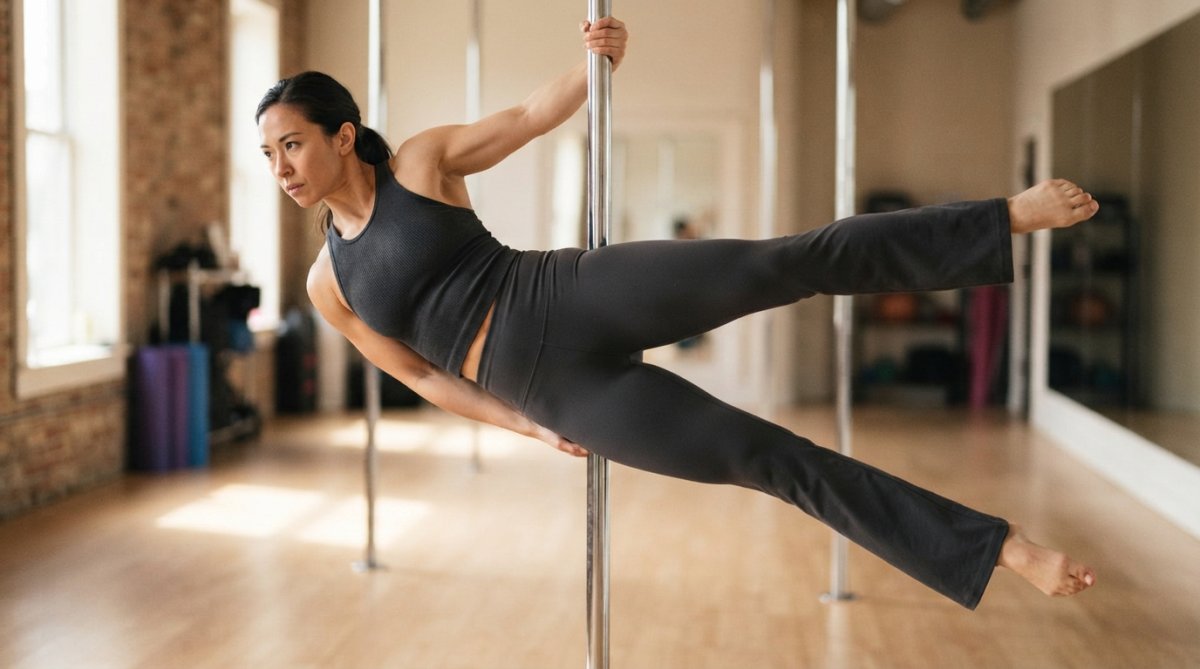
Relaxed Flare Cuts vs. Straight-Leg Options
Straight-leg pants offer the most minimal silhouette. They run straight from hip to ankle without any flare, giving you maximum visibility of your leg line and unobstructed contact with the pole. For serious pole dancers, this is often the preferred choice because there's literally nothing between you and your movement.
Relaxed flare cuts split the difference. They're tighter through the thigh than wide-leg options but still give you room to breathe and move. If straight-leg feels too restrictive or if you prefer a bit more volume for comfort during training, a relaxed flare is the practical middle ground. The flare itself is usually subtle, maybe 2-4 inches of additional width from knee to hem, so it doesn't interfere with your grip or footwork.
The choice between these two comes down to your comfort threshold and the aesthetic you prefer. Neither will fail you the way wide-leg pants will. Both allow you to see your body, maintain contact with the pole, and move freely through your training.
Fabric Considerations for Dance Movement and Grip
The material your pants are made from matters as much as the cut. High-friction fabrics like brushed cotton blends, fleece-lined options, or textured materials provide better grip against the pole. Smooth, slippery fabrics like satin or thin nylon reduce friction and make it harder to hold positions.
Most pole dancers prefer a fabric with some weight and texture. A cotton-spandex blend (usually 85-90% cotton with 10-15% spandex) offers the ideal combination of stretch, durability, and grip. The cotton provides friction against the pole, while the spandex lets the pants move with your body without restricting your range of motion. Avoid anything too thin or silky, these materials slide against the pole and against your skin, which undermines both safety and performance.
Breathability matters during intense training sessions. You'll be sweating, and you need fabric that allows moisture to evaporate rather than trapping heat and sweat against your skin. Cotton-based blends handle this well. Polyester alone can feel clammy during hard workouts, though polyester blends with cotton improve this significantly.
Durability is another practical concern. Pole dancing creates friction and wear on your clothing, especially around the inner thighs, hips, and anywhere your skin contacts the pole repeatedly. Quality fabrics with good thread count and reinforced seams last longer. Cheaper materials pill, tear, or lose their stretch after a few months of regular training. Investing in well-made pants pays off in longevity.
Comfortable Boots for Wide Calves as a Style Solution
Here's where many dancers hit a wall: finding boots that actually fit wide calves. Traditional boots are sized by shoe size, not by leg circumference. A women's size 8 boot assumes a specific calf width that may have nothing to do with your actual measurements. For dancers with muscular calves or naturally wider leg proportions, standard boots either won't zip up or fit so loosely that they're unwearable.
Boots aren't just a fashion choice for pole dancers, they're a legitimate training and performance option. A good boot gives you ankle support, adds visual polish to your look, and can make certain transitions feel more controlled. But only if they actually fit.
The problem with conventional boot shopping is that you're forced to choose between your shoe size and your calf size. Size up to fit your calf, and the shoe is too big. Stick with your shoe size, and the calf won't close. This is where boot sleeves change the equation entirely. Instead of buying a boot that doesn't fit, you transform a heel you already own into a boot that fits your exact measurements.
How to Measure for Wide Calf Boots and Boot Sleeves
Measuring yourself correctly is the foundation of getting a proper fit. You'll need a soft measuring tape, though a piece of standard printer paper (which is 11 inches wide) works as a makeshift ruler if you don't have a tape measure.
Start with your calf. Stand with your leg relaxed and measure around the fullest part of your calf muscle. This is usually a few inches below your knee. Write this number down. Next, measure your thigh at its fullest point, typically a few inches below your hip. Again, write it down. Some people also measure mid-thigh, halfway between hip and knee, if they're concerned about fit at that point.
For boot sleeves specifically, you're measuring circumference, not length. The circumference determines whether the sleeve will stretch comfortably over your leg and stay in place. A proper fit should feel snug but not cutting off circulation. You should be able to slip a finger under the top edge without strain.
Most quality boot sleeves come in inclusive sizing that accommodates many measurements. Bootsy- The Boot Sleeve, for example, sizes by thigh and calf circumference rather than shoe size, with options ranging from 14 inches to 60 inches. This approach means you're not forced to compromise between comfort at your calf and fit at your thigh. You pick the size that matches your actual measurements, and the stretch fabric does the rest.
If you fall between two sizes, the general rule is to size up. A slightly looser fit is more comfortable than one that's too tight, and the stretch material will still provide adequate support. If your measurement is exactly at a size boundary, try the larger size first.
Boot Sleeves: The Versatile Alternative for Existing Heels
Boot sleeves solve the wide-calf problem by working with shoes you already own. Instead of hunting for a boot in your shoe size that also fits your calf, a combination that may not exist, you simply slip a sleeve over a heel you love.
The mechanics are straightforward: the sleeve stretches over your shoe and up your leg, creating the visual and functional effect of a boot. Quality sleeves use stretch faux leather or vinyl that moves with your body without bunching or rolling down. The material is durable enough to handle repeated stretching and daily wear, yet flexible enough that putting it on and taking it off doesn't require a struggle.
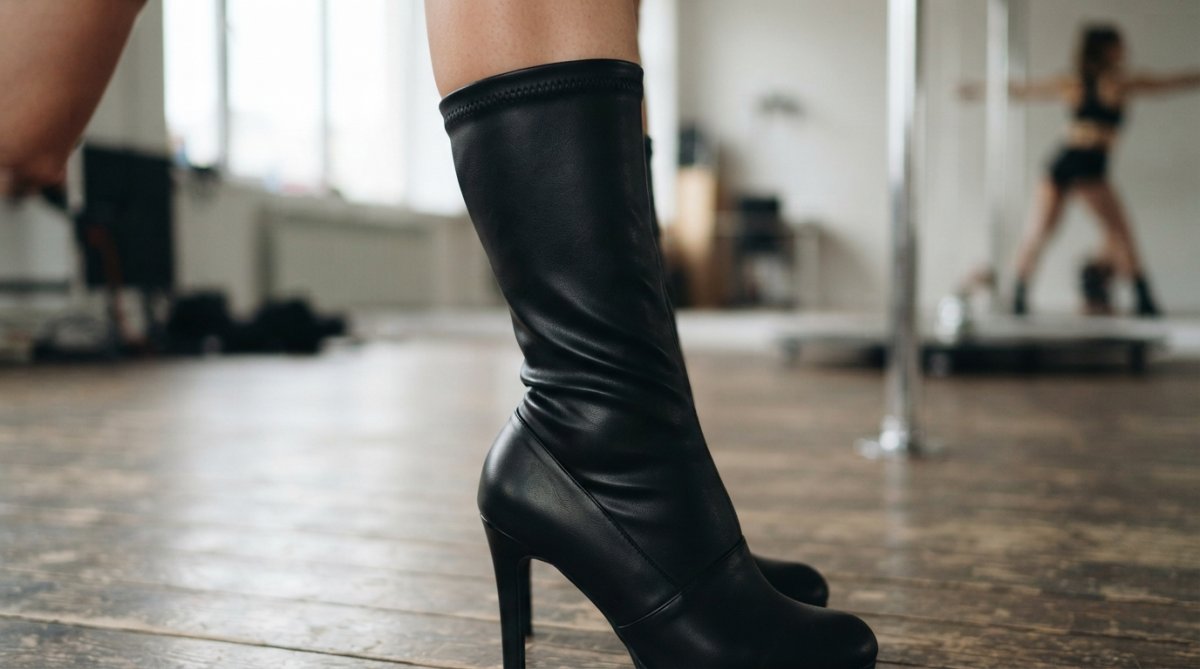
This approach has practical advantages beyond fit. A sleeve transforms one shoe into multiple looks. Pair a nude heel with a black sleeve for a sleek, elongated line. Switch to a burgundy sleeve with the same shoe for an entirely different vibe. You're not buying multiple boots, you're multiplying the utility of shoes you already own.
Travel is another major benefit. A boot sleeve packs flat and takes up almost no luggage space. If you're going to a dance competition, workshop, or performance, you can bring several sleeve options without the bulk of actual boots. This matters when you're trying to minimize what you carry.
The durability question comes up often: won't constant stretching wear out the material? Quality sleeves are designed for this. Bootsy- The Boot Sleeve uses high-quality stretch faux leather and vinyl specifically engineered to handle repeated use. The material maintains its elasticity and appearance through hundreds of stretches. It's not a disposable product, it's a durable accessory that should last for years with normal care.

Washability is built in. Most quality sleeves can be hand-washed or machine-washed on a gentle cycle. This keeps them fresh and extends their lifespan. After a sweaty training session, you can rinse them out and they're ready for your next wear.
Styling Tips to Complete Your Pole Dance Look
Your bottoms and boots are the foundation, but they're not the whole picture. Layering and accessory choices complete a polished pole dance aesthetic.
A fitted tank top or sports bra worn under a sheer mesh top creates visual interest and allows judges or instructors to see your body positioning while keeping you covered. The mesh adds texture and flow without the movement restrictions of a heavier top. Choose colors that complement your bottoms, if you're wearing black pants and a burgundy sleeve, a black or burgundy top creates cohesion.
Leg warmers serve both practical and aesthetic purposes. They keep your muscles warm during training, which is important for injury prevention. Visually, they add volume and color to your lower leg, which can be especially useful if your boots or sleeves are simple and neutral. A colorful leg warmer in a contrasting shade draws the eye and creates visual separation between your leg and your shoe.
Jewelry should be minimal and secure. Pole dancing involves rapid movements and inversions, anything loose becomes a hazard. Small hoop earrings, a simple bracelet, or a delicate necklace works. Avoid dangling pieces that could catch on the pole or your clothing.
Hair should be secured away from your face and neck. A high ponytail or bun keeps hair out of your way and off the pole. This is purely practical, but it also creates a cleaner visual line from your shoulders down through your body.
Confidence is your best accessory. When you're wearing bottoms that fit properly and move the way you need them to, and boots that actually stay in place, you can focus on your dancing instead of worrying about your clothes. That confidence shows.
Conclusion
Finding the right bottoms and boots for pole dancing doesn't mean settling for uncomfortable compromises. Fitted flare and straight-leg pants give you the movement and visibility you need. Boot sleeves transform your existing heels into boots that fit your actual measurements, something traditional boots rarely accomplish. Together, these alternatives to wide-leg pants let you train safely, move freely, and look sharp doing it. Start by measuring your thigh and calf circumference, then explore fitted silhouettes and quality boot sleeves. Bootsy- The Boot Sleeve offers inclusive sizing from 14 inches to 60 inches, with high-quality stretch faux leather and vinyl options at $35.99 each. Get started with a sleeve that matches your measurements, and unlock the full potential of your existing shoe collection.
Frequently Asked Questions
What are the best alternatives to wide-leg pants for pole dancing?
Fitted flare cuts, relaxed straight-leg trousers, and compression-blend activewear offer better grip and movement than wide-leg silhouettes. Fabric matters too: stretch materials with breathability prevent slipping during high-friction activities. Many dancers also pair fitted bottoms with boot sleeves, accessories that slip over heels to create a cohesive look without the bulk of traditional wide-leg pants.
How do I measure for wide calf boots that will actually fit my legs?
Measure your thigh and calf circumference at their widest points using a soft measuring tape, keeping it snug but not tight. Most wide calf options size by leg measurement rather than shoe size. If you fall between sizes, choose the larger size for comfort. A standard sheet of printer paper is 11 inches, wrap it around your thigh as a quick reference tool if you don't have a tape measure handy.
Can boot sleeves work with all types of heels for pole dancing?
Boot sleeves work best with heels sized 6-11 that have a defined heel structure. Stilettos and block heels both work well. The sleeve stretches to fit your leg circumference, creating a continuous line from shoe to thigh. Avoid very thin ankle straps or sandals without heel backing, as the sleeve needs a stable base to stay in place during movement and friction.
What fabric should I look for in pole dance bottoms for comfort and durability?
Choose stretch materials with breathability, faux leather and vinyl blends offer grip without slipping, while compression fabrics provide support during high-friction activities. Durable, washable materials withstand repeated wear and friction from the pole. Look for mid-rise or high-rise waistbands that stay secure during inverted moves and extended movement.
Are boot sleeves obvious when worn, or do they look like real boots?
Quality boot sleeves create a seamless, polished look that reads as a real boot when fitted correctly. The stretch material hugs your leg without bunching or gapping, and high-quality faux leather or vinyl finishes have the same sheen and texture as traditional boots. Worn with the right heel and fitted bottoms, they provide a professional appearance suitable for performances, training, or going out.
This article was written using GrandRanker
0 comments