

Table of Contents
- Why Standard Wide Calf Boots Fall Short
- How to Measure Calf Circumference for Boots
- Boot Sleeves for Wide Calves: The Fit-First Alternative
- Comfortable Boots for Wide Calves: What Actually Works
- Top Boomkats Alternatives for Wide Calves
- Return Policies and Shipping for Wide-Fit Specialists
- Frequently Asked Questions
Last Updated: September 15, 2026
Why Standard Wide Calf Boots Fall Short
Standard wide calf boots fall short because they size for height and shoe size, not leg volume. A boot labeled "wide calf" might still gap at the ankle or refuse to zip past mid-calf, since every leg carries width in a different place.
That mismatch is why so many women with wide calves end up with a closet full of boots that almost work. The shaft is too narrow at the top, too loose at the ankle, or the zipper stops two inches short. This guide from Bootsy covers the real alternatives, starting with the measurement most shoppers skip.
How to Measure Calf Circumference for Boots
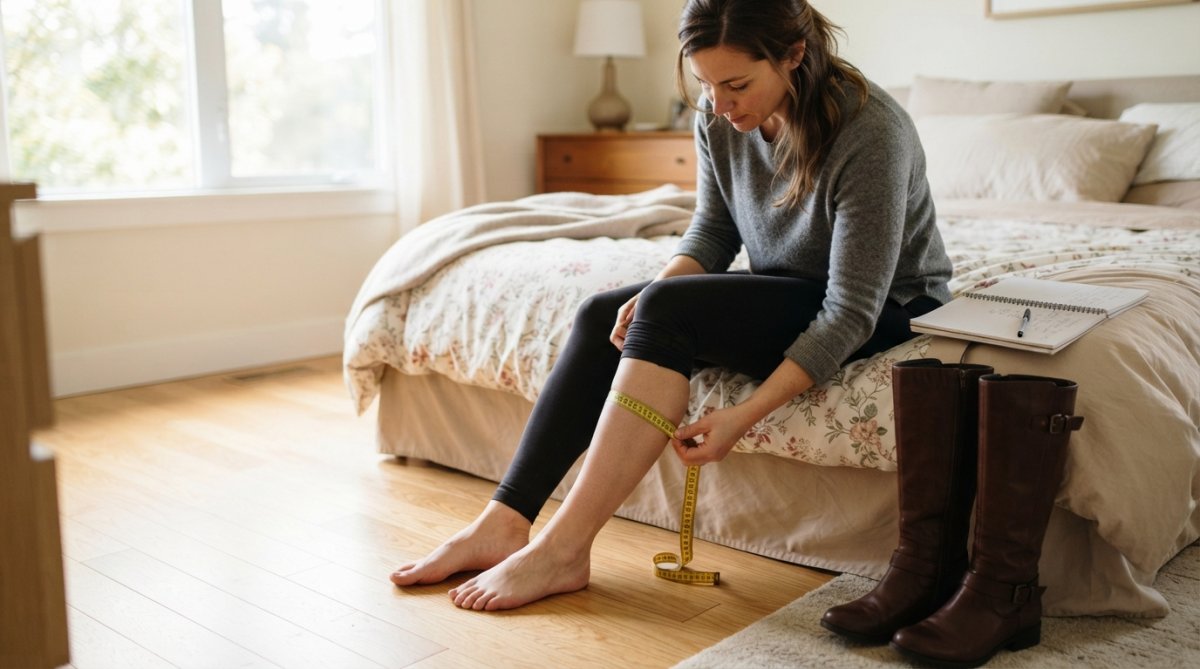
Calf circumference is the full distance around the widest part of your lower leg, measured while seated with your foot flat on the floor. That single number, not your shoe size, determines whether a boot shaft will close. Get it wrong by an inch and you either can't zip the boot or you're swimming in it.
Measure at three points, and write all three down:
- Widest calf point, usually one to two inches below the kneecap. This is the number most boot shafts are built around.
- Mid-calf, matters for mid-calf silhouettes and for boots that taper.
- Ankle, the number that predicts gaping, slipping, and that annoying "almost fits" feeling.
Do it in the afternoon, not the morning. Legs swell slightly over the course of a day, and a boot that zips at 8 a.m. may fight you at 6 p.m. Wear the leggings, tights, or socks you plan to wear with the boots, a pair of thick wool socks can add a full inch to your measurement.
Turning Your Measurement Into a Size
Once you have your widest-calf number, compare it to the boot's published shaft circumference, not the size label. A boot listed as "wide calf" typically runs about 16" to 18" at the top, "extra wide calf" runs about 18" to 21", and anything past 21" is usually sold as extended or custom (rei.com). If your calf measures 19" and the boot tops out at 17", no amount of stretching will close a two-inch gap.
A useful rule of thumb: add about half an inch of breathing room to your widest-calf measurement for a comfortable fit, and never buy a shaft narrower than your calf. If you're between two sizes, size up on the shaft and keep your true shoe size, the shaft absorbs the width, your shoe handles the length.
The Printer Paper Method for Quick Measurements
No tape measure? A standard sheet of printer paper is 11 inches long, so wrap it around your calf and use the overlap as a ruler (nist.gov). If the paper meets with room to spare, you are past 11 inches. Fold it in half first and you have a 5.5-inch gauge for ankle and mid-calf checks. This trick works for thigh measurements too, which matters for anyone shopping boot sleeves for wide calves.
Why the Shaft Number Matters More Than the Size Label
Boot brands use "wide calf" inconsistently. One label's wide is another label's standard, and a boot built for a 15" calf will not fit a 19" calf no matter how the tag reads. That inconsistency is the single biggest reason shoppers end up returning boots. The fix is simple: ignore the label, find the shaft circumference in the product specs, and match it to your number. If a brand won't publish shaft circumference, that's a signal to shop elsewhere.
How to measure your foot and calf at home
Boot Sleeves for Wide Calves: The Fit-First Alternative
A boot sleeve is a stretch tube that slips over an existing heel to create the look of a full boot, sized by leg circumference instead of shoe size. That single design choice solves the problem traditional boots create.
Bootsy's patent-pending sleeves fit calf and thigh measurements from 14" to 60", which means the fit is determined by your leg, not a manufacturer's guess. You keep the heels you already own and add the shaft.
How Boot Sleeves Compare to Traditional Wide Calf Boots
| Feature | Traditional Wide Calf Boots | Boot Sleeves |
|---|---|---|
| Sized by | Shoe size and height | Calf/thigh circumference |
| Fit range | Limited width options | 14" to 60" |
| Cost per look | New boot each time | One sleeve, many shoes |
| Packing | Bulky, rigid | Collapses flat |
| Zippers | Often strain or fail | Slip-on, no zipper |
The trade-off is honest: sleeves need a heel you already like, and they will not replace a heavy lug-sole winter boot. For dress boots, mid-calf looks, and thigh-high styles, they win on fit and price.
Comfortable Boots for Wide Calves: What Actually Works
Comfortable boots for wide calves share three traits: stretch at the shaft, cushioning under the foot, and a closure that does not fight your leg. Rigid leather with a fixed zipper is the usual culprit behind pinching and pressure points.
Look for elastic gore panels, adjustable buckles, and a footbed with real arch support. A common mistake is buying a half size up to gain calf room. That adds length you do not need and leaves your heel sliding.
Top Boomkats Alternatives for Wide Calves
The best Boomkats alternatives for wide calves fit by measurement, not by a fixed shaft width, and they keep the alternative, statement-boot look that drew you to Boomkats in the first place.
Boot Sleeves: The Fit-First Route
How Boot Sleeves Compare to Traditional Wide Calf Boots
| Feature | Traditional Wide Calf Boots | Boot Sleeves |
|---|---|---|
| Sized by | Shoe size and height | Calf/thigh circumference |
| Fit range | Limited width options | 14" to 60" |
| Cost per look | New boot each time | One sleeve, many shoes |
| Packing | Bulky, rigid | Collapses flat |
| Zippers | Often strain or fail | Slip-on, no zipper |
Stretch-Shaft and Elastic-Back Boots
Custom and Made-to-Measure Boots
DIY Modification and Cobbler Services
Matching the Alternative Aesthetic
Return Policies and Shipping for Wide-Fit Specialists
Return Policies and Shipping for Wide-Fit Specialists
Frequently Asked Questions
What shoes look best with wide calves?
Boots with a wider shaft and stretch panels work best. Look for styles with elastic gore or adjustable buckles, which accommodate calf circumference without pinching. Knee-high boots with a slight heel and a rounded or almond toe create a balanced silhouette. Boot sleeves are another option: they slip over your existing heels to create a custom fit based on your calf measurement, not shoe size. This means you can wear the shoes you already love and still get the look of wide calf boots.
How do I measure calf circumference for boots?
Wrap a flexible measuring tape around the widest part of your calf, usually about 2 to 3 inches below the knee crease. Keep the tape snug but not tight. If you don't have a tape measure, wrap a standard 11-inch sheet of printer paper around your calf and mark where it overlaps, then measure that length with a ruler. Record the number in inches. Compare it to the boot's shaft width, not your shoe size, when choosing a size.
Are boot sleeves for wide calves a good alternative to traditional boots?
Yes, boot sleeves solve the fit problem differently. Instead of forcing your calf into a fixed shaft width, sleeves stretch over your leg and are sized by circumference. Bootsy sleeves fit calf and thigh measurements from 14 to 60 inches and work with women's shoe sizes 6 to 11. They turn your existing heels into boots, so you avoid the frustration of zippers that won't close. They're also washable and pack flat for travel.
How do I know if a boot sleeve will stay up without slipping?
The stretch material and correct sizing keep the sleeve in place. Bootsy sleeves rely on a snug fit based on your calf or thigh measurement. If you're between sizes, choose the larger size for thigh-high styles and the smaller size for mid-calf styles to ensure a secure hold. The fabric grips without pinching, so it won't bunch or slide down during normal walking. Proper measurement is the key to a no-slip fit.
Can I wear boot sleeves with different heel types?
Boot sleeves work with most heels, including stilettos, block heels, and pumps. They fit over women's shoe sizes 6 through 11. The sleeve covers the shoe and extends up your leg, creating a continuous boot look. Some very chunky platforms or unusual shoe shapes may not work as smoothly, but standard heels and many flats are compatible. Always check the product description for specific shoe compatibility before ordering.
Finding boots that fit a wide calf should not require a dozen returns. Bootsy solves it by sizing to your measurements, from 14" to 60", so the sleeve fits your leg instead of a manufacturer's average. The Mini Mid-Calf and the thigh-high styles in Black, Deep Cherry, and Chocolate Crocodile turn heels you already own into boots you will actually wear. Add a pair to your cart and stop shopping around your calf size.
0 comments