

Table of Contents
- Assess Your Leather Before Stretching
- How to Use Boot Stretching Spray for Leather
- Using a Boot Calf Stretcher Tool Effectively
- Heat and Thick Sock Method for Calf Expansion
- Professional Cobbler Services vs. DIY Stretching
- Alternatives to Stretching Boots for Wide Calves
- Maintain Your Leather After Stretching
- Frequently Asked Questions
Last Updated: September 20, 2026
Assess Your Leather Before Stretching
Before you attempt to stretch leather boots wide calves, take time to understand what you're working with. Not all leather stretches equally, and some materials resist expansion entirely. Full-grain leather stretches well because the fibers remain intact and flexible. Suede and nubuck also respond to stretching, though they require gentler handling. Synthetic materials, on the other hand, have fixed dimensions, they won't budge no matter what method you try.
Check the boot's label or ask the retailer about the material composition. If your boots are genuine leather with a natural finish, they're candidates for stretching. Look for visible signs of quality: smooth surfaces without heavy coatings often indicate leather that will respond to stretching techniques.
The boot's construction matters too. Boots with flexible stitching and soft lining adapt better to stretching than rigid styles with reinforced shafts. Examine the calf circumference where tightness occurs. If the leather feels thin or brittle, aggressive stretching could damage it. A quick test: press your thumb into the leather. If it bounces back, it has elasticity and will stretch. If it stays compressed, proceed with caution.
Consider the age of your boots. Brand-new leather is often stiff and resistant. Boots worn for several months have already begun their break-in period, making them more responsive to stretching techniques. Older boots with established leather grain may stretch more predictably than fresh pairs.
How to Use Boot Stretching Spray for Leather
Boot stretching spray works by temporarily softening leather fibers, making them more pliable. The spray penetrates the material and relaxes the leather's structure, allowing it to expand around your calf. This method is popular because it's non-invasive and works quickly.
Start by cleaning your boots thoroughly. Dust and dirt prevent even spray application. Use a soft cloth to wipe down the exterior and interior surfaces. Allow boots to dry completely before spraying.
Apply stretching spray evenly across the tight areas. Hold the can 6-8 inches from the boot shaft and use short bursts rather than one long spray. Oversaturation wastes product and can damage leather, so use restraint. Focus on the calf area where tightness occurs.
Put on thick socks immediately after spraying. Slip your feet into the damp boots and wear them for 20-30 minutes. The combination of moisture, heat from your body, and the weight of your foot creates gentle pressure that stretches the leather. Walk around your home during this time rather than sitting still.
Remove your boots and allow them to air dry completely, which typically takes 4-6 hours. Never use direct heat like a hair dryer, as this can shrink leather unexpectedly. As the boots dry, the leather sets into its new, slightly expanded shape.
Repeat this process 2-3 times over several days if needed. Each application stretches the leather incrementally. Multiple smaller stretches are safer than one aggressive attempt.
Using a Boot Calf Stretcher Tool Effectively
A dedicated boot calf stretcher tool provides controlled, mechanical expansion. These devices insert into the boot shaft and expand outward, gradually widening the calf opening. Unlike sprays, stretchers offer precise control over how much stretch you apply.
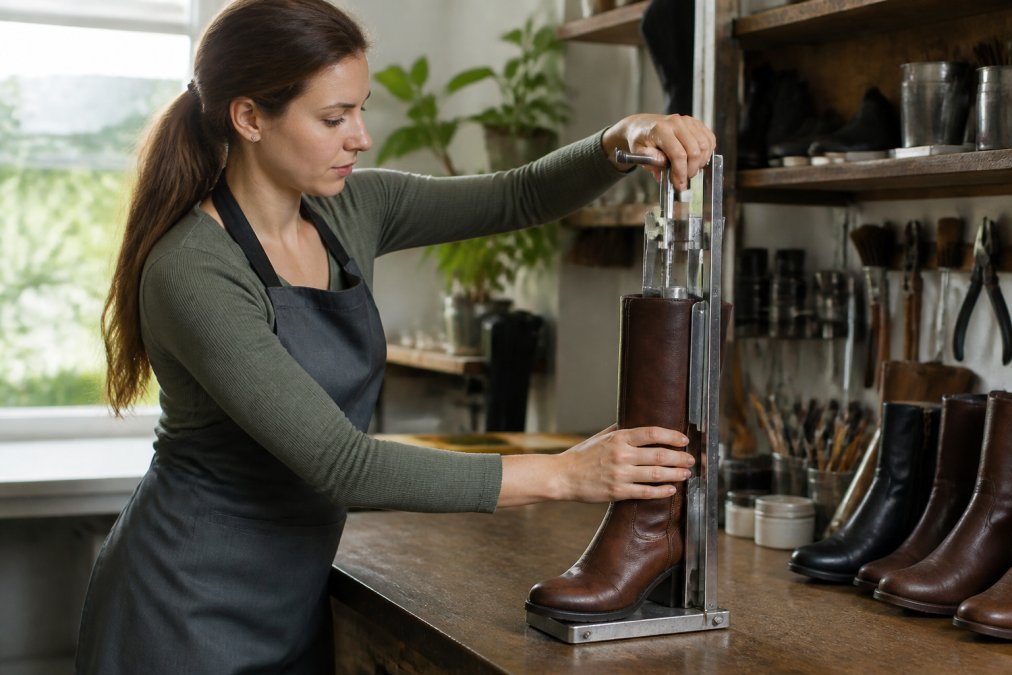
Select a stretcher designed specifically for calf expansion rather than general boot stretchers. Calf stretchers have a longer shaft and wider expansion range to address circumference issues. Measure your boot's interior calf diameter to choose the right size tool.
Insert the stretcher into the boot with the expansion mechanism pointing toward the tight area. Position it so the pressure points align with where you feel the most resistance. Tighten the expansion screw gradually, turning it a quarter-turn at a time. You should feel gentle pressure, not pain or strain on the leather.
Leave the stretcher in place for 24-48 hours for initial stretching. The longer you leave it, the more the leather adapts. Check progress by removing the tool and trying on the boot. If it still feels tight, reinsert the stretcher and continue stretching.
For stubborn tightness, use a stretcher in combination with stretching spray. Apply spray, insert the stretcher while the leather is damp, and leave it in place as the boot dries. This combination approach yields faster results than either method alone.
| Method | Duration | Effort Level | Best For |
|---|---|---|---|
| Stretching spray alone | 20-30 minutes per session | Low | Quick, temporary stretch |
| Boot calf stretcher | 24-48 hours per session | Low | Gradual, controlled expansion |
| Spray + stretcher combo | 24-48 hours | Low | Stubborn, significant tightness |
Heat and Thick Sock Method for Calf Expansion
The heat and thick sock method relies on moisture and warmth to soften leather fibers. This traditional approach requires no special tools and uses items you likely have at home already.
Put on the thickest socks you own, ideally wool or thermal varieties that add significant bulk. Wool naturally insulates and adds volume without excessive heat. Layer two pairs of thick socks if needed to create maximum calf circumference.
Put on your boots while wearing these socks. The added volume stretches the leather shaft. Wear them for 30-45 minutes while moving around. Walking and activity generate body heat, which further softens the leather and helps it conform to the larger calf shape.
After wearing the boots with thick socks, remove them and let the leather cool and dry naturally. The leather will partially retain the expanded shape. Repeat this process several times over a week for cumulative stretching.
You can enhance this method with gentle heat. After putting on thick socks and boots, use a hair dryer on low heat to warm the calf area for 2-3 minutes. Keep the dryer moving constantly to avoid overheating one spot. The warmth makes leather more receptive to stretching. Never use high heat settings, which can cause shrinkage.
This method works best for leather that's already somewhat flexible. It's gentler than mechanical stretchers and less messy than sprays. The downside is that results come more slowly and may be less dramatic than other techniques.
Professional Cobbler Services vs. DIY Stretching
A professional cobbler has specialized equipment and decades of experience with stretch leather boots wide calves. They understand material properties, can assess whether your boots are salvageable, and apply techniques that minimize damage risk. Professional stretching often produces more dramatic results than DIY methods.
Cobblers use industrial-grade stretchers that apply even pressure across the entire calf shaft. They can also reinforce stressed seams or adjust zippers if tightness relates to hardware rather than just leather circumference. Many cobblers offer guarantees on their work, meaning if stretching fails, you have recourse.
The trade-off is cost and time. Professional stretching typically costs between $40-$80 per pair, depending on the extent of work needed. Turnaround time ranges from one to two weeks. For expensive boots or severe tightness, this investment often makes sense.
DIY stretching costs almost nothing if you use spray or household items. It takes less time since you control the schedule. The risk is that aggressive stretching can damage leather permanently. If something goes wrong with a DIY attempt, you can't undo it.
Consider professional service if your boots were expensive, if you've tried DIY methods without success, or if the leather feels delicate. Choose DIY for inexpensive boots, minor tightness, or when you have time to experiment.
Alternatives to Stretching Boots for Wide Calves
Sometimes stretching isn't the best solution. If your boots resist all stretching attempts or if you want faster results, consider these alternatives.
Maintain Your Leather After Stretching
Once you've successfully stretched your boots, proper maintenance preserves the new shape and protects the leather. Stretched leather is more vulnerable to damage than original leather because the fibers have been stressed.
Frequently Asked Questions
Can you stretch wide calf boots?
Yes, leather boots can be stretched for wider calves using several methods. Full-grain leather and suede respond best to stretching because their fibers have natural elasticity. Synthetic materials have less give, so results vary. Professional cobblers can stretch the shaft width and calf circumference by 0.5 to 1 inch safely. DIY methods like stretching sprays, boot stretchers, and heat application also work but require patience and proper technique to avoid damaging the leather grain or structural integrity.
How to stretch the calf area of leather boots?
The most effective methods target the calf directly. Apply boot stretching spray for leather to the tight areas, then wear the boots with thick socks for 20-30 minutes to allow the leather fibers to expand. Alternatively, use a dedicated boot calf stretcher tool inserted overnight to gradually widen the shaft. Heat application with a hairdryer on low setting (held 6 inches away) combined with thick socks speeds the process. For stubborn boots, professional cobblers use specialized equipment to stretch leather without compromising its suppleness or durability.
What should I do if my boots are too small for my calves?
First, assess whether the leather has enough material elasticity to stretch. Try one DIY method: boot stretching spray plus thick socks worn for 30 minutes daily over a week. If that doesn't work, rent or purchase a boot calf stretcher and leave it in overnight for 5-7 nights. For significant tightness, visit a professional cobbler who can stretch the shaft width and calf circumference safely. If leather won't budge after these attempts, consider alternatives like boot sleeves that slip over your existing heels to create the boot look without the fit struggle.
Is it safe to use a boot stretcher on leather?
Yes, boot stretchers are safe for leather when used correctly. They work by gently expanding the material without applying excessive force that could tear the leather grain. Use stretchers on full-grain leather and quality suede; synthetic lining and delicate leathers need caution. Leave the stretcher in for 8-12 hours, not longer, to avoid over-stretching. Combine with boot stretching spray for leather to enhance results and protect the material. Always check the boot's condition first, cracked or damaged leather shouldn't be stretched further.
0 comments