

Table of Contents
- What Makes Thigh High Boot Sleeve Fit So Important
- How to Measure for Boot Sleeves Accurately
- Stretchy Boot Sleeves for Thick Thighs: Finding Your Size
- How to Keep Boot Covers from Sliding Down
- Choosing Materials That Work for Your Lifestyle
- Styling Your Boot Sleeves with Confidence
- Troubleshooting Common Fit Issues
Last Updated: August 26, 2026
What Makes Thigh High Boot Sleeve Fit So Important
A poorly fitted sleeve slides down, bunches, or creates visible gaps. A properly fitted one becomes invisible. Most people have never found boots that actually fit because standard retail boots are sized by shoe size, not leg circumference. Someone with a 24-inch thigh and someone with an 18-inch thigh might both wear a size 9 shoe but have completely different leg volumes. At Bootsy- The Boot Sleeve, our sleeves are designed for measurements ranging from 14 inches to 60 inches around the thigh.
A proper thigh high boot sleeve fit solves this by eliminating the guesswork. Instead of hoping a standard boot will zip up or stay in place, you're working with a sleeve engineered specifically for your leg measurements. The sleeve stretches to accommodate your exact circumference, stays put throughout the day, and transforms any heel into a finished boot look. Getting the fit right means actually using what you bought.
How to Measure for Boot Sleeves Accurately
Your thigh high boot sleeve fit depends entirely on accurate measurement. Start by finding the widest point of your thigh, usually about 2-3 inches below the hip. Stand in front of a mirror and identify where your thigh bulges most.
Use a soft measuring tape, not a rigid ruler. Wrap it snugly around your thigh at that widest point. The tape should be firm enough that it doesn't slip, but loose enough that you can fit one finger underneath. Write down the exact number, then measure again in the same spot. If you get a different number, measure a third time and use the most common result.
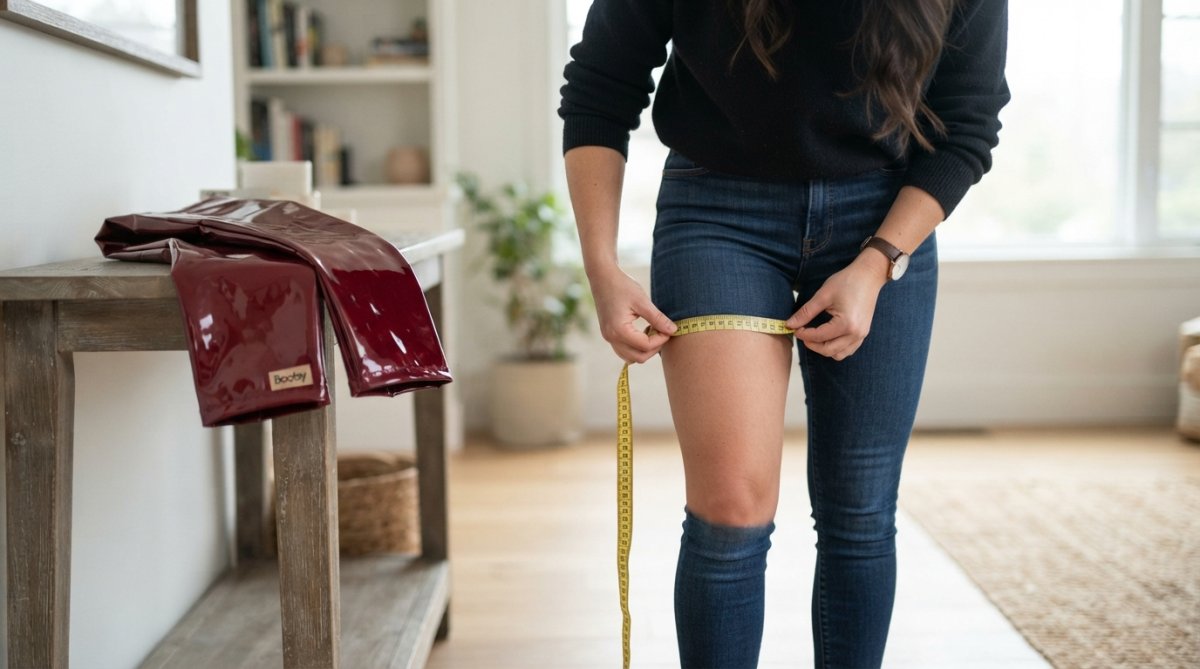
Consider what you'll be wearing under the sleeve when you actually use it. If you plan to wear tights, measure while wearing tights. If you'll go bare-legged, measure bare-legged. This changes your measurement by a quarter-inch to half-inch, which matters for fit.
Also measure your calf circumference at its widest point, usually about halfway between your knee and ankle. Knowing your calf helps you understand how much your leg tapers. A significant difference between thigh and calf measurements means you need a sleeve with good elasticity to maintain contact along your entire leg without bunching.
Stretchy Boot Sleeves for Thick Thighs: Finding Your Size
"Stretchy boot sleeves for thick thighs" means the sleeve is engineered with elasticity and sizing that accommodates larger leg circumferences without losing shape or support. Not all stretch is equal. A high-quality stretch faux leather or vinyl with proper elasticity maintains its appearance and structure while still accommodating significant leg volume (the FTC).
Sizing by thigh measurement rather than clothing size is what makes inclusive fit possible. Bootsy- The Boot Sleeve offers sizes for thigh and calf measurements from 14" to 60", ensuring comfort and versatility for every body type. A sleeve designed for a specific thigh range will provide the right amount of stretch and support for that range.
When you're between sizes, round up slightly. A sleeve that's slightly looser is easier to put on and adjust than one that's too tight. Test the sleeve on the heel you plan to wear it with most. If the sleeve fits well on that shoe and stays in place comfortably on your leg, you've found your size.
How to Keep Boot Covers from Sliding Down
A boot sleeve that slides down ruins the entire look. The primary cause is too much stretch or too loose a fit at the top. The fix starts with proper sizing, but there are additional techniques that make a real difference.

The first technique is the saran wrap method. Before putting on your sleeve, wrap a thin layer of plastic wrap around your leg just below where the sleeve will sit. This creates a slightly slippery surface that actually helps the sleeve grip better because it distributes pressure more evenly and prevents bunching.
The second technique is using a non-slip grip product. Kinesiology tape, medical-grade silicone strips, or adhesive-backed non-slip material applied to the inside of the sleeve opening creates friction that keeps the sleeve anchored to your leg (the FDA). Apply the grip material to the upper 2-3 inches of the inside of the sleeve, where it contacts your leg directly.
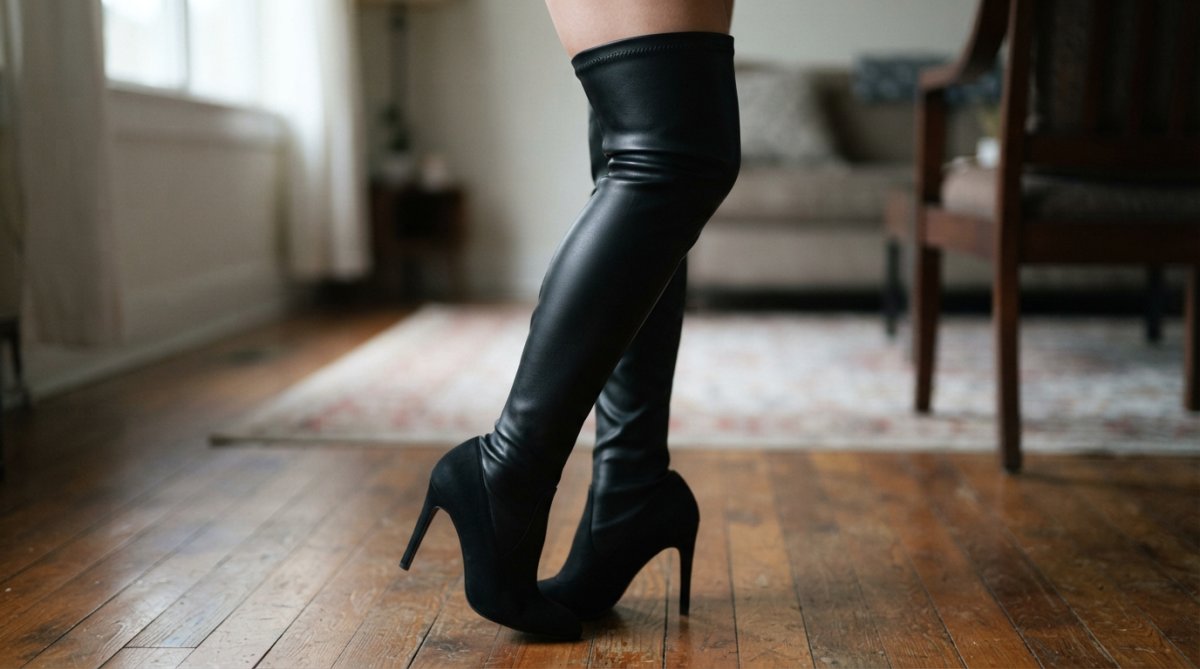
A third option is velcro strips. Self-adhesive velcro applied to the inside top of the sleeve and to your leg (or to your clothing if you're wearing tights) creates an adjustable anchor point. The advantage is that you can adjust tightness without removing the sleeve.
The material of the sleeve itself matters. High-quality stretch faux leather and vinyl have natural grip that cheaper materials don't. They hold their shape better and create more friction against your skin. Consider also the heel you're using. A very thin stiletto heel creates a narrower base than a chunky block heel. The narrower the heel, the more the sleeve needs to grip to stay stable.
Test your setup before wearing the sleeve out. Put it on, move around, bend your legs, sit down. Watch for any downward movement. Most people find that a combination approach works best: proper sizing plus one grip technique equals a sleeve that stays in place all day.
Choosing Materials That Work for Your Lifestyle
The two primary materials used in quality boot sleeves are stretch faux leather and stretch vinyl. Faux leather tends to have a more matte, sophisticated finish that looks closer to real leather. Vinyl has a slight sheen and is extremely durable and easy to clean.
If you travel frequently or pack your sleeves often, vinyl is more forgiving. It resists creasing and doesn't require conditioning. You can roll it, fold it, or compress it without permanent damage. Faux leather is slightly more delicate during packing but offers a more refined appearance once you're wearing it.
For everyday wear in a professional setting, faux leather typically looks more polished. Vinyl works great for casual wear, going out, or cosplay. Vinyl can be wiped clean with a damp cloth and dries quickly (peer-reviewed research). Faux leather benefits from occasional conditioning to prevent cracking. Neither requires special washing; both are washable in cool water and should be air-dried.
Bootsy- The Boot Sleeve offers both materials in multiple colors, from classic black and chocolate to statement prints like crocodile patterns. For example, consider the Vamp-The Boot Sleeve in Thigh High, High Quality Stretch Vinyl in Deep Cherry (https://bootsy.store/products/vamp-deep-cherry-thigh-high-boot-sleeve) or the Croc-The Boot Sleeve in Thigh High, High Quality Stretch Faux Leather in Chocolate Crocodile Print (https://bootsy.store/products/womens-plus-size-boot-chocolate-crocodile-animal-print-wide-calf-boot-sleeve). If you're unsure which material suits you, think about your most common use case. Professional settings favor faux leather. Frequent travelers favor vinyl. Choose based on the look you prefer.

Styling Your Boot Sleeves with Confidence
A thigh high boot sleeve fit that's technically perfect still needs to be styled right. The simplest approach is to match the sleeve color to your heel or to your outfit's dominant color. A black sleeve over a black heel disappears visually, creating the illusion of a real boot.
When you want the sleeve to stand out as a styling choice, pair a contrasting color with a neutral outfit. A deep cherry sleeve over a nude heel with neutral clothing reads as intentional fashion. Length of your outfit matters too. A thigh high boot sleeve works best with skirts, shorts, or dresses that hit above the knee. Anything that covers the top of the sleeve disrupts the line and makes the sleeve obvious.
Tights and hosiery change how the sleeve looks. Opaque tights create a seamless line from hip to heel. Sheer tights add subtle texture. Bare legs with the sleeve create a bold, intentional look. All three work depending on what you're going for. The most important rule is confidence. When you know your fit is correct and you've styled it intentionally, it shows.
Troubleshooting Common Fit Issues
Even with proper measurement and setup, fit issues sometimes emerge.
The sleeve slides down during the day. This almost always means the opening is too large for your leg. Confirm your measurement is accurate by remeasuring. If your measurement is correct but the sleeve still slides, try one of the non-slip methods: saran wrap, silicone grip, kinesiology tape, or velcro. If none of those work, you may be between sizes and need to size down.
The sleeve bunches or wrinkles around your leg. Bunching usually means the sleeve is too large or the material doesn't have enough elasticity. If you sized correctly, the issue is likely material quality. A high-quality sleeve with proper elasticity maintains contact.
The sleeve shows visible gaps between the material and your leg. Gaps happen when the sleeve is too small or when your leg shape doesn't match the sleeve's design. Some people have very cylindrical legs; others have more taper between thigh and calf. You might need a different style of sleeve or one with more graduated sizing.
The sleeve feels uncomfortable or restricts movement. Discomfort usually means the sleeve is too tight. Go up a size. A properly fitted sleeve should feel snug but not restrictive.
The sleeve looks obvious or cheap when you're wearing it. This is usually a material quality issue. Low-quality stretch materials look thin and plastic-y. High-quality faux leather and vinyl look intentional and finished.
The heel feels unstable inside the sleeve. This typically means the heel is too thin or narrow. Stiletto heels are more prone to this than block heels. Try using a heel grip or cushion inside the sleeve to increase friction and stability.
If you've worked through these troubleshooting steps and still have fit issues, reach out to the brand directly. Bootsy- The Boot Sleeve can help you find the right size and style for your specific measurements and needs.
Finding the right thigh high boot sleeve fit transforms how you wear your shoes. It's the difference between heels that work one way and heels that become versatile, season-spanning staples of your wardrobe. Bootsy- The Boot Sleeve solves this by sizing sleeves based on your actual leg measurements rather than shoe size, offering sizes from 14 to 60 inches in thigh circumference. With proper measurement, the right material for your lifestyle, and a non-slip technique that works for you, you'll have boots that fit, stay in place, and look intentional.
| Common Fit Problem | Root Cause | Solution |
|---|---|---|
| Sleeve slides down | Opening too large | Remeasure, size down, or use non-slip grip |
| Bunching or wrinkles | Sleeve too large or low elasticity | Size down or invest in higher-quality material |
| Visible gaps | Sleeve too small or leg taper mismatch | Size up or try different sleeve style |
| Uncomfortable tightness | Sleeve too tight | Size up; should be snug but not restrictive |
| Looks cheap or plastic | Low-quality material | Upgrade to high-quality faux leather or vinyl |
| Heel feels unstable | Heel too thin or narrow | Add heel grip or cushion inside sleeve |
Frequently Asked Questions
What if I'm between two sizes? Round up slightly. A sleeve that's slightly loose is easier to put on and adjust than one that's too tight. You can always use a non-slip grip method to keep it in place.
Will the sleeve work with all my heels? Most heels work, but very thin stilettos and extremely narrow heels can be unstable inside a sleeve. Block heels and wider heel bases work best. Test the sleeve on your most-worn heel first.
How do I know if my measurement is accurate? Measure twice in the same spot and compare. If you get the same number both times, you're accurate. If the numbers differ, measure a third time and use the most common result.
Can I wear the sleeve with flats? Most flats are too flexible and don't provide enough support for a sleeve. Heels with structure work best because they anchor the sleeve and keep it stable.
How long do boot sleeves last with frequent use? High-quality faux leather and vinyl sleeves last years with regular wear, especially if you care for them properly. Cheap materials may show wear within months. Invest in quality if you plan to wear the sleeve frequently.
Frequently Asked Questions
How do I know my thigh high boot sleeve fit size without ordering?
Measure your thigh circumference at the fullest point and your calf at the widest spot using a soft measuring tape. Bootsy- The Boot Sleeve sizes by these measurements (14" to 60" thigh circumference) rather than shoe size, so you can determine your fit before purchasing. If you're between sizes, opt for the larger option for comfort.
What's the best way to prevent stretchy boot sleeves for thick thighs from bunching?
Proper measurement is your first defense, sleeves sized too large will bunch. Second, ensure the top edge sits high enough on your thigh for the fabric tension to work against gravity. Silicone grip bands or kinesiology tape applied to the inner thigh can add friction without damaging the sleeve material. When pulling the sleeve on, smooth out any wrinkles from bottom to top before securing it in place.
Can I wear boot sleeves with all types of heels?
Boot sleeves work best with heels that have a stable heel structure, pumps, block heels, and kitten heels are ideal. Thin stilettos can work, but the narrower shoe profile may create less friction at the ankle, so you'll want to use additional grip solutions. Avoid very open-toed sandals or strappy heels where the sleeve would have minimal contact with the shoe. Bootsy- The Boot Sleeve is compatible with women’s shoe sizes 6-11.
How long do boot sleeves last if I wear them frequently?
High-quality stretch faux leather and vinyl sleeves hold up well with regular use when cared for properly. Wash by hand in cool water, air dry completely, and store flat or rolled loosely. The lifespan depends on how often you stretch them on and off, proper fit reduces unnecessary stress on the material.
This article was written using GrandRanker
0 comments