

Last Updated: October 27, 2026
Quick Summary
Styling winter heels starts with closed-toe shapes like pointed pumps, block heels, and heeled ankle boots, since open toes get wrecked by cold air, road salt, and slush. Choose block heels and textured rubber soles for grip, then add thin wool socks, tights, or thermal insoles for warmth without cutting circulation.
- Skip thin-soled stilettos on icy days and treat wet pavement near freezing as ice.
- A shoe repair shop can cement a thin rubber sole over a smooth outsole for better wet-pavement grip.
- Ask for a rubber heel tip rather than plastic when replacing worn heel tips.
- Size up a half size for winter if you plan to wear thick tights or socks in heels.
- Spray leather and faux leather with water repellent before the season and reapply every few weeks.
Table of Contents
- Start With Closed-Toe Heels Built for Cold Weather
- Pick Heel Shapes That Handle Snow, Ice, and Slush
- Winter Outfits With Heels: Formulas That Actually Work
- How to Wear Socks With Heels Without Looking Bulky
- How to Wear Open-Toed Heels in Winter (Yes, Really)
- How to Keep Feet Warm in Heels All Day
- Protect Your Heels From Salt, Rain, and Slush
- Build Your Cold-Weather Heel Look With Bootsy
- Frequently Asked Questions
Start With Closed-Toe Heels Built for Cold Weather
Styling high heels for winter starts with one rule: your toes need coverage. Cold air, road salt, and slush will wreck an open toe in minutes, so closed-toe shapes are the foundation of every winter heels look.
You do not need a whole new shoe collection, just the right shapes and a few smart layers.
Here is what works:
- Pointed-toe pumps look sharp and keep toes warm
- Closed-toe block heels give you a stable base
- Heeled ankle boots and booties handle light snow best
- Closed-toe wedges balance height with grip
Skip the thin-soled stilettos on icy days. The Occupational Safety and Health Administration's guidance on winter weather hazards is written for job sites, but the core warning applies to sidewalks too: ice and slush cause slips, and thin soles make them worse.
If you are weighing boot sleeves against tall leather boots, our boot sleeves vs tall leather boots comparison breaks down cost, fit, and care side by side before you commit.
Pick Heel Shapes That Handle Snow, Ice, and Slush
Traction decides whether a heel works in winter. A block heel spreads your weight and grips better than a stiletto, and a textured rubber sole beats smooth leather every time. The outsole, heel tip, and walking surface matter just as much as heel shape.
A shortlist of heel shapes to consider:
- Block heels - widest contact patch, most stability
- Chunky heeled booties - good ankle support, easy to walk in
- Kitten heels - low height, low risk, great for office days
- Closed-toe wedges - solid base, but watch smooth soles
- Stilettos - fine for cleared paths, risky on ice
What actually gives you grip
A heel grips when the outsole is softer than the ground and the tread has somewhere for water and slush to go. Smooth leather or hard plastic soles are the worst choice on wet pavement, no channels to push water away. Rubber outsoles with a shallow lug pattern are the practical standard.
Heel shape changes stability in two ways.
When high heels are unsafe on ice
No heel height makes ice safe. People often fall not on the ice itself but on the thin layer of meltwater or refrozen slush near curbs, crosswalks, and building entrances. If the sidewalk looks wet and the temperature is near or below freezing, treat it as ice.
Three fixes that cost little
- Add a rubber grip sole. A shoe repair shop can cement a thin rubber sole over the existing outsole. It changes how the shoe handles wet pavement and is the single most effective upgrade for a smooth-soled heel.
- Replace worn heel tips. The plastic or rubber cap on the bottom of the heel wears down fast on pavement. A worn tip is slick and unstable. Ask for a rubber tip rather than plastic when you have them replaced.
- Test the sole before you buy. Run your thumb across the bottom of a new heel. If it slides easily, it will slide on wet pavement. If it has some texture and resistance, it is a better starting point.
Wondering whether your stilettos can work with a boot sleeve at all? Our guide on whether boot sleeves fit stiletto heels answers that directly, including which heel shapes stay put and which slip.
Winter Outfits With Heels: Formulas That Actually Work
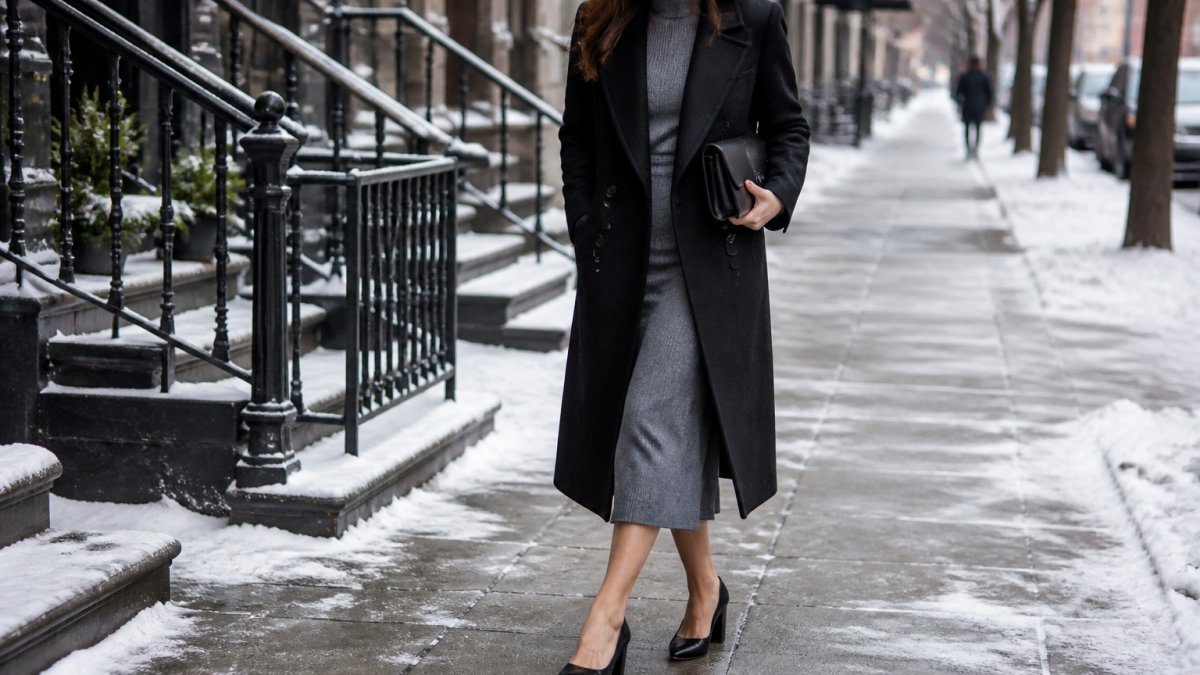
Winter outfits with heels come down to three formulas. Each one pairs a closed-toe heel with warm layers, so you get style without freezing.
Formula 1: The office look
- Tailored blazer or structured coat
- Midi skirt or wool trousers
- Closed-toe pumps or kitten heels
- Opaque tights in a matching tone
Formula 2: The weekend look
- Chunky knit sweater
- Mini or midi skirt with thick tights
- Heeled ankle boots or booties
- Crossbody bag, hands free for balance
Formula 3: The evening look
- Long wool coat over a slip dress
- Closed-toe heels or heeled boots
- Statement jewelry, minimal layers underneath
Layering matters more than any single piece. A structured coat over a light dress keeps you warm without bulk, and tights do the heavy lifting on your legs.
For more combinations, our styling guide for heels with boot sleeves walks through specific pairings by occasion and weather.
How to Wear Socks With Heels Without Looking Bulky
Socks with heels work when the sock is thin, the color is close to your shoe or tights, and the heel has some coverage. Bulky athletic socks bunch and ruin the line.
Try this approach:
- Choose thin wool or cashmere-blend socks, not cotton crew socks
- Match the sock to your tights or your shoe, not to your outfit
- Wear them with closed-toe heels only
- Fold the cuff once so it sits just above the shoe line
- Test the fit with a walk around the room before you leave
Thick socks have their place, but not inside a pointed pump. Save cozy socks for boots and booties.
CROC | Chocolate Croc Thigh-High Boot Sleeve | XS–6X Thigh & Calf Fit →
For a full-day comfort plan, our guide on how to wear boot sleeves comfortably all day covers fit, slippage, and what to check before a long day out.
How to Wear Open-Toed Heels in Winter (Yes, Really)
Open-toed heels in winter are a calculated risk, not a hard no. They work for short indoor events, car-to-door trips, and mild days with dry pavement.
Here is how to pull it off:
- Check the forecast first. Dry and above freezing? Go for it. Snow or slush? Skip it.
- Keep the exposure short. An indoor party or a dinner reservation is fine. A commute is not.
- Add a closed-toe backup. Keep a pair of closed-toe heels or booties in the car or your bag.
- Protect your feet. A thin sock or foot liner helps, and it keeps your toes from going numb.
- Treat the shoes afterward. Wipe off any salt or moisture as soon as you get home.
How to Keep Feet Warm in Heels All Day
Warm feet in heels come from three things: insulation underfoot, coverage on top, and dry materials. Get those right and you can wear heels through a full winter day. The wrong combination makes feet colder, not warmer, because it cuts circulation, the goal is warmth without pressure.
Compare your warmth options
Each layer has a trade-off. Pick based on time outside and how much room your shoe has.
- Thermal insoles and felt inserts. These add warmth underfoot and can be swapped between shoes. A thin wool or felt insole is the least disruptive option because it takes up little volume. A thick foam insole may push your foot up and make the heel slip.
- Tights. Opaque tights add a layer of insulation without much bulk. Fleece-lined tights are warmer but thicker, so test them with the shoe before a long day.
- Thin wool or cashmere-blend socks. Wool insulates even when slightly damp, which is why it beats cotton for winter. The key word is thin. A thin wool sock adds warmth without crowding the toe box.
- Toe warmers. Air-activated toe warmers stick to the sock or insole and produce heat for several hours. They work best in shoes with a little room, because they need airflow. In a tight pointed pump they can feel bulky and may make your toes sweat, which defeats the purpose.
The fit trade-off nobody mentions
Thick socks plus a snug heel is the fastest way to cold, aching feet.
A practical approach is to size up a half size for winter if you plan to wear thick tights or socks, or to keep a dedicated pair of winter heels that fit with your cold-weather layers. If you cannot size up, choose the thinnest warm layer that works and save the thick socks for boots.
Prolonged wear and blister prevention
A full day in heels is a different challenge from a two-hour event.
- Break in new heels at home. Wear them with your winter socks for short periods before a long day.
- Use a blister patch or moleskin on known hot spots before you leave, not after a blister forms.
- Keep a spare pair of dry socks at your desk or in your bag. Wet feet get cold fast, and a dry swap mid-day makes a difference.
- Plan your walking distance. If your commute involves several blocks, wear flat boots for the walk and change into heels at the destination. This is the most reliable way to wear heels all day without pain.
Protect Your Heels From Salt, Rain, and Slush
Protection is simple:
- Spray leather and faux leather with a water repellent before the season starts
- Wipe salt off with a damp cloth and a little white vinegar mixed with water
- Let wet shoes dry at room temperature, never on a radiator
- Stuff shoes with paper to hold their shape while drying
- Reapply protectant every few weeks during winter
The Environmental Protection Agency's overview of road salt and its effects explains why salt is so hard on materials: it draws moisture out and leaves a residue that keeps working until you wash it off. Clean your shoes the same day if you can.
Build Your Cold-Weather Heel Look With Bootsy
A boot sleeve can create the look of a tall or mid-calf boot with compatible heels you already own.
Bootsy boot sleeves are sized by thigh and calf measurements rather than shoe size.
Three options to start with:
| Style | Height | Fit Range | Price |
|---|---|---|---|
| MINI Chocolate Croc | Mid-calf | XS-4X calf | $29.99 |
| CROC Chocolate Croc | Thigh-high | XS-6X thigh and calf | $35.99 |
| BEST Black | Thigh-high | XS-6X thigh and calf | $35.99 |
The CROC thigh-high boot sleeve offers a chocolate croc texture.
Bootsy sleeves are designed to work with women's heels and select flats.
Winter does not have to end your heel season.
Bootsy offers a patent-pending boot sleeve sized by leg measurements rather than shoe size.
Ready to build your winter look? Browse the full Bootsy collection and find your fit by thigh and calf measurement.
Frequently Asked Questions
Are heels still in style in 2026?
If you already own compatible heels, Bootsy's $35.99 BEST thigh-high sleeve creates the look of a thigh-high boot.
Can you wear socks with high heels?
You can, and it is one of the fastest ways to keep feet warm in winter heels. Choose thin wool or cashmere-blend socks that fit close to the foot, and match the sock color to your shoe or tights so the line stays clean. Avoid thick athletic socks, which bunch at the toe and make closed-toe heels tight. For ankle boots and block heels, a crew sock in a matching tone reads intentional; for pumps, a sheer or opaque tight works better than a visible sock.
How do you make high heels safer to wear on slippery winter surfaces?
Start with the heel itself: a block heel or wedge spreads your weight and grips better than a stiletto on ice. Roughen a smooth sole with fine sandpaper or add adhesive traction pads, and take shorter steps with your weight over the ball of your foot. Walk on cleared paths where possible, and keep a pair of flat shoes at your desk or in your bag for icy stretches. No heel gives full grip on ice, so treat traction as a management plan rather than a guarantee.
How do you keep your feet warm while wearing heels in winter?
Bootsy's MINI mid-calf sleeve ($29.99) and CROC thigh-high sleeve ($35.99) are designed to create the look of boots with compatible heels and select flats.

0 comments