

Table of Contents
- How to Measure for Boot Sleeves Correctly
- Choosing the Right Boot Sleeve Fit for Your Body
- Step-by-Step Routine for Wearing Boot Sleeves All Day
- How to Keep Boot Sleeves from Slipping During the Day
- Wearing Boot Sleeves Over Leggings and Tights
- Faux Leather Boot Sleeve Care and Maintenance
- Managing Heat, Sweat, and Circulation All Day
- Frequently Asked Questions
Last Updated: October 6, 2026
How to Measure for Boot Sleeves Correctly
To wear boot sleeves comfortably, getting the right fit starts with accurate measurements. Boot sleeves work differently than traditional boots because they size by your leg, not your shoe.
Measure your thigh at the fullest part, about halfway between your hip and knee. Use a soft measuring tape and keep it snug but not tight. Write down this number.
The beauty of sizing by leg circumference is that it works for everyone. Whether you have petite legs or thick thighs, there's a size that fits your actual measurements.
Write down both measurements and keep them handy. You'll use them to pick the right style and size. This simple step prevents the frustration of ordering something that doesn't fit your body.
Choosing the Right Boot Sleeve Fit for Your Body
Proper fit starts with leg circumference
The right fit means your sleeve sits smoothly on your leg without gaps or pinching. A sleeve that's too loose will slip down throughout the day. One that's too tight creates pressure points and restricts circulation.
Your measurements determine everything. If your thigh measures 22 inches, you need a size that accommodates that exact measurement. The same applies to your calf.
The stretch material adapts to your leg shape, but it works best when you start with the right size. Think of it like choosing jeans: the right size hugs your curves without squeezing. Too big and it bunches. Too small and it restricts movement.
Heel compatibility and shoe selection
Boot sleeves work with most women's heels in sizes 6 through 11. The heel style matters less than the shoe's overall structure. A stiletto, block heel, or kitten heel all work equally well.
What matters most is that your shoe has a defined heel and a fitted opening at the ankle. Slip-on flats sometimes work, but shoes with laces or straps give you better ankle stability. The sleeve needs something to grip against so it doesn't slide down when you walk.
Consider your heel height too. Taller heels naturally elongate your leg and make the sleeve look more intentional. Lower heels work fine, but the visual effect changes slightly. Test different heel styles in your closet to see which shoes look best with your chosen sleeve style.
Step-by-Step Routine for Wearing Boot Sleeves All Day
Step 1: Prepare your skin and socks
Start with clean, dry skin. Moisture creates friction, which leads to slipping and discomfort. If your legs are damp from showering, give them time to dry completely before putting on the sleeve.
Wear socks that fit well and don't bunch. Smooth, fitted socks reduce friction between your skin and the sleeve material. Avoid thick, bulky socks that create lumps under the sleeve. Cotton or moisture-wicking blends work best for all-day wear.
Some people prefer wearing two thin socks instead of one thick one. This creates a smoother surface and reduces hot spots. Experiment to find what feels best on your legs.
Step 2: Position and slide on the sleeve
Sit down to put on your boot sleeve. This takes pressure off your leg and makes the process easier.
Slide your foot and heel into the sleeve first. The heel should sit at the bottom of the sleeve opening. Once your heel is positioned, stand up and gently pull the sleeve up your leg.
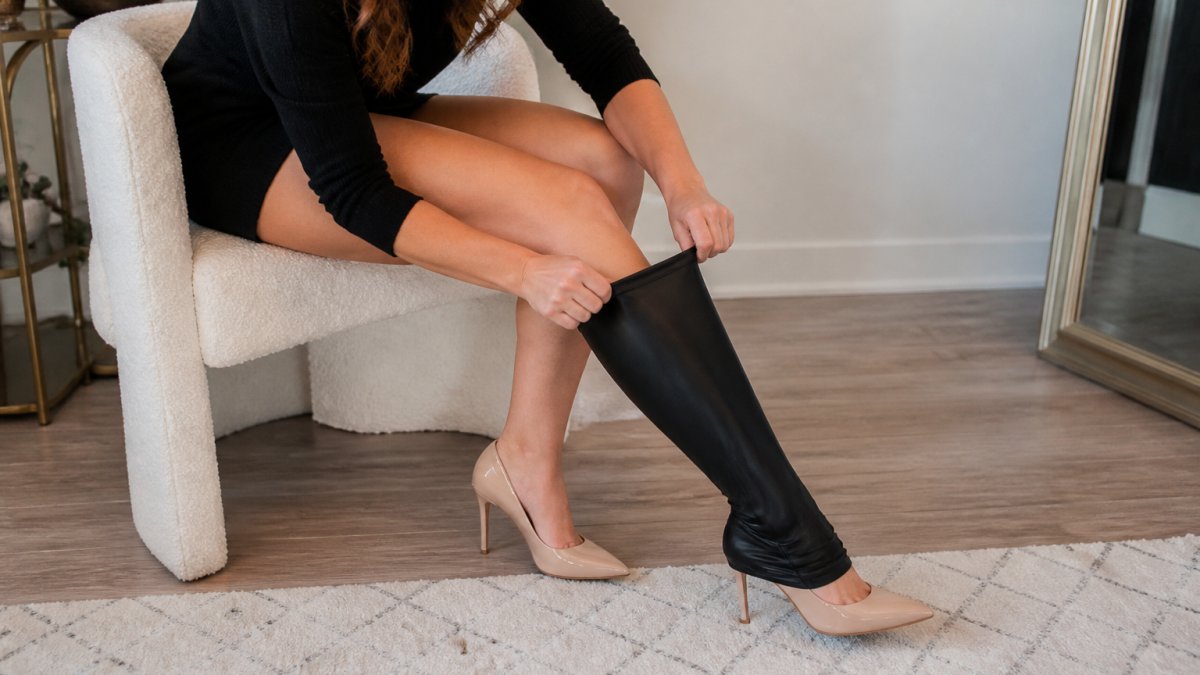
Pull the sleeve all the way up to where it should sit. For thigh-high sleeves, this means just below your hip. For mid-calf styles, stop at your calf.
Step 3: Adjust for comfort and alignment
Once the sleeve is on, check the alignment. It should sit straight on your leg with no twists or folds. Look in a mirror from the front and side to verify it's positioned correctly.
Smooth out any wrinkles by gently pulling the material in different directions. The sleeve should hug your leg evenly without gaps. If you see gaps at the ankle or thigh, your size might not be right, or the shoe underneath needs adjustment.
Make sure the heel of the sleeve aligns with your shoe's heel. A misaligned heel creates an awkward angle that throws off the whole look and feel. Take a moment to get this detail right before you start your day.
Step 4: Build wear time gradually
Don't jump into wearing your boot sleeve for eight hours on day one. Start with two to three hours and add more time as your leg adjusts. This gradual approach prevents soreness and helps you identify any fit issues early.
Pay attention to how your leg feels. Mild tightness is normal. Sharp pain, numbness, or tingling means something is wrong. Stop wearing the sleeve and reassess your size or positioning.
After a week of gradual wear, most people can wear boot sleeves comfortably for a full day. Your skin adapts, and the material feels like a natural part of your outfit.
How to Keep Boot Sleeves from Slipping During the Day
Preventing slipping with proper fit and positioning
Slipping happens when the sleeve is too loose or when your leg is too moist. The most reliable prevention is starting with the correct size. A sleeve that fits your thigh and calf measurements won't slip, even during active days.
Positioning matters too. Make sure the sleeve sits high enough on your leg. If it creeps down within an hour, it's probably too large. If it feels tight and uncomfortable, it might be too small. The right size stays in place without effort.
CROC | Chocolate Croc Thigh-High Boot Sleeve | XS–5X Thigh & Calf Fit →
Some people add a thin layer of body lotion or anti-chafing balm to their leg before putting on the sleeve. This reduces friction and helps the material stay put. Use sparingly, too much moisture causes slipping.
Managing moisture and friction
Sweat is the enemy of all-day comfort. Moisture makes your skin slippery and causes the sleeve to shift. Keep moisture under control by wearing moisture-wicking socks and taking breaks when needed.
If you're in a warm environment or moving around a lot, take off the sleeve for five to ten minutes every few hours. This lets your leg breathe and reduces sweat buildup. When you put it back on, your leg will be drier and the sleeve will stay in place better.
For high-moisture situations like outdoor events or physical activity, consider taking the sleeve off entirely. It's easy to remove and put back on, so you can adjust throughout the day as needed.
Wearing Boot Sleeves Over Leggings and Tights
Layering for comfort and style
Leggings and tights create a smooth, slippery surface under your boot sleeve. This can help the sleeve stay in place because there's less friction between your skin and the material. Many people prefer this combination for all-day wear.
Choose fitted leggings or tights that don't bunch at the ankle. Thick, textured fabrics can create lumps under the sleeve. Smooth materials like nylon blends work best. The tighter the fit, the better the sleeve will sit on top.
Opaque tights or leggings also give you more styling options. You can wear lighter-colored sleeves without worrying about your skin showing through. This expands your wardrobe possibilities.
Preventing bunching and rolling
Bunching happens when fabric gathers under the sleeve. Prevent this by choosing tights or leggings that fit your leg properly. They should be snug without being restrictive.
Pull your tights or leggings all the way up to your hip before putting on the sleeve. Any slack fabric will bunch when the sleeve goes on top. Make sure the ankle opening sits smoothly against your heel.
If bunching still happens, try wearing a size up in your tights. The extra room reduces the likelihood of fabric gathering. Some people also smooth out the leggings as they slide the sleeve on, using both hands to eliminate wrinkles before they become permanent folds.
Faux Leather Boot Sleeve Care and Maintenance
Cleaning and washing your sleeves
Faux leather and vinyl sleeves are easy to care for. Wipe them down with a damp cloth after wearing them. This removes sweat and dirt that accumulate during the day.
For deeper cleaning, hand wash your sleeves in cool water with mild soap. Use a soft cloth or sponge to gently scrub the material. Rinse thoroughly and pat dry with a towel. Never put them in the washing machine or dryer, as heat and agitation damage the material.
Store your sleeves flat or rolled loosely in a cool, dry place. Avoid direct sunlight, which can fade the color over time. Keep them away from heat sources like radiators or air vents.
Conditioning and storage between wears
Between wears, store your sleeves somewhere they won't get crushed. A shelf or drawer works well. If you travel frequently, roll them gently and place them in a packing cube to protect them from damage.
Managing Heat, Sweat, and Circulation All Day
Wearing boot sleeves all day means managing temperature and moisture. Your leg gets warm inside the sleeve, especially in hot weather or during physical activity.
Take breaks every two to three hours. Remove the sleeve for five to ten minutes to let your leg cool down and dry off.
Watch for signs of poor circulation. Numbness, tingling, or a feeling of pins and needles means the sleeve is too tight. Remove it immediately and reassess your size.
Wear moisture-wicking socks to manage sweat. Cotton absorbs moisture but holds it against your skin. Synthetic blends pull sweat away from your leg, keeping you drier.
In very hot weather, consider wearing your boot sleeve for shorter periods. There's no rule that says you must wear it all day.
Boot sleeves transform your favorite heels into stylish boots, but only when they fit properly and stay comfortable all day. Our patent-pending stretch faux leather and vinyl materials move with your leg while staying in place. Add to your collection and discover how the right fit changes everything about your boot-wearing experience.

Frequently Asked Questions
How do you measure your thighs and calves for boot sleeves?
Measure your thigh at its widest point and your calf at its fullest. Use a soft measuring tape, keep it snug but not tight, and measure while standing. Write down both measurements in inches. The Bootsy Boot Fit Guide walks you through this process so you can select the correct XS-5X size for your leg circumference. Accurate measurements prevent gaps, pinching, and slipping during all-day wear.
How do you keep boot sleeves from slipping down throughout the day?
Proper fit is your first defense. A sleeve sized to your actual thigh and calf measurements will stay in place without constant adjustment. Clean, dry skin also reduces slipping; moisture creates friction that works against you. Wearing clean socks or lightweight tights under your sleeves adds grip. If you notice slipping after a few hours, take a short break, dry your leg, and reposition the sleeve. Moisture management and correct sizing eliminate most slipping issues.
Can you wear boot sleeves over leggings or tights all day?
Yes. Leggings and tights create a smooth surface that actually helps prevent slipping and friction against bare skin. Choose lightweight, breathable leggings to avoid excess heat buildup under the sleeve. Thicker materials can bunch or create pressure points, so opt for a single layer of fitted leggings rather than multiple layers. This combination keeps your skin protected, reduces blisters, and allows you to wear boot sleeves for longer periods comfortably.
How do you clean and maintain faux leather boot sleeves?
Wash your sleeves by hand in cool water with mild soap, then air-dry flat or hanging. Do not machine wash, bleach, or use heat. Once dry, wipe with a soft cloth and store in a cool, dry place away from direct sunlight. Proper care keeps the stretch faux leather or vinyl supple and extends the life of your sleeve, especially if you travel frequently and pack or remove them regularly.
0 comments