

Last Updated: October 23, 2026
Quick Summary
The best heel heights for wide calf boots sit between 1 and 3 inches, with 2 to 2.5 inches delivering the most reliable all-day comfort. That range keeps your weight centered over the ball of your foot while giving your calf room to move inside the shaft.
- Measure your calf at the widest point while standing, at the end of the day, and size to the larger leg.
- Block heels outperform stilettos at the same height because the wider base spreads pressure and steadies your stride.
- For commuting, choose 1 to 2 inches with a block or lug sole to handle stairs and uneven pavement.
- For all-day walking, 1 to 1.5 inches with a low block or wedge causes the least arch strain.
- Slide two fingers between your calf and the boot at the widest point; any tighter and the zipper will strain.
Table of Contents
- Best Heel Heights for Wide Calf Boots: What Actually Works
- How to Measure Calf Circumference for Boots
- Comfortable Heel Height for Boots: The 1 to 3 Inch Range
- Wide-Calf Boots with Block Heels: Why Shape Matters More Than Height
- Wide-Calf Boots That Make Legs Look Longer
- Heel Height by Use Case: Commuting, Work, Events, and All-Day Walking
- Fit Checks for Shaft, Foot, and Heel Before You Buy
- Conclusion
- Frequently Asked Questions
Best Heel Heights for Wide Calf Boots: What Actually Works
The best heel heights for wide calf boots sit between 1 and 3 inches, with 2 to 2.5 inches delivering the most reliable all-day comfort. That range keeps your weight centered over the ball of your foot while giving your calf room to move inside the shaft. Below, we break down heel height by use case, explain how heel shape changes everything, and give you a measurement routine you can finish in five minutes.
The core tension here is simple: a taller heel changes how your leg looks, but it also changes how your calf sits inside the boot. Get the height wrong and the shaft pulls, the zipper strains, or your arch aches by lunchtime. Get it right and a wide calf boot feels like it was made for you.
How to Measure Calf Circumference for Boots
Wrap a soft measuring tape around the widest part of your calf while standing, keeping the tape snug but not tight. That number, not your shoe size, decides whether a boot shaft will close comfortably.
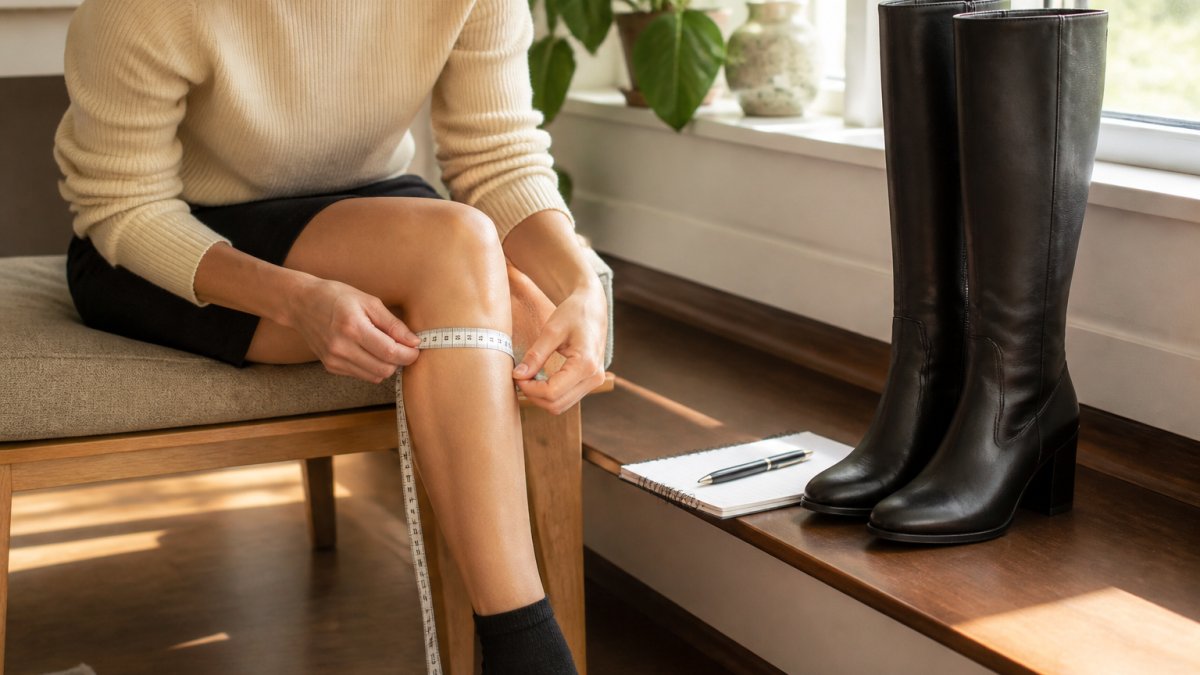
Do it at the end of the day when swelling peaks, and wear the socks or tights you plan to pair with the boots. For a step-by-step walkthrough, see how to measure calf for boots.
Comfortable Heel Height for Boots: The 1 to 3 Inch Range
A comfortable heel height for boots lands between 1 and 3 inches, and wide calf wearers should stay at the lower end of that band. Here's why: a wider calf adds weight and volume above the ankle, and a higher heel shifts your center of gravity forward, which makes the calf work harder to stabilize you. The result is fatigue that shows up fast.
- 1 to 1.5 inches: near-flat, best for long walking days and anyone with plantar fasciitis or heel pain
- 2 to 2.5 inches: the practical middle, flattering without punishing your arch
- 3 inches: the ceiling for most wide calf boots, fine for events but not for a full workday
A common mistake is buying a 4-inch stiletto because it looked great in the photo, then discovering the shaft gapes at the top and the ball of the foot burns after an hour. Height and fit are a package deal.
Wide-Calf Boots with Block Heels: Why Shape Matters More Than Height
Wide-calf boots with block heels outperform stilettos at the same height because the wider base spreads pressure and steadies your stride.
Heel shape changes three things:
- Balance: a block heel gives side-to-side support on uneven sidewalks
- Posture: a low, broad heel keeps your pelvis neutral instead of tilting you forward
- Calf silhouette: a chunky heel visually balances a fuller calf, while a thin stiletto can make the leg look top-heavy
Wedge heels sit between the two. They distribute weight along the whole foot, which helps on long days, but they offer less lateral support than a true block. Lug soles add grip for wet pavement and winter, at the cost of a heavier boot.
Wide-Calf Boots That Make Legs Look Longer
The trick to wide calf boots that make legs look longer is a heel in the 2 to 3 inch range paired with a shaft that ends at or just below the knee. That combination draws the eye upward in one continuous line instead of chopping the leg at mid-calf. But the mechanism is worth understanding, because heel height and heel shape change perceived calf proportions in ways most styling advice skips.
Why the 2 to 3 inch range works. A moderate heel lifts the back of the foot, which tilts the lower leg forward slightly and lengthens the visible line from ankle to knee. Below 2 inches, the lift is too small to change the silhouette. Above 3 inches, the knee bends more and the calf muscle engages, which can make a fuller calf look more pronounced rather than less. The 2 to 3 inch band is where the line lengthens without the calf bulging.
Shaft height does the rest. A shaft that stops mid-calf visually shortens the leg because it creates a horizontal break at the widest part of the calf.
Color continuity. Match your boot color to your tights or trousers and the line continues unbroken from hem to toe.
A quick fit check for the lengthening look. Before you buy, stand in the boots and look at where the shaft ends.
Heel Height by Use Case: Commuting, Work, Events, and All-Day Walking
Match heel height to how long you'll be on your feet and what you'll be walking on, not to how the boot looks on the shelf.
| Use case | Recommended heel height | Heel shape | Why it works | Watch out for |
|---|---|---|---|---|
| Commuting | 1 to 2 inches | Block or lug sole | Handles stairs, platforms, and uneven pavement | A shaft that gaps at the top when you climb stairs; check knee bend before buying |
| Office and work | 2 to 2.5 inches | Stacked block | Professional line, comfortable through a full day | A tight instep that pinches after hours of sitting and standing |
| Events and evenings | 2.5 to 3 inches | Block or sculpted | Lift for photos, still walkable to the car | A narrow stiletto base that feels unstable on slick floors |
| All-day walking | 1 to 1.5 inches | Low block or wedge | Least arch strain, best stability | A wedge that rolls outward on uneven ground if the sole is too soft |
| Travel | 1.5 to 2 inches | Block | Packs flat, works for multiple outfits | A tall shaft that creases in a carry-on and never recovers |
Commuting. The hidden variable is stairs and platform edges. A 2-inch block heel is fine if the shaft stays put when you climb; a 1-inch lug sole is safer if your route includes wet pavement or train gaps.
Office and work. Two to 2.5 inches with a stacked block is the reliable middle because it keeps a professional line without forcing your arch to work all day. For wide-calf knee-high options suited to professional outfits, see wide calf knee high boots for professional outfits. The fit risk here is the instep, not the calf: a wide calf boot with a narrow footbed will pinch across the top of your foot after a few hours of sitting and standing. If you sit most of the day, a slightly lower 2-inch heel reduces pressure on the ball of the foot when you stand up.
Events and evenings. A 2.5 to 3-inch block or sculpted heel gives the lift you want for photos while staying walkable to the car.
All-day walking. One to 1.5 inches with a low block or wedge is the least taxing option. If you want boots proven comfortable for long wear, see comfortable wide calf boots for walking all day. A wedge distributes weight along the whole foot, which helps on long days, but a soft wedge can roll outward on uneven ground. A low block gives more side-to-side support. If you have plantar fasciitis, bunions, or knee issues, stay at 2 inches or below and prioritize a cushioned footbed; a podiatrist can advise on arch support inserts that fit inside a boot shaft.
Travel. One and a half to 2 inches with a block heel packs flat and works across outfits. The fit risk is the shaft: a tall knee-high boot that creases in a carry-on often stays creased. A mid-calf or ankle boot with a moderate heel travels better if you're short on luggage space.
Fit Checks for Shaft, Foot, and Heel Before You Buy
Run three checks before you commit, and you'll avoid most returns. For broader tips on finding tall boots that fit perfectly, see tips for finding tall boots that fit perfectly. Wide calf boots fail at the shaft first, the foot second, and the heel last, so test in that order.
- Shaft: slide two fingers between your calf and the boot at the widest point. Any tighter and the zipper will strain when you sit.
- Knee bend: sit down. The shaft should not dig into the back of your knee or gap open at the top.
- Instep: your foot should slide in without forcing. A tight instep means the boot is too narrow regardless of calf width.
- Heel slip: walk ten steps. A small lift is normal; a sliding heel means the boot is too long.
Conclusion
The right heel height for wide calf boots comes down to matching your daily mileage, not your Pinterest board. Start at 2 to 2.5 inches with a block heel, measure your calf at the end of the day, and check the shaft before anything else. If you already own heels you love and just want the boot look without hunting for a shaft that fits, our boot sleeves turn your existing shoes into mid-calf and thigh-high styles sized by calf and thigh measurement rather than shoe size.
Frequently Asked Questions
What heel height is most comfortable for wide-calf boots?
A heel between 1 and 3 inches is the most comfortable range for wide-calf boots. This height lifts your arch slightly without shifting weight onto the ball of your foot the way higher heels do. Block heels and wedge heels in this range give you a stable base, which matters more when the boot shaft is snug around a wider calf. If you stand or walk for hours, stay closer to 1 to 2 inches.
How do I measure my calf for wide-calf boots?
Wrap a soft measuring tape around the widest part of your calf, usually 2 to 3 inches below the knee, and keep it level and snug without pressing into the skin. Measure both legs because one is often larger. Then compare that number to the boot's calf-width range, not your shoe size.
Do wide-calf boots with block heels feel more stable than stilettos?
Yes. A block heel spreads your weight across a wider surface, so your ankle has less side-to-side wobble on uneven sidewalks and stairs. Stilettos concentrate weight on a small point, which is harder to balance when the boot shaft is fitted around a wider calf. For all-day wear, a 2-inch block heel or a low wedge is the safer choice for stability and walking comfort.
What boots make legs look longer?
Boots that match your skin tone or your tights create an unbroken line from foot to knee, which makes legs look longer. A pointed or almond toe and a heel of 2 to 3 inches add height without looking heavy. Keep the shaft height just below or at the knee, and avoid a wide cuff or contrast band at the top, which cuts the leg visually and shortens the look.
Finding wide calf boots that fit is still harder than it should be, and heel height is only half the puzzle. At Bootsy- The Boot Sleeve, we take the other half: our patent-pending sleeves convert the heels and some flats you already own into boots, sized by calf and thigh measurements from 14" to 60" instead of shoe size, in stretch faux leather and vinyl that move with you. Get started with Bootsy- The Boot Sleeve and build the boot looks you want from the shoes already in your closet.

0 comments