

Table of Contents
- Understanding Boot Sleeves and Heel Compatibility
- Boot Sleeve Fitting Guide: Measuring Your Leg and Shoe
- Step-by-Step Instructions for Wearing Boot Sleeves
- How to Style Boot Sleeves for Any Outfit
- DIY Boot Covers for Heels: Materials and Alternatives
- Preventing Slip and Maintaining Your Boot Sleeves
- Common Mistakes and Troubleshooting
- Conclusion
Last Updated: August 19, 2026
Understanding Boot Sleeves and Heel Compatibility
Boot sleeves are stretchy fabric accessories that transform your existing heels into stylish boots instantly by covering the gap between your heel and leg. Not every heel works equally well, stilettos require secure grip on a narrower shoe, while block heels provide more surface area for anchoring. Heel height matters too, as taller heels create more distance between shoe and leg, affecting how the sleeve sits.
Bootsy- The Boot Sleeve designs products specifically for this compatibility challenge. Their stretch faux leather and vinyl materials accommodate thigh and calf measurements from 14 inches to 60 inches, eliminating the traditional shoe-size limitation that makes standard boots inaccessible for many people. The best boot sleeves grip your heel firmly enough to stay in place during movement while remaining comfortable for extended wear.
Boot Sleeve Fitting Guide: Measuring Your Leg and Shoe
Proper measurement is the foundation of wearing boot sleeves over heels successfully. Unlike traditional boots sized by shoe size alone, boot sleeves depend on accurate leg measurements.
Taking Accurate Thigh and Calf Measurements
Measure your thigh circumference at the fullest point, typically 2-3 inches below your hip bone, with a soft measuring tape snugly around your thigh while standing with weight distributed evenly. The tape should be firm enough to stay in place but loose enough that you can slip a finger underneath.
Next, measure your calf at its widest point, usually about halfway between your knee and ankle, using the same consistent tension. Record both measurements in inches. Bootsy- The Boot Sleeve uses these exact measurements for sizing rather than shoe size, accommodating the actual dimensions of your legs regardless of shoe size.
Checking Heel Compatibility
Examine your heel's design before purchasing a boot sleeve. The heel should have enough shaft surface area to grip the sleeve material. Chunky block heels, wedges, and platform shoes work exceptionally well because their broader base provides stability and more surface for the sleeve to anchor against. Check the heel height and shaft length, a 3-inch heel with a tall shaft gives the sleeve more material to grip than a 2-inch heel with minimal shaft.
Step-by-Step Instructions for Wearing Boot Sleeves
Preparing Your Heel
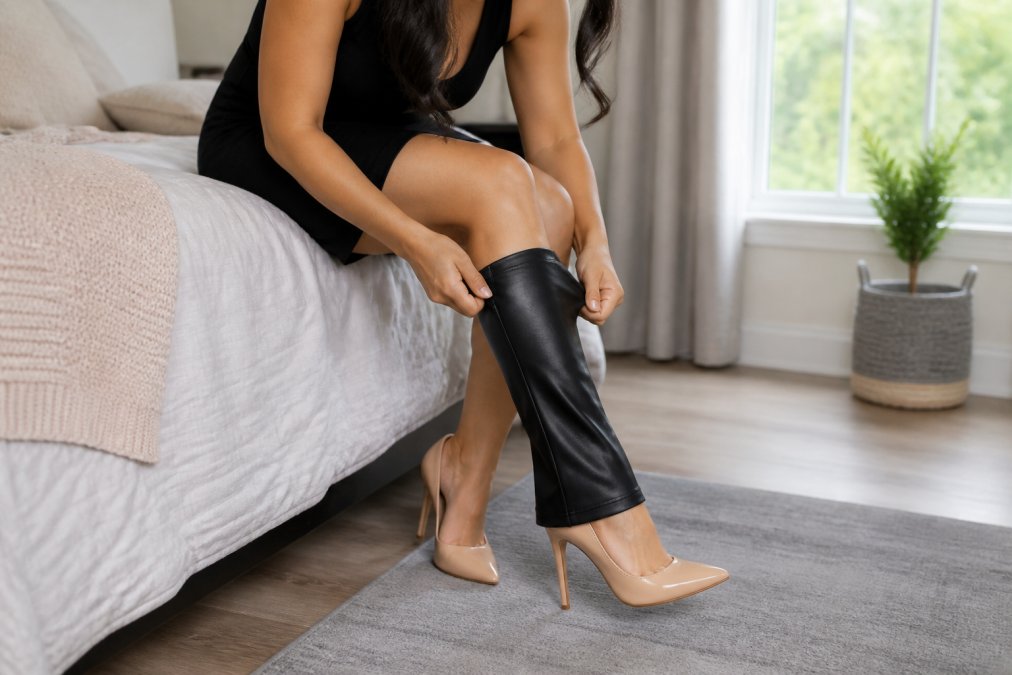
Ensure your heel is clean and dry before sliding on a boot sleeve, as dust or moisture reduces grip and causes slipping. Put on your heel and fasten it completely, an unstable heel will shift as you slide the sleeve up, making proper placement nearly impossible. Sit in a comfortable position where you can easily reach your leg and shoe.
Sliding On the Boot Sleeve
Gently stretch the sleeve opening wide enough to fit over your heel, then slide it slowly and deliberately up your leg. Guide the sleeve evenly, ensuring it sits smoothly without wrinkles or folds. Continue pulling upward until it reaches your desired height, for thigh-high sleeves, extend as high as you want on your thigh; for mid-calf sleeves, stop just below the knee.
Securing the Fit
Once positioned, smooth out any wrinkles by running your hands down the sleeve. The material should feel taut but not painfully tight, and you should be able to slip a finger under the top edge. Test the grip by gently tugging on the sleeve, it should stay in place without sliding down. Stand up and walk around to assess the fit; the sleeve should move with your leg naturally.
How to Style Boot Sleeves for Any Outfit

Boot sleeves over heels work with virtually any outfit when treated as a fashion statement. With casual outfits, pair them with jeans and a blazer for a put-together look. For dressier occasions, wear them with dresses, skirts, or tailored pants, a knee-length dress paired with a thigh-high boot sleeve creates the illusion of longer legs.
The color of your sleeve matters for visual cohesion. Black sleeves work with almost everything and create a simplified look. Chocolate or deep burgundy tones pair beautifully with warm-toned outfits. Consider the texture and material of your sleeve when styling, faux leather sleeves project a polished, professional appearance suitable for work, while vinyl sleeves have a shinier finish that reads as more playful or fashion-forward.

DIY Boot Covers for Heels: Materials and Alternatives
Some people prefer creating custom boot sleeves rather than purchasing ready-made options. DIY boot covers require careful pattern drafting, accurate seam allowance calculations, and proper sewing skills. The process begins with cling wrap and duct tape to create a custom pattern based on your exact leg measurements, then tracing onto stretch fabric like spandex or stretch faux leather.
The sewing process demands precision with stretch stitches or ballpoint needles designed for elastic fabrics. Many DIYers find that professional-grade stretch faux leather or vinyl produces better results than spandex, which can be temperamental.
For those without sewing skills, ready-made options like Bootsy- The Boot Sleeve eliminate technical challenges entirely. Their pre-made sleeves come in various sizes based on thigh and calf measurements, with professional seam finishing and tested elasticity. For most people, the time investment and skill required for DIY construction makes purchasing a quality ready-made sleeve the more practical choice.
Preventing Slip and Maintaining Your Boot Sleeves
Boot sleeve slipping is the most common complaint, but several strategies prevent it effectively. The primary solution involves ensuring proper fit through accurate measurement. A sleeve that's too large will slip regardless of technique, while a properly sized sleeve stays in place naturally.
Heel surface texture affects grip significantly. Some people apply a thin layer of clear nail polish or fashion tape to their heel's shaft to create more texture for the sleeve to grip. Some sleeves include elastic bands or hook-and-loop closures at the top to secure against your leg, preventing downward migration throughout the day.
Maintain your boot sleeves by hand washing in cool water with mild soap, then laying flat to dry. Avoid wringing or twisting the material, which can damage elasticity. Never use hot water or high heat. Store sleeves flat or rolled gently, never folded tightly, and keep them away from direct sunlight and heat sources. Inspect regularly for signs of wear and repair small tears or loose seams promptly.
Common Mistakes and Troubleshooting
The most frequent mistake is purchasing the wrong size based on shoe size rather than leg measurements. Boot sleeves over heels are sized by thigh and calf circumference, not shoe size. Measuring accurately before purchasing prevents this costly error.
Another common issue involves expecting the sleeve to stay perfectly in place without anchoring. Even well-fitted sleeves benefit from fashion tape or built-in elastic bands. Some people struggle with the sleeve bunching at the transition between heel and leg, adjust the position so the sleeve sits evenly, then smooth out wrinkles before standing.
Discomfort around the top edge usually indicates improper fit or sizing. If the sleeve feels too tight, you may need a larger size; if it feels loose and slips, you need a smaller size. Difficulty getting the sleeve on and off suggests either incorrect sizing or improper technique, practice the sliding motion slowly and deliberately. Some heels simply don't work well with sleeves, particularly extremely narrow stilettos or heels with minimal shaft.
Finding the right boot sleeve that works with your existing heel collection shouldn't require trial and error. Bootsy- The Boot Sleeve solves this by sizing based on your actual thigh and calf measurements, 14 inches to 60 inches, rather than shoe size. Their stretch faux leather and vinyl materials provide the durability and elasticity needed for daily wear, transforming your favorite heels into stylish boots instantly. Get started with Bootsy- The Boot Sleeve's thigh-high collection and discover how many new looks you can create from your existing shoe collection.
Frequently Asked Questions
Can you wear boot sleeves over any type of heel?
Boot sleeves work best with most heel styles, including stilettos, block heels, and platform heels with shoe sizes 6-11. The key is ensuring your heel has a smooth surface and stable sole for the sleeve to grip. Very thin or extremely narrow heels may shift more easily, so proper securing methods become even more important. Always check your specific heel's compatibility before purchasing.
How do you keep boot sleeves from sliding down during the day?
Proper fit is your first defense against slipping. Measure your thigh and calf accurately before ordering, boot sleeves sized for your exact measurements will stay in place naturally. For added security, use fashion tape along the upper inner edge where the sleeve meets your leg, or wear shorts or leggings underneath to create friction. Some wearers also apply a thin grip liner inside the top of the sleeve for extra hold throughout the day.
What materials work best for boot sleeves?
High-quality stretch faux leather and vinyl are the top choices for durability and aesthetic appeal. Stretch faux leather offers a sophisticated look with natural elasticity that moves with your leg, while vinyl provides a bold, statement appearance. Both materials are easy to clean and maintain. Spandex blends add flexibility but may show wear faster with frequent on-and-off movement. Avoid stiff, non-stretch fabrics that won't conform to your leg shape.
Are boot sleeves comfortable for all-day wear?
Yes, when properly fitted to your measurements, boot sleeves are comfortable for extended wear. The stretch fabric should feel snug but not restrictive, you should be able to move your leg freely and sit without discomfort. Start with shorter wearing periods to let your leg adjust to the sensation. If you experience tightness or circulation issues, your size may be too small. Quality materials like stretch faux leather offer breathability, making all-day wear more pleasant.
This article was written using GrandRanker
0 comments