

Table of Contents
- Why Travel Footwear Strategy Matters
- How to Make Heels Look Like Boots for Travel
- How to Pack Shoes Efficiently Without Sacrificing Style
- Choosing Versatile Footwear for Multiple Climates
- Breaking In Travel Shoes and Preventing Blisters
- Managing Shoe Odors and Maintenance on the Road
- Footwear Accessories That Transform Your Travel Wardrobe
- Frequently Asked Questions
Last Updated: September 26, 2026
Why Travel Footwear Strategy Matters
Most travelers pack one or two pairs of shoes to save luggage space, missing opportunities to transition between day and evening looks. Travel footwear styling hacks change this equation entirely.
The real problem isn't needing more shoes, it's not maximizing the ones you own. A single pair of heels can work as casual daytime wear, formal evening wear, or a boot-like look depending on styling. At Bootsy- The Boot Sleeve, travelers can transform their packing by treating footwear styling as a multiplier. The goal: pack less, look more, stay comfortable.

Travel footwear styling uses strategic layering and smart accessories to make shoes work across multiple contexts. Treating shoes as modular wardrobe components unlocks flexibility that traditional packing can't deliver.
How to Make Heels Look Like Boots for Travel
The most practical travel footwear styling hack is transforming heels into boots with a boot sleeve. This creates a new silhouette that looks intentional, provides leg coverage, and works for formal settings.
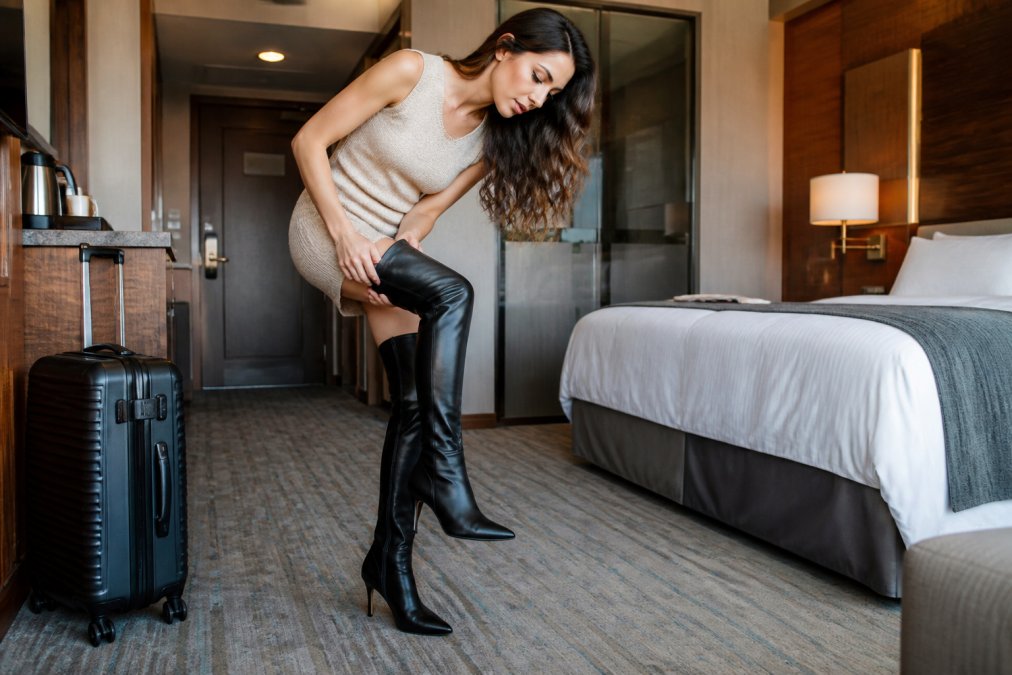
The Boot Sleeve Solution
A boot sleeve is a stretch fabric accessory that slips over your heel to create a full boot appearance. Instead of packing dedicated boots, you carry a lightweight sleeve that weighs almost nothing and collapses into a pocket.
The Bootsy- The Boot Sleeve is sized by leg circumference (thigh measurements from 14" to 60") rather than shoe size, adapting to your body. The stretch faux leather creates a smooth silhouette without bulging, avoiding the discomfort and fatigue of traditional boots during long walking days.
Applying a boot sleeve takes seconds: slip it over your heel and adjust to your desired height. The material grips securely without zippers or fasteners, ensuring reliability when creating multiple looks from limited footwear.
Styling Heels as Day and Evening Looks
The same heel transforms completely with or without a boot sleeve. Wear it alone during the day with cropped pants or skirts for a casual look. In the evening, add the boot sleeve with formal dress or tailored pants for a polished, intentional look.
This dual-purpose approach is what makes travel footwear styling effective: you use styling and accessories to create context shifts rather than buying different shoes. A nude or black heel pairs with almost any color palette for seamless day-to-evening transitions.
How to Pack Shoes Efficiently Without Sacrificing Style
Efficient packing is where travel footwear styling delivers its biggest payoff. Strategic packing combined with smart styling means you can fit everything into carry-on luggage.
The One-Bag Approach
One-bag travel requires shoes that work across multiple contexts and pack small. A typical pair of boots takes up as much space as several lighter shoes. Heels plus a boot sleeve solves this immediately.
Select one neutral heel (black, nude, or tan) as your anchor for casual and formal wear. Add one flat for comfort during long walking days. These two pieces plus a boot sleeve create four distinct looks: heel alone (daytime casual), heel with boot sleeve (evening), flat (walking), and flat with boot sleeve (elevated casual). This combination fits minimal luggage space while providing genuine outfit flexibility.
Space-Saving Techniques
Beyond selecting the right shoes, packing method matters significantly for travel footwear styling. Store heels heel-to-toe to maximize space efficiency. Place flat shoes inside each other. Use shoe bags to keep them separate from clothing and prevent dirt transfer. If you're traveling with a boot sleeve, roll it tightly and place it in a shoe compartment, it takes up less space than a single sock.
Consider the specific destinations you're visiting. If you're traveling somewhere with primarily casual environments, your flat shoe becomes your primary footwear and the heel becomes your specialty piece for specific occasions. Conversely, if you're visiting a city with more formal dining and events, the heel becomes your primary and the flat becomes your backup for comfort.
Pack shoes at the bottom of your luggage to maximize vertical space. Place heavier items on top of them rather than stuffing shoes into gaps, this protects both the shoes and your other belongings. The goal is making every cubic inch of luggage work for you while maintaining the versatility that travel footwear styling provides.
Best-The Boot Sleeve in Thigh High →
Choosing Versatile Footwear for Multiple Climates
Travel footwear styling requires understanding how climate affects both shoe choice and styling options. A lightweight heel works beautifully in temperate climates but may feel inappropriate or uncomfortable in warm weather. Similarly, the materials you choose for your boot sleeve matter when temperature changes.
Select heels in breathable materials when traveling to warm destinations. Avoid heavy materials that trap heat against your skin. Pair them with no-show socks to manage moisture and prevent blisters. In cooler climates, you can layer more substantially, thicker socks, opaque tights, or even boot-cut pants that work with your boot sleeve styling.
The Bootsy- The Boot Sleeve comes in both faux leather and vinyl materials. Choose your boot sleeve material based on your destination climate and the specific occasions you're planning to dress for.
Moisture-wicking socks are non-negotiable for travel footwear styling, regardless of climate. They prevent the blisters and odor issues that derail travel comfort. Pack at least three pairs of high-quality socks that work with your heels and flats. This small investment pays enormous dividends in foot comfort and confidence throughout your trip.
Breaking In Travel Shoes and Preventing Blisters
New shoes cause blisters, and blisters ruin travel plans. Breaking in your travel footwear before departure is essential, not optional. Wear your heels around your home for several hours at a time over the course of a week before traveling. This allows the material to mold to your foot and identifies any pressure points before they become problems during travel.
The break-in period also reveals whether your boot sleeve works correctly with your specific heel. Some heels have very thin or very wide heels, and compatibility matters. Testing this at home prevents unpleasant surprises when you're traveling. The boot sleeve should sit securely without slipping, and your heel should feel stable and supported underneath it.
Moleskin is your emergency blister prevention tool. Carry several precut pieces in your travel kit. At the first sign of rubbing or discomfort, apply moleskin to the problem area. This simple material prevents blisters from forming and can save an entire travel day. Orthotic inserts also help significantly if you have arch support needs, they reduce fatigue and prevent common travel foot pain.
Break-in also applies to your boot sleeve. Wear it for short periods before your trip to ensure it sits comfortably and doesn't create unexpected pressure points. The stretch material adapts to your leg, but this adaptation happens faster if you've already worn it several times. This preparation transforms your travel footwear styling from experimental to confident.
Managing Shoe Odors and Maintenance on the Road
Shoe odor becomes a real problem during extended travel, particularly when you're packing limited footwear and wearing the same shoes repeatedly. Prevention is far more effective than treatment. Start with moisture-wicking socks that pull sweat away from your skin. Change socks daily even if you wear the same shoes. This single habit eliminates most odor problems.
Air your shoes out every evening. Remove them as soon as you reach your accommodation and place them in a well-ventilated area. Open windows if possible to create air circulation.
Footwear Accessories That Transform Your Travel Wardrobe
Beyond boot sleeves, several accessories multiply your footwear styling options significantly. These pieces are lightweight, pack flat, and deliver disproportionate style impact.
| Travel Footwear Styling Strategy | Best For | Luggage Impact | Outfit Versatility |
|---|---|---|---|
| Single heel + boot sleeve + one flat | Weekend trips, city travel | Minimal | High (4+ distinct looks) |
| Two heels + one flat | Week-long travel | Low | Moderate (3-4 looks) |
| Heel + flat + sneakers | Active travel with varied activities | Moderate | High with planning |
| Boot sleeve approach | One-bag carry-on only | Minimal | Very high (multiplier effect) |
Frequently Asked Questions
How can I make heels look like boots without buying new shoes?
Boot sleeves are the fastest solution. They slip over your existing heels to create a continuous boot shaft from thigh to heel, instantly transforming dress shoes into boots. Bootsy's boot sleeves work with women's shoe sizes 6-11 and fit thigh circumferences from 14 to 60 inches, so they adapt to your body rather than forcing you into a standard size. The stretch faux leather material moves with your leg and stays secure throughout the day.
What's the best way to pack shoes efficiently for travel?
Start by choosing shoes with high versatility: neutral colors, multiple heel heights, and slip-on styles that work for casual and dressy occasions. Use shoe bags or packing cubes to organize them in your luggage, and stuff socks or compression items inside shoes to save space. For carry-on-only travel, limit yourself to two or three pairs maximum, a comfortable walking shoe, a versatile neutral heel, and one accent piece. Boot sleeves multiply the looks you can create from a single pair of heels, effectively doubling your footwear options without adding weight.
How do I prevent blisters and break in travel shoes before a trip?
Break in new shoes at least two weeks before your trip by wearing them for short periods around your home. Use moleskin patches on problem areas before friction starts, and pack blister prevention supplies: extra moleskin, cushioning inserts, and no-show socks that reduce heel slip. For travel shoes with arch support or orthotic inserts, start wearing them gradually to let your feet adjust. If blisters develop during travel, clean the area, apply moleskin immediately, and switch to a different pair of shoes to let the blister heal.
Will a boot sleeve stay in place all day, or will it slip down?
Quality boot sleeves designed by thigh measurement stay secure because they're fitted to your leg circumference rather than relying on generic sizing. Bootsy's stretch faux leather and vinyl materials grip your leg without bunching or sliding, even during extended walking. The sleeve extends from your heel up past your calf to the upper thigh, distributing the hold across a wider area. If you're between two sizes, sizing down ensures a snug fit that won't slip. The material is also washable, so it maintains its stretch and grip through multiple wears.
0 comments