

Table of Contents
- Why a Custom Fit Boot Sleeve Guide Changes Your Shoe Game
- How to Measure Calf and Thigh for Boots: The Only Method You Need
- What Makes Stretchy Boot Sleeves for Thick Thighs Work
- Step-by-Step: Getting the Perfect Fit at Home
- Preventing Boot Sleeves from Slipping: What Actually Holds
- Matching Sleeves to Shoe Styles: Heels, Flats, and Boots
- Caring for Your Sleeves So the Fit Lasts
- Your Custom Fit Boot Sleeve Guide: Final Checklist
- Frequently Asked Questions
Last Updated: September 7, 2026
Finding boots that fit well is a struggle for millions of women, and the reason usually has nothing to do with shoe size. Standard boots are built around an average calf and thigh circumference, leaving anyone outside that narrow range with limited options (peer-reviewed research). A custom fit boot sleeve guide changes that by shifting the focus from shoe size to leg measurements, which is exactly the approach we use at Bootsy- The Boot Sleeve.
Most guides treat boot fitting like a one-size-fits-all problem, but the real issue is volume, not length. The solution is a stretchy sleeve that adapts to your specific leg shape rather than forcing your legs to adapt to a rigid boot shaft. Below, we'll show you exactly how to measure correctly, choose the right sleeve, and keep it in place all day.
Why a Custom Fit Boot Sleeve Guide Changes Your Shoe Game
A boot sleeve is a stretchable fabric or faux leather tube that slips over your shoe and extends up your leg to create the look of a tall boot. This design bypasses the most common fitting problem entirely: the fixed shaft of traditional boots that either gapes around thin calves or refuses to close around wider ones. When you use a sleeve, the fit is determined by your leg's circumference, not by a manufacturer's assumption about what "average" looks like.
The practical payoff is significant. Instead of buying multiple pairs of boots in different shaft widths, you can convert the heels you already own into thigh-high or mid-calf styles in seconds. For travelers, this means packing one pair of heels and a few lightweight sleeves instead of three bulky boot pairs.
How to Measure Calf and Thigh for Boots: The Only Method You Need
Measuring your legs correctly determines whether any boot sleeve guide recommendation will work for you, so take five minutes to do it right. You need a flexible cloth measuring tape, not a metal one, because the tape must hug your skin without compressing it. Measure at the two widest points: the fullest part of your calf and the widest part of your thigh, typically a few inches below the gluteal fold (peer-reviewed research).
Stand with your weight evenly distributed and your feet about shoulder-width apart. Wrap the tape around your calf at its widest point and note the number, then do the same for your thigh. Compare both numbers against the sleeve's size chart, which should list ranges like 14 to 60 inches, rather than shoe sizes. This is where stretchy boot sleeves for thick thighs earn their reputation, because a high-quality sleeve stretches to match your circumference instead of squeezing it.

What Makes Stretchy Boot Sleeves for Thick Thighs Work
Understanding the material science behind boot sleeves is the difference between a one-season novelty and a reliable wardrobe staple. The ideal material depends entirely on the boot type you are mimicking and the activity you are dressing for.
The Three Core Material Families
Stretch Faux Leather (Polyurethane on Knit) This is the workhorse for fashion boots. The knit backing provides the 4-way stretch, while the polyurethane (PU) top layer gives the glossy, polished look of leather. The key metric is the fabric's stretch recovery, determined by the percentage of spandex or elastane in the knit base. Look for a sleeve that lists its stretch capacity as a percentage or a circumference range, not just a vague 'one size fits most'.
Silicone and Rubberized Grips These are not full sleeves but are critical components. Silicone is used as a grip strip on the inside top edge of a sleeve to prevent slippage by creating a high-friction seal against the skin or tights.
Neoprene (for Utility and Work Boots) If you are looking to create a sleeve that mimics a work boot or rugged outdoor style, neoprene is the superior choice. This closed-cell foam offers excellent thermal insulation, is highly durable, and provides a compressible rather than purely elastic stretch (acs.org). It conforms to your leg shape under pressure but lacks the 'snap-back' of a spandex-blend sleeve, making it ideal for cold-weather work boots but poor for a sleek evening look.
Why Material Choice Matters for Fit
The 'fit' of a sleeve is not just about circumference; it is about how the material interacts with your leg shape and the shoe it is attached to. A stiff, high-gloss vinyl sleeve holds its shape well over a structured pump but wrinkles over a soft, slouchy flat, while a matte, soft faux leather sleeve drapes better over a flat shoe but may lack structure over a chunky heel.
Here is a quick guide to matching material to your intended use:
| Sleeve Material | Best For | Key Characteristic | Stretch Type |
|---|---|---|---|
| Stretch Faux Leather (PU) | Fashion heels, dress boots | Matte or glossy finish, mimics leather | 4-way elastic (spandex blend) |
| Stretch Vinyl | Evening wear, high-shine looks | High gloss, less breathable | 2-way elastic (often stiffer) |
| Neoprene | Work boots, cold weather | Insulating, durable, compressible | Compressible foam |
| Knit/Fabric (Cotton-Spandex) | Casual flats, ankle boots | Soft, breathable, casual texture | 4-way elastic (high recovery) |
The 'Recovery' Mechanism
The most critical technical detail is the difference between 'stretch' and 'recovery.' A sleeve can stretch to 60 inches in circumference, but if it does not recover to its original 14-inch size, it is useless. Recovery is driven by the elastomeric fibers (spandex/elastane); when you pull the sleeve over your calf, you store potential energy in these fibers.
Step-by-Step: Getting the Perfect Fit at Home
Getting the perfect fit at home takes about two minutes once you have the right sleeve and a mirror. Start by putting on the shoes you plan to wear, since the sleeve needs to sit over the heel and the top of your foot to create a seamless boot line. Hold the sleeve at the top edge, ease it over your foot first, then gradually pull it up your leg, smoothing wrinkles as you go.
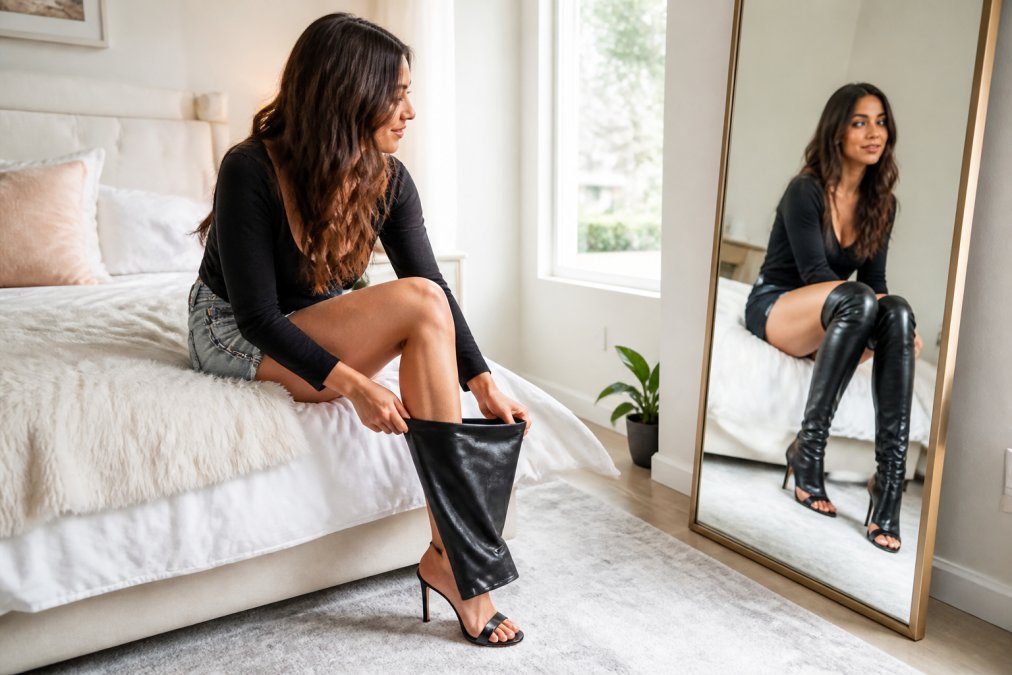
Adjust the sleeve so the bottom edge covers the shoe's heel and arch completely, creating the illusion that the shoe and shaft are one piece. For heels with ankle straps or buckles, the sleeve should sit just below the strap so the hardware remains visible. Walk around and check for bunching behind the knee, which indicates the sleeve needs a firmer pull upward or that the top is too loose.
| Fit Issue | Likely Cause | Quick Fix |
|---|---|---|
| Wrinkling behind knee | Sleeve not pulled high enough | Smooth and re-pull with even tension |
| Slipping down the leg | Top band too loose for thigh | Choose smaller size range or add grip tape |
| Visible bunching at ankle | Shoe heel too high for sleeve length | Wear with lower heels or adjust heel placement |
| Tightness around calf | Sleeve at max stretch capacity | Size up to next circumference range |
Preventing Boot Sleeves from Slipping: What Actually Holds
The most common worry about boot sleeves is whether they will slide down during the day, and the answer depends on fit precision and surface grip. Preventing boot sleeves from slipping starts with choosing the correct circumference range, since a sleeve that is too loose at the top has nothing to grip. The top band should sit snugly against your thigh.
Several practical tricks keep sleeves in place for hours. Silicone grip strips on the inside top edge add friction against bare skin or thin tights. If between sizes, size down rather than up, and wear the sleeve over sheer tights rather than bare legs, as fabric-to-fabric contact holds better.
Matching Sleeves to Shoe Styles: Heels, Flats, and Boots
Not every sleeve works with every shoe, so matching the sleeve style to your footwear matters more than most guides admit. Pointed-toe pumps and stiletto heels pair best with a matte faux leather sleeve in a neutral color, while chunky block heels and platform styles benefit from a sleeve with more structure.
Many women assume boot sleeves only work with heels, but some flats can pull off the look. Ballet flats and loafers with a slightly pointed toe can transform into a chic riding-boot style when paired with a mid-calf sleeve, though very thin or strappy sandals do not provide enough structure to anchor onto. Color matching is equally important: a sleeve in the same color family as your shoe creates the most convincing boot illusion.
Caring for Your Sleeves So the Fit Lasts
A custom fit is not a one-time achievement; it is a relationship that requires maintenance. The top-ranking guides tell you to 'wipe clean' and 'store flat,' but they fail to address what happens when your sleeve starts to lose its grip after a season of wear.
The Degradation Timeline
Every stretch sleeve degrades, but the timeline depends on material quality and usage.
How to 'Refresh' a Sleeve's Fit
Before you give up on a sleeve that has lost its grip, try these restoration techniques.
1. The Heat Recovery Method Heat can temporarily re-energize spandex fibers. Use a handheld garment steamer on the lowest setting, holding it 6-8 inches away and passing it slowly over the entire surface. Do not soak the material; you want it warm and slightly damp. Immediately put the sleeve on over tights and wear it for 30 minutes. As it cools, the fibers 'set' to your leg's circumference, restoring some lost grip.
2. The Grip Strip Revival Silicone grip strips collect body oils and lotion residue, making them slippery. Clean the strip with rubbing alcohol on a cotton pad to dissolve the oils and restore tackiness, then allow it to dry completely. If the strip is peeling or cracked, apply a thin line of silicone seam sealant (available at outdoor gear stores) to the inside edge as a temporary fix.
3. The Cold Set For sleeves that have stretched out permanently at the ankle, dampen the sleeve with cool water, wring it out gently, and place it in a sealed plastic bag in the freezer for 2-3 hours. The cold causes the elastane fibers to contract, leaving a slightly smaller resting circumference when thawed.
The 'Season-End' Protocol
At the end of the season, follow this protocol to maximize your sleeves' lifespan:
- Clean: Wipe down with a damp cloth and a drop of mild dish soap. Pay special attention to the inside top band where sweat and body oils accumulate.
- Deodorize: Sprinkle baking soda inside the sleeve, let it sit for 24 hours, then shake it out. This neutralizes odors without damaging the material.
- Condition: For faux leather sleeves, apply a very thin layer of a water-based leather conditioner. Rub it in with a soft cloth and let it dry for 24 hours.
- Store: Roll the sleeve loosely, do not fold it. Place it in a breathable cotton bag, not a plastic bin. Keep it in a cool, dark place. Heat and UV light are the primary enemies of elastic recovery.
When to Retire a Sleeve
No amount of maintenance can fix a sleeve that has reached the end of its life. Retire a sleeve when:
- The top band no longer grips your thigh even after cleaning and heat treatment.
- There are visible cracks in the faux leather that expose the knit backing.
- The sleeve has a permanent wrinkle or crease that does not smooth out when worn.
- The material has a 'tacky' or sticky feel, which indicates the PU coating is breaking down chemically.
By understanding the degradation cycle and applying these restoration methods, you move from being a passive consumer to an active manager of your custom fit, keeping your sleeves working as well in year two as they did on day one.
Your Custom Fit Boot Sleeve Guide: Final Checklist
Before you buy or wear your next pair of sleeves, run through this final checklist to confirm you have the right product for your body and wardrobe.
- Measure your calf and thigh at the widest points and compare against the sleeve's circumference chart, not shoe size
- Confirm the sleeve material matches your intended use: vinyl for glossy events, faux leather for everyday wear
- Verify the sleeve length works with your heel height so the bottom edge covers the shoe fully
- Test the top band tension to ensure it grips without digging in or leaving marks
- Match the sleeve color to your shoe color for a seamless boot illusion
- Check the care instructions and store flat to preserve elasticity
A custom fit boot sleeve guide only works when you apply it to sleeves designed with real leg measurements in mind. Bootsy's size-inclusive range, accommodating thigh sizes from 14 to 60 inches, ensures that stretchy boot sleeves for thick thighs and petite frames alike deliver a secure, comfortable fit. The patent-pending design pairs with heels and some flats across women's sizes 6 to 11, giving you endless styling options from the shoes you already own.
Getting dressed should not require settling for boots that pinch, gape, or refuse to zip. With the right measurements and a sleeve built around your leg's actual circumference, you can turn any heel in your closet into the boot look you want. Bootsy- The Boot Sleeve offers high-quality stretch faux leather and vinyl options designed for every body type, so you can stop hunting for boots that fit and start wearing the ones you already love.
Frequently Asked Questions
How do I measure my legs for custom fit boot sleeves?
Measure the widest part of your calf and the widest part of your thigh while standing. Use a flexible tape measure and keep it snug but not tight. Note both numbers in inches. Bootsy sleeves are sized by thigh circumference from 14 to 60 inches, so focus on that measurement first, then check that your calf fits within the stretch range.
What materials are best for stretchy boot sleeves?
High-quality stretch faux leather and vinyl hold their shape best. They offer enough give to fit thick thighs comfortably while keeping a smooth silhouette that looks like a real boot. Look for a design that specifies a stretch range, like Bootsy's 14 to 60 inch thigh fit, rather than generic one-size options.
How do I keep boot sleeves from sliding down?
Start with a correct fit: sleeves should be snug, not loose. Pull them high and smooth out any wrinkles. If you need extra grip, some wearers use fashion tape at the top edge. Bootsy's design relies on precise thigh measurement, so re-measure if slipping happens.
Can boot sleeves be worn with any type of shoe?
Boot sleeves work best with heels and some flats, typically women's sizes 6 to 11. Thin stilettos and chunky block heels both work. The key is a shoe you can walk in comfortably, since the sleeve adds a boot shaft. Avoid styles with very thick ankle straps or bulky buckles that create lumps under the sleeve.
How do I clean and maintain my faux leather boot sleeves?
Wipe your sleeves with a soft, damp cloth after each wear to remove dust and dirt. For deeper cleaning, hand wash with mild soap and cool water, then hang to dry away from direct heat. Do not machine wash or dry. Store them laid flat or rolled loosely to prevent creases.
0 comments