

Table of Contents
- How Long Do Boot Sleeves Last With Regular Use
- What Counts as Regular Use and How It Affects Lifespan
- Material and Construction: Why Durability Varies
- How to Care for Boot Sleeves to Maximize Lifespan
- How to Clean Faux Leather Boot Sleeves Properly
- How to Keep Boot Sleeves From Slipping and Stretching
- How to Measure Thighs for Boot Sleeves and Ensure Proper Fit
- Signs Your Boot Sleeves Need Replacement
- Frequently Asked Questions
Last Updated: October 8, 2026
How Long Do Boot Sleeves Last With Regular Use
Boot sleeves are designed to transform your favorite heels into stylish boots, but like any wearable accessory, they have a lifespan. The question of how long do boot sleeves last with regular use depends on several factors: the material quality, how often you wear them, how well you care for them, and the conditions they face.
The reality is that boot sleeves don't fail suddenly. They gradually show signs of wear, stretching, seam separation, or material breakdown, that signal when replacement is approaching. Understanding these signs and the factors that influence lifespan helps you maximize your investment and know when it's time to refresh your collection.
What Counts as Regular Use and How It Affects Lifespan
Regular use means wearing your boot sleeves multiple times per week, typically three to five days weekly, for extended periods during the day. This is different from occasional weekend wear or special-event-only use, which would extend the lifespan significantly.
Here's how different use patterns affect durability:
- Daily wear (5-7 days per week): Boot sleeves show noticeable wear within 12-18 months
- Regular use (3-5 days per week): Expect 18-36 months of serviceable wear
- Moderate use (1-2 days per week): Can last 3-5 years or longer
- Occasional use (special events only): Often last 5+ years
The intensity of use matters as much as frequency. Wearing your boot sleeves while walking around all day, climbing stairs, or sitting and standing repeatedly creates more friction and stress on seams and elastic than wearing them for a few hours at a stationary event. If you're constantly pulling them on and off your shoes, the elastic experiences more strain than if you leave them on for an entire day.
Environmental factors also play a role. Wearing boot sleeves in humid climates, during hot weather when you sweat more, or in wet conditions accelerates material breakdown. Cold, dry conditions are gentler on the fabric and elastic components, potentially extending lifespan by several months.
Material and Construction: Why Durability Varies
The material your boot sleeve is made from is the primary determinant of how long it will last. Different fabrics have different resistance to stretching, tearing, moisture, and general wear.

Faux Leather vs. Vinyl: Which Lasts Longer
Faux leather and vinyl are the two most common materials for boot sleeves, and they perform differently under stress.
Faux leather is typically more durable and maintains its appearance longer. It resists moisture better, doesn't become sticky in heat, and develops a more natural appearance as it ages. Faux leather boot sleeves often last 24-36 months with regular use because the material itself is more resistant to cracking and peeling. The downside is that faux leather requires more deliberate care and can be damaged by harsh chemicals or excessive heat.
Vinyl is more affordable and easier to clean, but it's less durable overall. Vinyl stretches more readily under repeated stress, becomes tacky in warm temperatures, and can crack or peel after 12-24 months of regular use. Vinyl boot sleeves are practical for testing the style before investing in a higher-quality product, but they're not designed for long-term wear.
The Bootsy- The Boot Sleeve collection uses high-quality stretch faux leather and vinyl options. Our faux leather sleeves, like the CROC Chocolate Thigh-High Boot Sleeve and BEST Black Thigh-High Boot Sleeve, are engineered to withstand regular wear while maintaining their shape and appearance. Both options are washable and reusable, which extends their functional lifespan compared to disposable alternatives.

Seams, Elasticity, and Stretch Fabric
The construction quality determines whether your boot sleeves will hold up or fail prematurely. Pay attention to three key structural elements:
Seams are the first place boot sleeves fail. Poorly sewn seams separate under stress, especially at the top edge where the elastic provides constant tension. Quality seams are reinforced, use thread that matches the material, and are stitched with tight, even stitches. Loose or unraveling seams indicate your boot sleeve is approaching the end of its lifespan.
Elasticity in the top band keeps your sleeve from slipping down your leg. Over time, elastic loses its stretch. Elastic that was once firm becomes loose and baggy, making the sleeve slip even if the rest of the material is still intact.
Stretch fabric needs to maintain its shape without becoming overly loose. Cheap stretch fabric loses its recovery, it gets pulled out and never returns to its original size. Quality stretch materials maintain their shape through hundreds of wear-and-wash cycles. The fabric should feel firm and supportive, not limp or saggy.
How to Care for Boot Sleeves to Maximize Lifespan
The way you care for your boot sleeves directly affects how long they last. Proper maintenance can add months or even years to their functional life.
General care principles apply to all boot sleeves:
- Store them flat or rolled, never folded or creased for extended periods
- Keep them away from direct heat, sunlight, and extreme temperatures
- Avoid contact with sharp objects that could puncture or tear the material
- Don't use harsh chemicals or bleach when cleaning
- Allow them to dry completely before storing to prevent mildew and material degradation
The most common care mistake is machine washing or using hot water. Both damage the elastic and can cause seams to separate. Hand washing in cool water with mild soap is always the safer choice. Air drying is essential, heat from a dryer weakens elastic and can cause permanent damage to faux leather or vinyl.
How to Clean Faux Leather Boot Sleeves Properly
Faux leather boot sleeves require specific cleaning techniques to maintain their appearance and durability.
Start with a gentle approach: wipe down your sleeves with a soft, dry cloth after wearing them to remove dust and surface dirt. This simple step prevents buildup that can degrade the material over time. For deeper cleaning, use cool water and a tiny amount of mild dish soap.
Dip a soft cloth into the solution and gently wipe the entire surface of the boot sleeve. Pay extra attention to areas that contact your skin, as sweat and body oils accumulate there. Rinse with a clean cloth dampened in plain cool water to remove all soap residue.
Never soak faux leather or submerge it in water. Never use a washing machine, even on a delicate cycle. Never use heat to dry, lay your sleeves flat on a clean towel and let them air dry completely before wearing or storing them.
If your faux leather develops stains, address them immediately. The longer a stain sits, the harder it becomes to remove. For stubborn stains, use a slightly stronger solution of mild soap and water, but test it on an inconspicuous area first to ensure it doesn't damage the material.
CROC | Chocolate Croc Thigh-High Boot Sleeve | XS–5X Thigh & Calf Fit →
How to Keep Boot Sleeves From Slipping and Stretching
Slipping and stretching are the most common durability complaints. Both are preventable with proper fit and care.
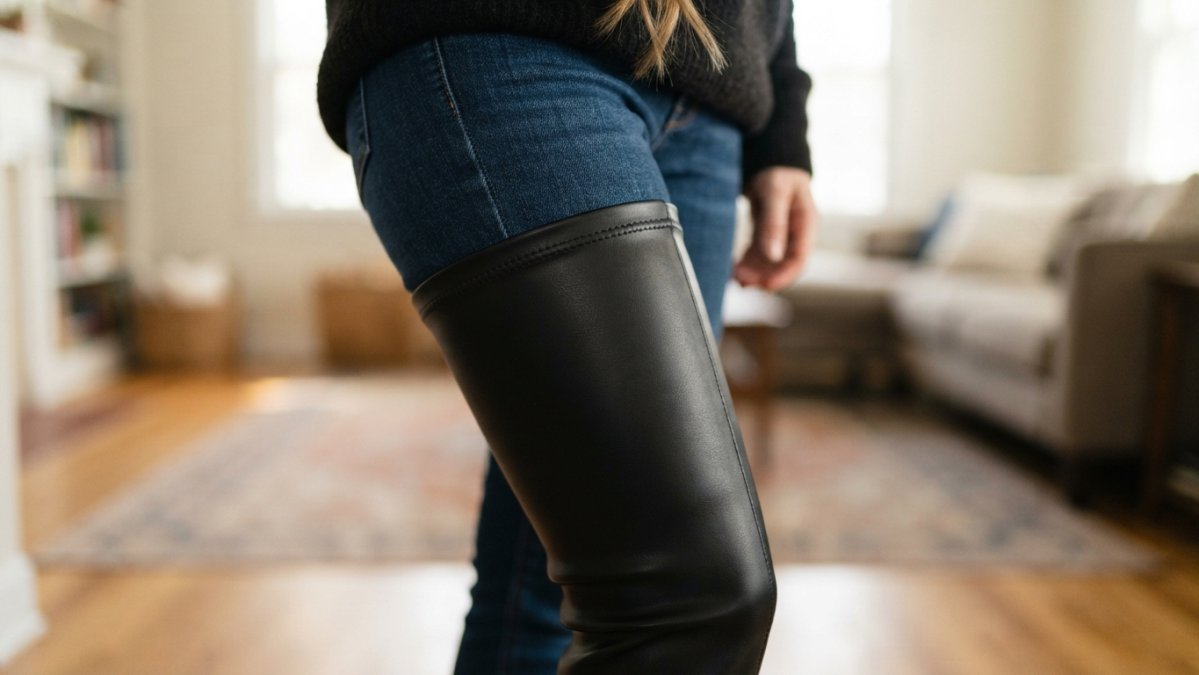
Slipping happens when the elastic loses tension or when the sleeve is too large for your leg. Prevention starts with accurate measurement. Use a soft measuring tape to measure your thigh and calf circumference at the widest points.
The MINI Chocolate Croc Mid-Calf Boot Sleeve and thigh-high options are available in XS through 5X sizes based on leg circumference, so you can find a fit that's snug without being uncomfortable. Proper fit prevents both slipping and unnecessary stretching.

Once you have the right size, avoid over-stretching during application. Pull the sleeve on gently and gradually, working it up your leg in stages rather than yanking it all at once. Aggressive pulling stresses the elastic and seams prematurely.
Store your sleeves without stretching them. Don't hang them on a hook or peg, as gravity will pull them out of shape over time. Instead, roll them loosely or fold them gently and lay them flat in a drawer.
How to Measure Thighs for Boot Sleeves and Ensure Proper Fit
Proper fit is the single most important factor in durability. A sleeve that fits correctly experiences less stress and lasts significantly longer than one that's too tight or too loose.
Measure your thigh at the fullest part, usually about halfway between your hip and knee. Use a soft measuring tape, not a rigid ruler.
If your thighs are different sizes, measure both and use the larger measurement. A sleeve that fits your larger thigh will be slightly loose on your smaller thigh, but this is better than one that's too tight on either leg.
For calf measurement, measure at the widest part of your calf, again using a soft tape that's snug but not tight. Some people have significantly different thigh and calf measurements, so both numbers matter.
Compare your measurements to the brand's sizing chart. Bootsy- The Boot Sleeve sizes by leg circumference rather than shoe size, which is far more accurate for fit. If you're between sizes, choose the larger size.
Proper fit means the sleeve sits securely on your leg without rolling, bunching, or cutting off circulation. You should be able to move comfortably and wear the sleeve for hours without discomfort.
Signs Your Boot Sleeves Need Replacement
Knowing when to replace your boot sleeves helps you avoid wearing damaged ones that look unprofessional or feel uncomfortable.
The most obvious sign is visible seam separation. If you see threads pulling away from the seam line, especially at the top edge, replacement is imminent.
Excessive stretching is another clear indicator. If your sleeve that once fit snugly now slips down your leg even with proper fit, the elastic has lost too much tension to be functional.
Visible cracks, peeling, or flaking in faux leather or vinyl means the material is degrading. Once the surface breaks, the damage spreads quickly.
Sticky or tacky feeling, especially in vinyl sleeves, indicates the material is breaking down. This typically happens in warm, humid conditions and signals that the sleeve is nearing the end of its life.
Permanent creases or deformation that don't smooth out even after washing indicate the material has lost its shape recovery. This is less of a functional failure and more of an aesthetic one, but it's a sign that replacement should be planned soon.
Loss of color vibrancy or a dull, faded appearance is normal over time, but dramatic color change or uneven fading can indicate material degradation. This is often cosmetic, but it may accompany structural issues.
Frequently Asked Questions
How long do boot sleeves last with regular daily wear?
With regular daily use, boot sleeves typically last between 1 and 3 years. The exact lifespan depends on how often you wear them, the material, how well you care for them, and environmental factors like moisture and heat exposure. Proper cleaning and storage can help extend this timeline significantly.
What factors affect how long boot sleeves last?
Several factors influence durability: frequency of use (daily wear shortens lifespan compared to occasional use), material quality (higher-grade faux leather resists abrasion better), seam construction (reinforced seams hold up longer), elasticity and stretch (repeated stretching causes degradation), moisture exposure (sweat and wet conditions accelerate wear), and storage conditions (heat and humidity damage the material faster than cool, dry storage).
How can I tell when my boot sleeves need to be replaced?
Replace your boot sleeves when you notice visible cracking or peeling in the faux leather or vinyl, seams separating or fraying, persistent slipping that won't stay in place even with proper fit, loss of elasticity (they no longer hug your leg), or visible wear patterns that affect appearance. If the sleeve no longer provides the polished boot look you want, it's time for a replacement.
Can boot sleeves be worn every day, and will that shorten their lifespan?
Yes, boot sleeves can be worn every day, but daily wear does reduce their lifespan compared to occasional use. To extend durability with daily wear, rotate between multiple pairs if possible, clean them regularly to prevent material buildup, let them air dry completely between wears, and store them flat or rolled to maintain elasticity. This approach helps distribute wear and keeps them looking fresh longer.
Boot sleeves are an investment in versatility and style. With proper care and realistic expectations about lifespan, you'll get months or years of wear from a quality sleeve. The key is choosing the right material, ensuring proper fit, and maintaining your sleeves through gentle cleaning and careful storage. When the time comes to replace your sleeve, you'll know exactly why, and you'll be ready to refresh your collection with a new one that matches your current style and needs.
0 comments